Key takeaways
- Compare smart Wi-Fi dehumidifiers for rental properties: app alerts, built-in pumps, and continuous drains that protect units between landlord visits.
The real decision for a landlord is not how fast a dehumidifier pulls water from the air. It is whether the machine keeps working during the weeks nobody checks on it. A basic unit with a full bucket quietly shuts off, humidity climbs back up, and the first sign of trouble is a musty smell or a mold complaint at the next inspection. A smart model changes that equation: it drains continuously, restarts itself after an outage, and sends a phone alert before a small problem becomes a remediation bill.


This guide is written for owners of single rental homes, duplexes with damp basements, and small apartment portfolios where units sit empty between tenancies. Every pick below is a Wi-Fi connected room dehumidifier chosen from its Amazon product title and listing specifications, with the drainage method, app features, and capacity checked against how a rental actually runs day to day.
Quick Picks
As an Amazon Associate we earn from qualifying purchases
| Product | Best for | Key spec from title |
|---|---|---|
| Midea Cube 50 Pint Smart Dehumidifier | Large bucket, fewer emptying trips | 50 pints per day, up to 4,500 sq. ft. |
| hOmeLabs 50 Pint Wi-Fi Dehumidifier with Pump | Basements with no floor drain | Built-in pump, Wi-Fi control |
| GoveeLife Smart Dehumidifier (H7151) | App-first control and automation | 2.0 gal bucket, app and voice control |
| Frigidaire 50-Pint Portable Dehumidifier with Wi-Fi | Cold rooms and brand support | Low-temperature operation down to 41°F |
How to Choose
Decide the drainage plan before anything else
Drainage decides whether a dehumidifier protects a rental or just sits in it. A bucket-only setup depends on a tenant remembering to empty it, and an overflowing or full bucket stops dehumidifying entirely. For a unit you cannot visit weekly, insist on a continuous drain hose that reaches a floor drain, or a built-in pump that pushes water up into a sink or out a window when the drain sits above the machine. Walk the property, find the lowest drain point, and measure the distance before ordering, because that answer narrows this list faster than any app feature.
Treat app alerts as a replacement for site visits
The smart features that matter for rentals are notifications and remote adjustment, not novelty voice commands. A full-bucket alert tells you the drain hose has kinked or the tenant has unplugged the hose. A humidity readout in the app lets you confirm the basement is holding at target without scheduling a walkthrough. Remote control also helps at turnover: you can raise the setting while a unit is vacant and humid, then hand control back to a sensible schedule when a new tenant moves in. Check that the app works on both iOS and Android so a property manager and an owner can share access.
Match pint capacity to the space, not the whole property
Pint ratings describe how much moisture a unit removes per day under test conditions, and the coverage figure in each listing title assumes one open space. A 50-pint machine suits a damp basement or a whole small apartment, but a closed bedroom door turns one large zone into several small ones. For a rental, place the dehumidifier where the moisture actually is: below-grade rooms, laundry areas, and bathrooms without exhaust fans. Oversizing slightly for a chronically wet basement is sensible, while a small unit in a huge space runs constantly, wears faster, and still loses the fight against humid air.
Plan for tenants, outages, and running costs
Assume the unit will be unplugged, moved, and ignored at some point. Auto restart matters because it restores your chosen settings after a power cut instead of leaving the machine off until someone notices. A washable filter keeps maintenance to a rinse rather than a replacement part order, and a filter-clean alert stops airflow problems before they look like a broken machine. Energy Star certified models cost less to run around the clock, which matters when the electricity bill is yours between tenancies. Finally, agree in writing who empties the bucket or checks the hose, so the arrangement survives the lease signing.
The 4 Best Options
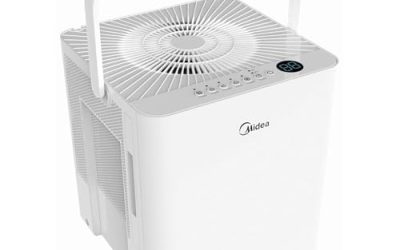
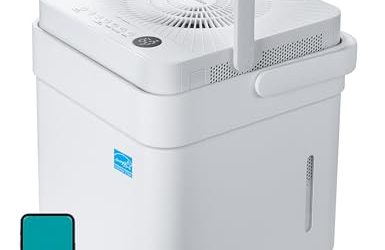
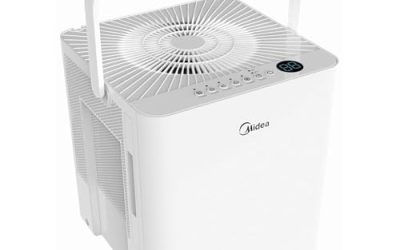
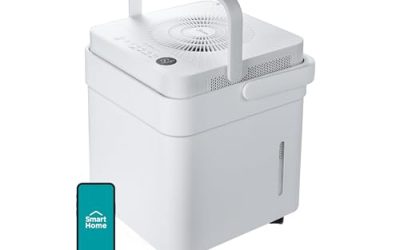
Midea Cube 50 Pint Smart Dehumidifier
The Cube design solves the biggest weakness of bucket drainage: the tank itself. Its lift-and-twist body nests into a bucket holding up to three times more water than a conventional tank, so a vacant unit or an inattentive tenant gets a much longer window before shut-off. Wi-Fi control through the SmartHome app covers remote humidity changes, and the included drain hose gives a continuous option when a floor drain is nearby. For landlords who want one flexible machine that can move between a basement, a bathroom, and a turnover clean-out, this is the most forgiving layout in the group.
Specs
- Removes up to 50 pints of moisture per day
- Coverage up to 4,500 sq. ft.
- Adjustable humidity range from 35% to 85%
- Removable bucket, 4.2 gallons (15.9 L)
- Wi-Fi enabled with SmartHome app control on iOS and Android
- Voice control via Alexa and Google Assistant
- Drain hose included for continuous drain option
- Auto restart and auto defrost functions
- Washable filter; Energy Star certified
Best for: Owners who need long unattended run time between bucket checks.
Watch out for: No built-in pump, so continuous drainage only works where gravity can reach a drain.
ASIN: B0915DV55B
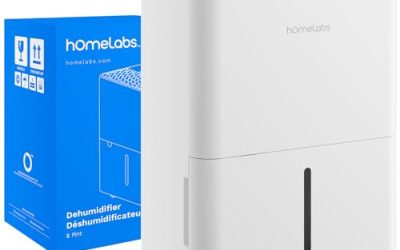
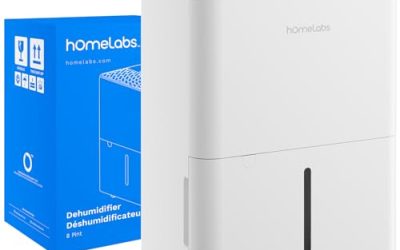
hOmeLabs 50 Pint Wi-Fi Dehumidifier with Pump
Basements without a floor drain are where rentals usually lose the humidity battle, and this model answers that directly with a built-in pump for continuous drainage uphill to a sink or window. Wi-Fi control lets you set humidity levels, schedules, and modes from the app, which suits a property you manage from across town or another state. Comfort, Turbo, and Continuous modes cover everything from a mild spring dampness to a flooded-feeling August basement, and the full-bucket indicator with automatic shut-off protects floors if the pump line is ever blocked or disconnected by a tenant.
Specs
- Removes up to 50 pints per day at 80°F, 60% RH (120 pints max at 95°F, 90% RH)
- Coverage up to 7,500 sq. ft.
- Built-in pump for continuous drainage
- Wi-Fi enabled for remote control through the app
- Airflow up to 218 CFM in Turbo mode, 188 CFM in Standard mode
- Comfort, Turbo, and Continuous operating modes
- Digital control panel with humidity readout and timer settings
- Full bucket indicator with automatic shut-off and overheat protection
- Check filter indicator; integrated rolling wheels
Best for: Damp basements where the only drain sits above the unit.
Watch out for: The pump depends on its discharge line staying connected, so secure the hose where tenants cannot knock it loose.
ASIN: B0D1HMXQTB
GoveeLife Smart Dehumidifier (H7151)
GoveeLife builds this unit around its app, which makes it the natural pick for an owner who already runs other smart devices across several properties. App, voice, and touch control are all supported, with Alexa, Google Assistant, and IFTTT compatibility for simple automations such as running harder when a separate sensor reports a humidity spike. The built-in sensor holds a target humidity automatically, the two-gallon bucket is generous for a unit in this class, and the included three-foot drain hose covers a short run to a nearby drain. It is the most automation-friendly option here for hands-off portfolio management.
Specs
- Coverage up to 4,500 sq. ft.
- Rated from 50 to 137 pints depending on conditions
- Water bucket capacity of 2.0 gallons
- Smart app, voice, and touch control
- Compatible with Alexa, Google Assistant, and IFTTT
- Supports 2.4 GHz Wi-Fi and Bluetooth
- Built-in sensor with automatic target humidity control
- Low, Medium, High, and Dryer dehumidification levels
- Three-foot drain hose included for continuous drainage
- Washable filter and auto defrost; R32 refrigerant
Best for: Owners who want automations and app control across multiple properties.
Watch out for: Wi-Fi is 2.4 GHz only, so confirm the rental has a compatible network band before relying on remote access.
ASIN: B0BR7RHQB9
Frigidaire 50-Pint Portable Dehumidifier with Wi-Fi
Frigidaire is the conservative choice: a long-running appliance brand, an Energy Star certified compressor unit, and Wi-Fi control through the Frigidaire app with Alexa and Google Home support for the tenants who want it. The detail that matters for rentals is low-temperature performance down to 41°F, which keeps the machine working in unheated basements and garages where other units frost up and stall through winter. Drainage is flexible, with an easy-carry bucket for occupied units and a continuous drain option for empty ones, and filter alerts arrive before a clogged filter quietly cuts performance.
Specs
- 50-pint capacity portable dehumidifier
- Wi-Fi enabled with control through the Frigidaire app
- Works with Amazon Alexa and Google Home
- Energy Star certified
- Custom humidity control with automatic shut-off when the bucket is full
- Two drainage methods: water bucket or continuous drain option
- Low-temperature performance down to 41°F
- Easy-to-clean washable filter with clean-filter alerts
Best for: Unheated basements and owners who prefer a major appliance brand.
Watch out for: No built-in pump on this model, so plan on a gravity drain or bucket emptying.
ASIN: B0DG131XB7
Which One Fits Your Situation
A duplex with a shared damp basement
Choose the hOmeLabs with the built-in pump. Shared basements rarely have a conveniently placed floor drain, and the pump sends water up to a utility sink without asking either tenant to empty anything. Set the humidity target in the app, turn on alerts, and the basement stops being a recurring complaint shared by both households in the building.
A single rental house managed from another city
The Midea Cube fits remote ownership best. Its oversized bucket buys weeks of margin if the drain hose plan falls through, and the SmartHome app lets you check the humidity trend before deciding whether a contractor visit is worth paying for. Confirm the drain hose reaches a floor drain during your next visit, and the house can largely look after itself.
A small apartment with a steamy bathroom
Pick the GoveeLife. A two-gallon bucket and automatic humidity control suit a compact floor plan, and app scheduling lets the unit work harder after showers and ease off overnight. Because it also responds to voice assistants, tenants are more likely to leave it running instead of switching it off, which is exactly the behavior you want in a small, moisture-prone unit.
A short-term rental with fast turnovers
The Frigidaire handles the gap between guests most calmly. Continuous drainage means housekeeping never faces a full bucket, low-temperature operation covers winter bookings in colder rooms, and the app lets you verify the unit is running before each arrival. Its brand-name controls are also simple enough that a guest can adjust comfort without calling you for instructions.
Common Mistakes
- Buying a bucket-only dehumidifier for a property you visit once a month, then discovering it shut off weeks earlier.
- Placing the unit in a hallway and expecting it to dry a closed bathroom or a basement through shut doors.
- Skipping the app setup at installation, which throws away the full-bucket and filter alerts that prevent damage.
- Choosing a model with no pump when the only drain is a sink above the unit, forcing a tenant to lift buckets of water.
- Never writing down who checks the filter and hose, so the owner and tenant each assume the other is doing it.
Frequently Asked Questions
Can a tenant and a landlord both control the same unit?
Yes, in practice. Each app here supports account-based access, so the owner can keep the main account and the tenant can use the on-device controls, or the app can be signed in on more than one phone. Decide before move-in who adjusts settings, and keep the target humidity in the lease paperwork so there is no argument later.
What humidity level should a rental dehumidifier hold?
A target between 40% and 50% relative humidity works for most rentals. That range discourages mold growth, protects wood flooring and paint, and still feels comfortable to live in. Basements that flood the gauge every summer may need the lower end of the range, while very dry winter climates rarely need the machine running at all.
Is a built-in pump worth it for a rental property?
A pump earns its place whenever the drain sits higher than the unit, which describes most basement sinks and windows. Without one, someone must empty the bucket by hand, and every missed emptying is a period with no dehumidification at all. If a floor drain sits nearby at ground level, gravity drainage does the same job without the pump.
Who pays for the electricity a dehumidifier uses?
That depends on whose meter the unit runs on and what the lease says. In an occupied unit, the tenant usually pays, which is one reason to choose an Energy Star certified model with modest running costs. Between tenancies the cost lands on the owner, so use the app schedule to run the machine only as hard as the empty property actually needs.