Our Short List of 3

- Best for: Bedroom and studio cooling where app control and a dual inverter compressor top the list.
- Cooling: 10,000 BTU SACC and 14,000 BTU ASHRAE
- Coverage: rooms up to 450 sq ft
- Dual Inverter compressor, per the listing title
- WiFi control with the LG ThinQ app

- Best for: Year round use in mild climates where one unit should heat and cool.
- Cooling: 14,000 BTU ASHRAE and 12,000 BTU SACC
- Heat pump operating range: 41 to 86 degrees Fahrenheit
- Coverage: up to 550 sq ft
- Works with Alexa and Google Assistant; remote and window kit included

- Best for: Big or damp rooms needing the widest coverage and a strong dehumidify mode.
- Cooling: 14,000 BTU ASHRAE and 12,000 BTU SACC
- Coverage: up to 600 sq ft
- Modes: Cool, Dehumidify and Fan with 3 speeds
- Dehumidifier capacity: 87 pints per day
All 3 Picks at a Glance
| Product | Specs | Action |
|---|---|---|
| LG Dual Inverter Portable Air Conditioner LP1022FVSM |
| Check price on Amazon |
| Midea Duo 14 Portable Air Conditioner with Heat |
| Check price on Amazon |
| Whynter ARC-1230WN Inverter Portable Air Conditioner |
| Check price on Amazon |
Key takeaways
- Five inverter portable air conditioners from LG, Midea and Whynter compared on SACC ratings, room coverage, smart control and drainage before you order.
Choosing an inverter portable air conditioner comes down to two decisions that listings make easy to blur. The first is honest capacity: the same machine can carry a large ASHRAE figure and a smaller SACC figure, and only the SACC number reflects the rating method used for portable units. The second is drainage. Shoppers often search for a condensate pump, yet the listings in this roundup describe auto evaporation and gravity drain hoses instead, so drainage deserves as much attention as cooling power before money changes hands.
The five machines below serve distinct buyers: apartment renters cooling one bedroom, households covering a large living room, and anyone who wants heating from the same unit through the shoulder seasons. Every pick states inverter technology on its Amazon page, and each one was selected from the names and specifications printed on those pages, with ASHRAE and SACC figures kept exactly as the listings present them and drainage wording reported rather than assumed.
Quick Picks
As an Amazon Associate we earn from qualifying purchases
| Product | Best for | Key spec from title |
|---|---|---|
| LG Dual Inverter Portable Air Conditioner LP1022FVSM | App control in a bedroom or studio | 10,000 BTU SACC, cools 450 sq ft |
| Midea Duo 12 Portable Air Conditioner | Voice control in one room | 12,000 BTU ASHRAE, cools 450 sq ft |
| Midea Duo 14 Portable Air Conditioner | Quiet cooling in larger living rooms | 14,000 BTU ASHRAE, cools 550 sq ft |
| Midea Duo 14 Portable Air Conditioner with Heat | Cooling plus shoulder season heating | 14,000 BTU ASHRAE with heat, cools 550 sq ft |
| Whynter ARC-1230WN Inverter Portable Air Conditioner | Damp rooms and the widest coverage | 14,000 BTU ASHRAE, cools 600 sq ft |
How to Choose
Read SACC Before ASHRAE
Portable air conditioners carry two capacity numbers because the older ASHRAE method and the newer SACC method measure the same machine differently. SACC accounts for the heat a single hose unit draws back into the room, so it lands lower and predicts real cooling more honestly. Compare machines by SACC first: a unit rated 12,000 BTU SACC will outcool one rated 10,000 BTU SACC even when both boxes advertise 14,000 BTU ASHRAE in larger type. Match the SACC figure to your room size, then check the stated coverage area as a second opinion rather than the headline.
Check How Condensate Leaves the Room
Drainage decides whether a portable unit runs unattended or demands regular trips with a bucket. None of the five listings in this roundup states a condensate pump, so do not buy any of them expecting water to be lifted to a sink or an elevated drain. The machines here rely on auto evaporation during cooling, which recycles most moisture into the exhaust air, plus gravity drain outlets or hoses for humid days. If your only drain point sits above floor level, treat pumped drainage as an unmet requirement and confirm the listing wording again before ordering.
Match Coverage to the Room You Actually Cool
Manufacturers state a maximum coverage area for every model here, ranging from 450 to 600 square feet, and those figures assume ordinary ceiling heights and moderate sun exposure. A west facing room with large windows, an open plan layout, or a kitchen adding heat will feel undersized sooner than a shaded bedroom of the same measured area. Renters cooling one sleeping space can stay near the lower coverage ratings, while households conditioning a combined living and dining area should start from the largest coverage figures and work downward.
Decide Whether Heating and Smart Control Matter
Four of these five machines cool only, while one adds a heat pump mode for cool weather, which can replace a separate space heater in a bedroom or studio. That flexibility matters most in regions with mild winters and unheated spare rooms. Smart features split the group too: app control and voice assistants appear across the range, yet the depth of scheduling and remote sensing differs by brand. List the extras you will genuinely use weekly, because paying for heating or automation that sits idle adds cost without comfort.
The 5 Best Options
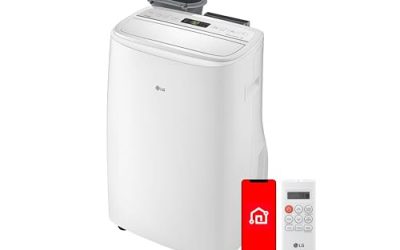
LG Dual Inverter Portable Air Conditioner LP1022FVSM
- Best for: Bedroom and studio cooling where app control and a dual inverter compressor top the list.
- Cooling: 10,000 BTU SACC and 14,000 BTU ASHRAE
- Coverage: rooms up to 450 sq ft
- Dual Inverter compressor, per the listing title
- WiFi control with the LG ThinQ app
Bedroom and studio cooling where app control and a dual inverter compressor top the list.
Listing copies retrieved for this ASIN are months old, so confirm a live buy option and the current drainage wording before ordering.
LG builds this model around its Dual Inverter compressor, and the listing pairs that hardware with WiFi control through the LG ThinQ app for schedule changes from a phone. The stated coverage reaches rooms up to 450 square feet, which suits a primary bedroom, a small studio, or a home office that stays occupied all day. Cooling is listed at 10,000 BTU under the SACC method and 14,000 BTU under ASHRAE, so judge it against rivals by the smaller figure. Drainage wording is absent from the retrieved listing copy, and no condensate pump is stated anywhere on the page.
Midea Duo 12 Portable Air Conditioner
The smaller Duo pairs a high efficiency inverter compressor with compatibility for Alexa and Google Assistant, and the box includes a remote for anyone who prefers physical buttons. Its ratings read 12,000 BTU ASHRAE and 10,000 BTU SACC, with coverage stated up to 450 square feet, placing it beside the LG as a one room solution rather than a whole apartment answer. Midea describes evaporative condensate handling in the listing copy, which keeps routine draining rare in moderate humidity, although the listing never mentions a condensate pump for lifting water to a higher drain point.
Specs
- Cooling: 12,000 BTU ASHRAE and 10,000 BTU SACC
- Coverage: up to 450 sq ft
- Inverter type listed as Has Inverter in the spec field
- Works with Alexa and Google Assistant; remote included
- Condensate pump: not stated in the listing
Best for: Single rooms up to 450 square feet where voice control matters.
Watch out for: The retrieved listing crawl is months old; confirm a live buy option, and remember that no condensate pump is stated.
ASIN: B091CHK173
Midea Duo 14 Portable Air Conditioner
Stepping up within the same Duo family raises capacity to 14,000 BTU ASHRAE and 12,000 BTU SACC, and the stated coverage grows to 550 square feet for larger living rooms or open plan spaces. The listing highlights noise as low as 42 dB, which matters when the machine runs beside a television or a video call, and a remote control plus window kit arrive in the box. The listing describes evaporating technology in Cool mode and a drain hose for Dry mode, so plan on gravity drainage rather than any pumped discharge.
Specs
- Cooling: 14,000 BTU ASHRAE and 12,000 BTU SACC
- Coverage: up to 550 sq ft
- Noise as low as 42 dB, per the listing
- Remote control and window kit included
- Condensate pump: not stated in the listing
Best for: Larger living rooms that need the higher SACC rating and quiet running.
Watch out for: Do not confuse this cooling only model with the heat variant below; their drainage behaviour differs by mode.
ASIN: B091CJVD2N
Midea Duo 14 Portable Air Conditioner with Heat
- Best for: Year round use in mild climates where one unit should heat and cool.
- Cooling: 14,000 BTU ASHRAE and 12,000 BTU SACC
- Heat pump operating range: 41 to 86 degrees Fahrenheit
- Coverage: up to 550 sq ft
- Works with Alexa and Google Assistant; remote and window kit included
Year round use in mild climates where one unit should heat and cool.
A white variant of this heat model sells under a different ASIN, so check the colour and ASIN on the listing before ordering.
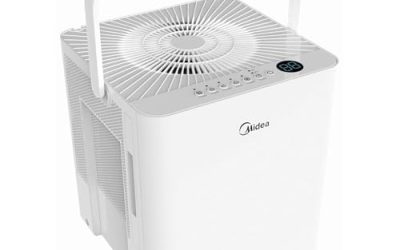
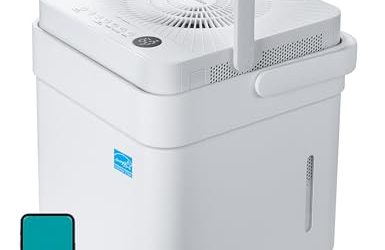
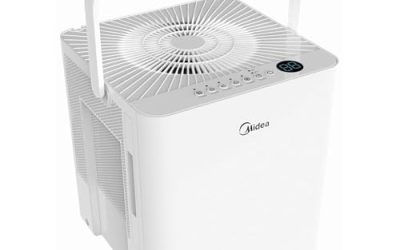
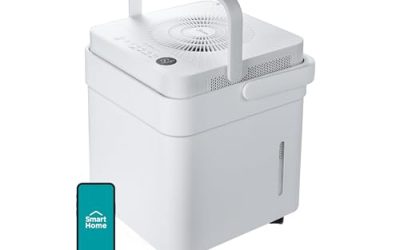
This black variant of the larger Duo adds a heat pump mode to the same cooling ratings, 14,000 BTU ASHRAE and 12,000 BTU SACC, with coverage stated up to 550 square feet. The listing gives a heat pump operating range from 41 to 86 degrees Fahrenheit, which frames it as shoulder season heating rather than a deep winter furnace replacement. Voice control through Alexa and Google Assistant returns, along with the remote and window kit. Heating mode produces condensate too, and the listing still states no pump, so a floor level drain path remains part of the setup.
Whynter ARC-1230WN Inverter Portable Air Conditioner
- Best for: Big or damp rooms needing the widest coverage and a strong dehumidify mode.
- Cooling: 14,000 BTU ASHRAE and 12,000 BTU SACC
- Coverage: up to 600 sq ft
- Modes: Cool, Dehumidify and Fan with 3 speeds
- Dehumidifier capacity: 87 pints per day
Big or damp rooms needing the widest coverage and a strong dehumidify mode.
Auto drain means evaporation through the exhaust, not a pump; rooms needing water lifted uphill still need another drainage plan.
Whynter stretches coverage furthest here, stating up to 600 square feet from its NEX inverter dual hose design, rated 14,000 BTU ASHRAE and 12,000 BTU SACC. Three modes are listed, Cool, Dehumidify and Fan with three speeds, and the dehumidifier capacity reaches 87 pints per day for damp basements or humid coastal rooms. The patented auto drain function exhausts condensate automatically as part of cooling, which the listing presents as evaporation rather than pumping, and Smart WiFi control is built in for remote adjustments.
Which One Fits Your Situation
One Bedroom or a Small Studio
Start with the two 450 square foot models. The LG suits buyers who want app scheduling through ThinQ and a dual inverter badge, while the Midea Duo 12 covers the same footprint with voice assistant support and a conventional remote. Either handles a single sleeping space comfortably, provided the window accepts the included kit and the hose run stays short.
A Large Living Room or Open Plan Space
Look at the three models rated 12,000 BTU SACC. The Midea Duo 14 states the quietest running figure for television rooms, the heat version adds cool weather warmth for the same footprint, and the Whynter claims the broadest coverage at 600 square feet for combined living and dining areas.
Humid Rooms and Basement Spaces
The Whynter fits best here because its listing states a dehumidifier capacity of 87 pints per day alongside a dedicated Dehumidify mode. Expect drainage to need attention on the wettest days with any model in this group, since evaporation slows as indoor humidity climbs and none of the five listings states a pump to move water for you.
Shoulder Season Heating From the Same Unit
Only the Midea Duo 14 with Heat covers this situation, since it is the single listing here that states a heat pump mode with an operating range reaching down to 41 degrees Fahrenheit. In mild climates it can take the chill off a bedroom or spare room without a second appliance competing for floor space.
Common Mistakes
- Comparing models by the ASHRAE figure alone and ignoring the lower SACC rating that reflects portable unit performance.
- Assuming a condensate pump is included because the search term mentioned one, when no listing here states a pump.
- Placing the unit where the only drain sits above floor level, leaving gravity drainage with nowhere to go.
- Buying the largest coverage rating for a small bedroom and living with more noise and cycling than necessary.
- Mixing up the black and white versions of the Midea heat model, which sell under different ASINs.
Frequently Asked Questions
Do any of these air conditioners include a condensate pump?
No. None of the five listings states a condensate pump for any model. Each machine handles water through auto evaporation during cooling, a gravity drain hose, or drain outlets, depending on the model and mode. If your installation needs water lifted to a raised sink or drain, treat that requirement as unmet by these listings and verify the drainage wording on the listing page before ordering.
Which BTU number should I compare, ASHRAE or SACC?
Compare the SACC figure first. SACC is the rating method developed for portable air conditioners and it accounts for heat leaking back through the exhaust hose, so it predicts room cooling more realistically. ASHRAE numbers run higher for the same machine and remain useful only when every model you compare reports both figures the same way, as the five listings here do.
Can one of these units heat a room as well as cool it?
Yes, one can. The Midea Duo 14 with Heat is the only listing here that states a heat pump mode, and it gives an operating range of 41 to 86 degrees Fahrenheit. That suits cool evenings and mild winter days in a bedroom or studio. The other four models are cooling only, so households in colder regions should plan on separate heating for deep winter.
How large a room can these portable units handle?
The listings state coverage from 450 square feet for the LG and the smaller Midea Duo up to 600 square feet for the Whynter, with the two larger Duo models at 550 square feet. Treat those figures as best case ceilings for ordinary rooms; strong sun, high ceilings, open plan layouts, and cooking heat all shrink the area a unit can hold comfortably.