Key takeaways
- Fire rated document safes sized for property deeds and legal papers, compared by the fire rating stated on each Amazon listing, interior size and lock type.
A property deed is one of the few documents in a house that is both irreplaceable in practice and boring enough to forget about for a decade. That combination drives the real buying decision: not how impressive a safe looks, but whether its stated fire rating actually covers paper, whether the interior swallows a deed packet flat without folding, and whether the lock will still open after years of being touched twice a year. A safe that fails any one of those three tests is furniture, not protection.


This guide is written for homeowners storing deeds, wills and closing paperwork, executors organising a parent’s records, and landlords keeping title documents for more than one property. Every safe below was selected from its Amazon listing, and every fire or water figure quoted here is a figure that listing itself states, naming the testing body the listing names. Where a listing makes a claim without numbers, this guide says so instead of filling the gap.
Quick Picks
As an Amazon Associate we earn from qualifying purchases.
| Product | Best for | Key spec from title |
|---|---|---|
| SentrySafe SFW123GDC | Everyday access to deeds with a keypad and a backup key | UL Classified 1 hour at 1700°F |
| SentrySafe SFW123DSB | A deed safe opened rarely, with no batteries to go flat | Dial combination, 1.23 cubic feet |
| SentrySafe SFW205CWB | Several properties worth of deeds, files and binders | 2.05 cubic feet, six locking bolts |
| First Alert 2087F | A smaller deed collection in the least floor space | UL Listed 1 hour up to 1700°F |
How to Choose
Read the fire rating as three separate numbers
A fire rating is only useful when the listing breaks it into parts: how long, at what outside temperature, and under whose classification. The stronger listings in this category state a duration of one hour, an external temperature of 1700°F, and a named classification such as UL Classified, sometimes with a limit on the temperature reached inside the box. Paper survives conditions that would ruin other contents, so a rating framed around documents is the relevant one for deeds. Treat any safe whose listing says fireproof or fire resistant with no duration, no temperature and no testing body as unrated, whatever the headline claims.
Measure your deed packet, then the interior
Deeds, closing binders and legal envelopes fail to fit in safes that look big enough from the outside, because fire insulation makes the walls thick and the interior far smaller than the exterior suggests. Work from the interior dimensions on the listing, not the capacity figure alone. Lay your largest document flat on a table, measure it, and compare that footprint with the interior width and depth, remembering that a shelf divides the space into shorter compartments. If your papers only fit diagonally or folded, the safe is the wrong size, and folding a deed to store it defeats the purpose of keeping it pristine.
Pick the lock for a safe you open twice a year
Access patterns for deed storage are unusual: long silence, then one urgent opening. A digital keypad is fast and easy to share with a spouse, but it runs on batteries that age while the safe sits untouched, so the listing’s backup entry method matters. A dial combination has nothing to go flat, which suits an archive safe, but it is slower and the combination on many models is preset at the factory. Decide which failure you would rather manage, a battery routine or a fixed combination stored safely elsewhere, and confirm the lock arrangement on the listing before you order.
Treat water as the second disaster, and plan the anchor
House fires end with water, from sprinklers, hoses or a burst pipe in the aftermath, so a stated water rating deserves the same scrutiny as the fire figure. The better listings here name a depth and a duration verified by a testing body; a bare claim of waterproof with no numbers tells you much less. Placement matters as well. A deed safe belongs on the lowest floor, ideally bolted down using the hardware the listing mentions, both because weight low in the building fares better in a fire and because a bolted safe cannot simply be carried out during a burglary.
The 4 Best Options
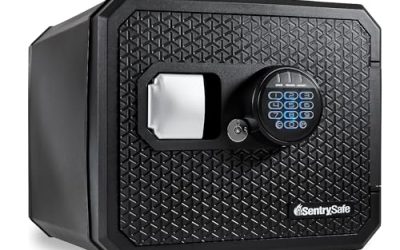
SentrySafe SFW123GDC
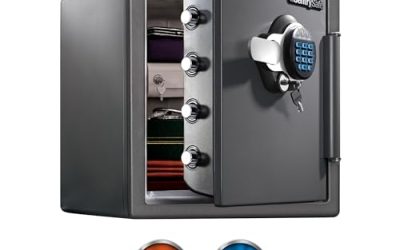
For most households this is the balanced deed safe: a family-sized interior, a keypad for quick access during a house sale or refinancing, and a dual key arrangement as a second way in. The listing states UL Classified fire protection of one hour at 1700°F and pairs it with ETL Verified water protection, which covers the two ways paperwork usually dies in a house fire. Four live-locking bolts and a bolt-down kit in the product details make it a fixed installation rather than a portable box, which is exactly what a deed archive should be.
Specs
- Fire protection stated on the listing: UL Classified to endure 1 hour at 1700°F
- Water protection stated on the listing: ETL Verified for 24 hours in water up to 8 inches deep
- Drop protection stated on the listing: ETL Verified to withstand a 15 foot fall and remain closed
- Capacity: 1.23 cubic feet
- Exterior: 17.8 x 16.3 x 19.3 inches
- Interior: 12.6 x 11.9 x 13.8 inches
- Lock: digital keypad with a secondary key lock
- Bolts: four 1-inch live-locking bolts
- Material: alloy steel
Best for: The main household deed safe, opened a few times a year for sales, refinancing and estate paperwork.
Watch out for: The keypad runs on batteries, so set a replacement routine; a deed safe opened rarely is exactly the one found dead at the urgent moment.
ASIN: B005P12C5A
SentrySafe SFW123DSB
This model keeps the same stated fire and water protection as its keypad sibling and swaps the electronics for a dial, which changes who should buy it. Nothing inside the lock needs power, so a safe that sits in a closet for three years opens the same way on the day a solicitor asks for the deed. The listing describes a dial combination paired with a key lock, four live-locking bolts and a pry-resistant hinge bar. It suits an archive mindset: documents go in, the door closes, and the safe is expected to simply wait, patiently, until life requires it again.
Specs
- Fire protection stated on the listing: UL Classified to endure 1 hour at 1700°F
- Water protection stated on the listing: ETL Verified for 24 hours in water up to 8 inches deep
- Drop protection stated on the listing: ETL Verified to withstand a 15 foot fall and remain closed
- Capacity: 1.23 cubic feet
- Exterior: 16.3 x 19.3 x 17.8 inches
- Interior: 12.6 x 11.9 x 13.8 inches
- Lock: dial combination with a secondary key lock
- Bolts: four live-locking bolts, with a pry-resistant hinge bar
- Weight: 86 pounds
Best for: A set-and-forget archive for deeds and wills in a home where the safe may not be opened for years.
Watch out for: Dial entry is slower than a keypad, and listing questions note the dial combination is preset, so keep the combination recorded somewhere outside the safe itself.
ASIN: B005P12F2K
SentrySafe SFW205CWB
Landlords, executors and anyone holding paperwork for more than one property eventually outgrow the standard box, and this is the step up. At 2.05 cubic feet with a tall interior, it takes deed packets, closing binders and a document tray standing upright instead of stacked in a single pile. The listing states the same one hour at 1700°F UL Classified fire protection as the smaller models, adds ETL Verified water protection, and closes the door with six large one-inch bolts rather than four. A preset dial combination and key suit a safe that lives in an office or a rental property’s storage room.
Specs
- Fire protection stated on the listing: UL Classified fire protection for 1 hour at 1700°F
- Water protection stated on the listing: ETL Verified for water protection up to 8 inches for 24 hours
- Drop protection stated on the listing: ETL Verified to withstand a 15 foot drop during a fire and stay closed
- Capacity: 2.05 cubic feet
- Exterior: 23.8 x 18.6 x 19.3 inches
- Interior: 19.6 x 14.8 x 11.9 inches
- Lock: preset dial combination with key
- Bolts: six large 1-inch bolts, with a pry-resistant hinge bar
- Weight: 124.8 pounds
Best for: Multiple properties, an executor’s archive, or a home office holding deeds alongside other legal files.
Watch out for: At 124.8 pounds with a tall body, this is a two-person placement job; decide the final spot, ideally on a ground floor, before it arrives.
ASIN: B00HS3NI4W
First Alert 2087F
The 2087F is the compact answer for a single property and a modest stack of paperwork. Its listing describes UL Listed resistance for one hour in fires up to 1700°F while holding the internal temperature below 350°F, which is the detail that matters for paper. A four-number combination lock with an emergency override key covers entry without batteries, and four live door bolts with pry-resistant concealed hinges handle the security side. An adjustable, removable shelf helps separate the deed packet from passports and smaller items. It asks for the least floor space of any safe here.
Specs
- Fire protection stated on the listing: UL Listed for 1 hour resistance to fires up to 1700°F, maintaining an internal temperature of less than 350°F
- Water protection stated on the listing: waterproof, with no depth or duration figure given
- Capacity: 0.94 cubic feet
- Lock: combination lock with 1 emergency override key
- Bolts: 4 live door bolts, with pry-resistant concealed hinges
- Shelf: 1 adjustable and removable shelf
- Weight: 76.3 pounds
Best for: One property’s deeds and a small set of legal papers in a flat, small house or tight closet.
Watch out for: The listing calls the safe waterproof without stating a depth or a duration, so do not count on the same flood protection the ETL Verified listings above describe in numbers.
ASIN: B000MPMEZM
Which One Fits Your Situation
You are storing one deed and a will at home
Either of the 1.23 cubic foot SentrySafe models covers a single household’s core paperwork with room to spare. Choose the SFW123GDC if several family members need quick keypad access, or the SFW123DSB if the safe will sit untouched for long stretches and you would rather never think about batteries. Both carry the same fire and water figures on their listings, so the lock is the whole decision.
You manage deeds for several properties
Go straight to the SentrySafe SFW205CWB. Deed packets multiply quietly, and its taller interior keeps each property’s documents upright and separate instead of compressed into one stack you have to excavate. The six-bolt door and the extra weight also suit a safe stored in an office or an outbuilding, where it may sit further from daily attention than a hallway closet at home.
The safe will live somewhere damp or flood-prone
Weight the water figures, not the fire headline. The three SentrySafe listings state ETL Verified protection for 24 hours in water up to 8 inches deep, which gives you something concrete to plan around in a basement or a ground floor that has flooded before. The First Alert 2087F claims waterproofing without numbers on its listing, so in a genuinely wet location it is the weaker documented choice despite its fire rating.
Space is tight and the collection is small
The First Alert 2087F fits where the others will not, and for one property’s deed, a will and a few certificates, its 0.94 cubic feet is honestly enough. Its listing states an internal temperature limit during its one hour fire rating, which is the figure paper cares about. Just accept the trade: a smaller archive and a water claim with no published depth or duration behind it.
Common Mistakes
- Judging a safe by its exterior size and discovering the insulated interior will not take a deed packet flat.
- Treating the word fireproof on a listing as a rating, without a duration, a temperature and a testing body behind it.
- Storing the only copy of the combination or the override key inside the safe it opens.
- Leaving a keypad safe’s batteries unchanged for years, then meeting an emergency with a dead lock.
- Placing a heavy fire safe on an upper floor instead of the lowest level, where heat exposure in a fire is worst.
Frequently Asked Questions
Is a one hour fire rating enough for property deeds?
For most houses it is the sensible benchmark, and it is the figure the listings in this guide state. The rating means the safe held its internal temperature within limits for one hour at the stated external temperature, which covers the span a typical residential fire burns at full intensity in one area. What matters is that the listing names the duration, the temperature and the testing body, rather than using the word fireproof on its own.
Will legal-size documents fit in these safes?
Check the interior footprint on the listing against your largest envelope before ordering. The 1.23 cubic foot SentrySafe models list an interior 12.6 inches wide and 11.9 inches deep, which takes letter and legal paperwork laid flat in a folder, while the taller SFW205CWB adds height for binders. The compact First Alert 2087F suits a slimmer stack. If your deed packet only fits folded or diagonal, move up a size.
Should I choose a keypad or a dial for a deed safe?
Choose by how the safe will actually be used. A keypad opens quickly and suits paperwork you reach for during sales and refinancing, but it needs a battery routine. A dial has nothing to go flat and suits an archive opened once in a blue moon, at the cost of slower entry and, on the models here, a preset combination. Either is defensible; a lock you cannot open in an emergency is not.
Where in the house should a document safe go?
On the lowest floor you have, bolted down if the listing includes the hardware, and away from the kitchen and garage where fires most often start. Ground floors and concrete floors run cooler in a fire than upper storeys, and a bolted safe also resists being carried away. Avoid anywhere that floods regularly unless the listing states a water rating with a depth and duration you can plan around.