Key takeaways
- Budget tier: basic battery-only units without a display, like the Kidde C3010.
- Mid-range tier: battery-only units with a digital display, such as the C3010D and the First Alert CO710, which show readings and peak levels.
- Premium tier: plug-in units with voice alarms, night lights and sealed backup, or combination units that replace two devices.
A sealed-battery 10-year carbon monoxide alarm suits most homes that want a “fit and forget” unit: the Kidde C3010 or C3010D and the First Alert CO710 are the clearest battery-only choices, while Kidde’s plug-in models with a sealed lithium backup suit rooms where an outlet is handy and a voice or display is wanted. A “10 year” CO alarm here means a unit whose sensor and non-replaceable battery are designed to last a decade, after which the whole alarm is replaced.
Carbon monoxide is a colourless, odourless gas produced by fuel-burning appliances, and an alarm is a warning device, not a protection guarantee. Use it alongside regular appliance servicing and follow the maker’s manual and local code on where to place it. If an alarm sounds, the general instruction in maker manuals is to move to fresh air and call emergency services; if anyone has symptoms such as headache, dizziness or nausea, seek medical help.
Our top picks


As an Amazon Associate we earn from qualifying purchases at no extra cost to you.
At a Glance: Current 10-Year CO Alarms
| Model | Type | Key stated specs | Limits |
|---|---|---|---|
| Kidde C3010 (part number 21010045) | Battery-only CO alarm | 10-year sealed battery, electrochemical sensor, 10-year limited warranty | No display; does not interconnect |
| Kidde C3010D | Battery-only with digital display | Same alarm as the C3010 with a display showing CO levels from 30 to 999 ppm | Does not interconnect |
| Kidde COB10 / COBD10 | Battery-only, newer line | Sealed 10-year lithium battery, electrochemical sensor, 85 dB alarm, UL 2034 tested per the maker’s sheet; wall or countertop placement; COB10 uses LED status lights, COBD10 adds a ppm display | Does not interconnect; the COBD10 sheet was not seen in full, so read it on the box |
| First Alert CO710 | Battery-only with digital display | Built-in sealed 10-year lithium battery, electrochemical sensor, 85 dB alarm, backlit display of temperature plus current and peak CO, UL listed | Battery not replaceable; check manufacture date on the unit |
| Kidde KN-COP-DP-10YL / 10YB / 10YH | Plug-in with sealed lithium backup | Living area, bedroom (voice alarm) and hallway (night light) versions, all with digital display | Needs an outlet; not interconnectable |
How the 10-Year Claim Works
These alarms use an electrochemical sensor, the type most commonly used in home CO alarms. The battery is sealed inside the housing and cannot be swapped. At the end of the design life, the alarm gives an end-of-life signal and the whole unit is replaced. First Alert describes an audible end-of-life signal about ten years after installation. Kidde describes a similar end-of-life behaviour on its sealed models, including a chirp pattern that can be silenced temporarily on some units, as the manual explains.
Two practical details matter. First, the ten years generally count from activation or installation, so a unit that sat in a warehouse has less life left. Buyers have reported units manufactured well before they arrived, so read the date on the back of the alarm. Second, a sealed battery means no mid-life battery chirps, but you still need to test the alarm periodically using the test button as the manual describes.
The Picks Explained
Kidde C3010 and C3010D
The maker lists the C3010 as a 10-year, sealed-battery CO alarm with electrochemical sensing and a 10-year limited warranty. The C3010D adds a digital display, showing levels from 30 to 999 ppm. Kidde’s materials note these are not interconnectable, so each alarm sounds only for itself. For a home where each floor has one alarm and someone is usually in earshot, that may be fine. In a larger house, an alarm in a basement may not wake someone on the top floor, and a hardwired or interconnected system would be a better conversation with a licensed electrician.
Kidde COB10 and COBD10
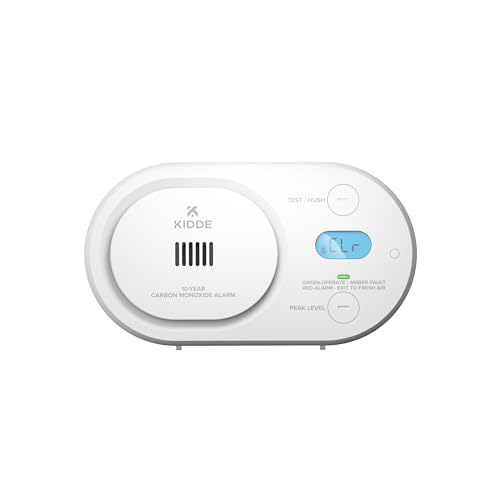
The maker’s data sheet for the COB10 describes a battery-only alarm with a sealed 10-year lithium battery, an electrochemical sensor, an 85 decibel horn and a 10-year limited warranty, tested to UL 2034. It has LED status lights and a test and hush button, with a distinct amber signal and chirp at end of life, and it can be mounted on a wall or placed on a countertop. The COBD10 is described as the same alarm with a backlit display of CO readings. Compare the specification sheet on the box with the C3010 family, since the two lines look similar.
First Alert CO710
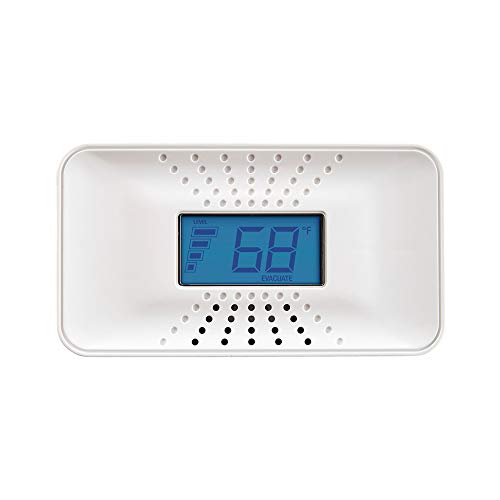
The maker lists the CO710 with a built-in sealed 10-year lithium battery, an electrochemical sensor, an 85 decibel alarm and a backlit display that shows temperature and both current and peak CO readings. It is UL listed and carries a 10-year limited warranty. The maker says it can sit on a shelf or tabletop, which suits rental properties, caravans and hotel-style rooms where drilling is not an option, as long as the manual says that placement is acceptable for your use.
Kidde plug-in models with 10-year backup
Kidde’s KN-COP-DP-10Y line pairs a plug-in design with a sealed lithium backup that covers outages without ever being replaced. The living area version has a digital display; the bedroom version adds a voice alarm that announces carbon monoxide; the hallway version adds a night light and escape light. These are not interconnectable. Plug-in models save you from thinking about the main battery but need a free outlet and are not wired into the house.
Combination smoke and CO units
Kidde also lists 10-year sealed combination smoke and CO alarms, such as the P3010CU, which the maker describes with a voice warning, photoelectric smoke sensing, an electrochemical CO sensor and a 10-year limited warranty. Kidde’s kitchen-oriented P3010K-CO appears on retailer pages, but one seller notes it has been superseded by a newer model, so confirm which kitchen version is current if you want one. If you want a combination alarm, ask which smoke technology it uses and whether it is suited to your location, and follow the manual on placement. Combination alarms mean one fewer device on the ceiling but replace smoke and CO functions together at end of life.
Budget, Mid-Range and Premium Tiers
- Budget tier: basic battery-only units without a display, like the Kidde C3010.
- Mid-range tier: battery-only units with a digital display, such as the C3010D and the First Alert CO710, which show readings and peak levels.
- Premium tier: plug-in units with voice alarms, night lights and sealed backup, or combination units that replace two devices.
Pick X If…
| If you want… | Choose | Why |
|---|---|---|
| The simplest sealed-battery alarm | Kidde C3010 | No frills, 10-year sealed battery |
| To see CO levels | Kidde C3010D or First Alert CO710 | Digital displays; the CO710 also shows peak readings |
| A shelf-friendly unit for a rental or caravan | First Alert CO710 | Maker says it can sit on a shelf or tabletop |
| A voice alarm in a bedroom | Kidde KN-COP-DP-10YB | Voice announcement plus display |
| A hallway unit that doubles as a night light | Kidde KN-COP-DP-10YH | Night light and escape light features |
| Fewer ceiling devices | A combination smoke and CO alarm | Confirm the current model and smoke technology |
Placement, Compatibility and Safety Notes
- Follow the manual. Placement guidance varies by maker and by local rules. Many codes call for alarms outside each sleeping area and on each level, and some require them near fuel-burning appliances, but your local code is the authority.
- Do not place alarms directly beside fuel-burning appliances, in humid bathrooms or in dead-air corners unless the manual allows it. Operating temperature ranges apply; the Kidde C3010D data sheet gives 40 to 100 degrees Fahrenheit, so garages and unheated spaces may be outside range.
- Test regularly using the test button as the manual describes, and clean dust with a soft vacuum attachment if the manual permits.
- Never disable or silence an alarm permanently. Use the hush feature only as the manual describes and ventilate and investigate.
- Do not depend on an alarm in place of servicing furnaces, water heaters, fireplaces and gas appliances. The alarm is a warning, not a preventer.
- Look for listing marks. Makers state UL listing; Kidde cites UL 2034 for CO alarms.
- Hardwired replacements. If you are swapping a wired alarm, switch off the circuit and follow the manual and local code, using a licensed electrician where required.
Alternatives
- Hardwired interconnected alarms with a sealed backup, such as Kidde’s wired combination line listed on its site, so that every alarm sounds together.
- Replaceable-battery CO alarms, which can cost less up front but need periodic battery changes and a separate replacement date for the alarm itself.
- Smart CO alarms that send phone alerts are a separate category, useful if you are often away. Read each maker’s power and battery-life statement before choosing, since many are not sealed ten-year designs.
Frequently Asked Questions
What happens after 10 years?
The alarm signals the end of its life and the whole unit is replaced. The sealed battery cannot be changed, and replacing the unit also renews the sensor, which does wear out.
Where should I put a CO alarm?
Maker manuals and local code typically call for alarms outside sleeping areas and on each level of the home. Follow the manual for your model and ask your local fire authority if you are unsure about requirements.
Is a display necessary?
No. A display is useful because it shows low-level readings that stay below the alarm threshold, but a basic alarm still sounds when levels reach its trigger. Note that makers say these alarms are not designed to sound at very low levels.
Can I silence a false alarm?
Treat every alarm as real until you have confirmed otherwise. Move to fresh air and call emergency services if you have symptoms or cannot find the cause. Use hush features only as the manual describes.
Do these alarms interconnect?
The Kidde 10-year CO models described here are not interconnectable, per the maker. If you want every alarm to sound together, look at a wired or interconnected system and consult a licensed electrician.
Is a combination smoke and CO alarm better?
It is more convenient, but it also means both functions are replaced together and a nuisance trigger on one function may affect the other. Choose based on your layout, and follow placement rules for both smoke and CO.