Key takeaways
- Follow the manual for placement, spacing and distance from kitchens, bathrooms and vents.
- Test each alarm with its test button as the maker advises and never disable or remove an alarm because of nuisance alarms; use the hush function instead.
- Replace the alarm when it reaches its end-of-life date, which for these models is about 10 years from manufacture.
- If a CO alarm sounds, move everyone to fresh air and call emergency services, and do not re-enter until the home has been checked.
- Use only equipment listed to UL standards as the maker states, and read the label for the UL 217 and UL 2034 edition.
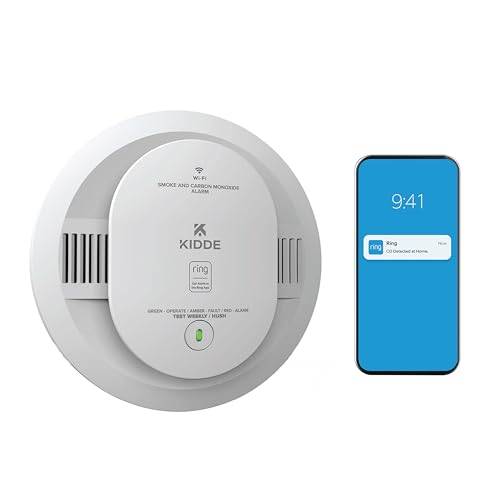
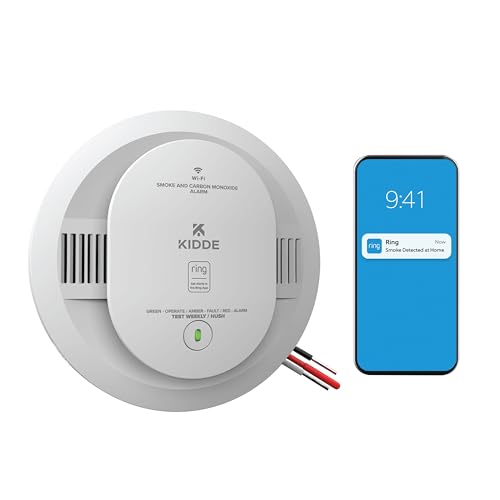
The best smart smoke and carbon monoxide alarm for most homes is a combination unit that sends phone alerts without a subscription and links wirelessly or by wire to the other alarms in the house: the First Alert SC5 suits homes that want a direct Nest Protect replacement with a battery or hardwired version, and the Kidde smoke plus CO alarm with smart features (model P4010ACSCO-WF) suits homes that already have 120 volt alarm wiring and want a sealed 10-year backup battery. A “smart smoke detector with carbon monoxide” here means one device that senses both smoke and CO, connects to home Wi-Fi and notifies your phone, while still sounding its own horn if the internet is down.
Our top picks


As an Amazon Associate we earn from qualifying purchases at no extra cost to you.
What “smart” adds, and what does not change
Smart features are extras on top of a normal alarm. The core job, sensing smoke or CO and sounding a loud local horn, must work without Wi-Fi, a phone or a cloud account. The smart layer adds a notification to your phone when you are away, a message that names the room and the hazard, remote silencing for nuisance alarms, and a way to see whether batteries and sensors are healthy. It does not make the alarm more sensitive, and no alarm can promise to prevent a fire or an injury. Treat an alarm as one part of a plan that also includes an escape route, working alarms in the right rooms and a household that knows what to do when it sounds.
Local building and fire codes decide where alarms must be installed, and the maker’s manual gives the placement rules, such as alarms in each bedroom, outside sleeping areas and on each level for smoke, and CO alarms near sleeping areas. Follow those instructions and your local rules before you decide where each unit goes.
Models worth knowing
First Alert SC5
The maker lists the SC5 in two versions: a battery model (SMCO600NV) and a hardwired model (SMCO600NV-AC). The battery model uses six replaceable CR123A 3 volt lithium batteries. The hardwired model runs on 120 volt household power, with a 3 volt lithium backup that is not replaceable. It has a photoelectric smoke sensor and an electrochemical CO sensor, a horn rated at least 85 decibels at 10 feet with the standard T3 smoke and T4 CO patterns, and voice alerts that name the hazard and location. It sends alerts through the maker’s app, and can wirelessly interconnect with up to 18 compatible units, including SC5 models and Nest Protect battery alarms, with the Google Home app needed for the Nest link. The warranty is stated as 10 years limited. The maker’s own pages state conformance to the 10th edition of UL 217, while some retailer listings still say 9th edition, so read the label on the unit you receive. The battery model has been shown as backordered, so availability varies.
Kidde Smoke + CO Alarm with smart features, P4010ACSCO-WF
Kidde’s data sheet describes a 2-in-1 Wi-Fi alarm with an app, powered by 120 volt AC with a sealed lithium backup battery stated to last the 10-year life of the device. No additional hub is needed. Wi-Fi is 802.11 b/g/n at 2.4 GHz, the smoke sensor is photoelectric, the horn is 85 decibels at 10 feet, and the alarm can interconnect with up to 24 Kidde devices. Notifications come through the Kidde app, and Wi-Fi links each alarm to a phone rather than alarm to alarm, since interconnect between alarms is by wire. The warranty is stated as 10 years limited. Because it is hardwired, it is a replacement for existing wired alarms rather than a stick-it-anywhere battery unit.
Google Nest Protect (2nd generation), for existing owners
Google’s own specification page lists a battery model that uses six AA lithium batteries and a wired model with three AA backup batteries, a Split-Spectrum smoke sensor, an electrochemical CO sensor, 85 decibel horn, 2.4 GHz Wi-Fi and compliance with UL 2034, UL 217 and NFPA 72. Google states that the Nest Protect is no longer sold but remains supported, and it recommends the First Alert SC5 as the replacement. Existing units keep working until their expiry date, about 10 years from manufacture for the 2nd generation, so this entry is for current owners; a new purchase should be a model that is still sold.
At a glance
| Model | Best for | Key stated specs | Limits |
|---|---|---|---|
| First Alert SC5 battery (SMCO600NV) | Homes without alarm wiring | Six CR123A, photoelectric plus electrochemical, 85 dB, interconnects up to 18, voice alerts | Replaceable batteries to manage; availability varies |
| First Alert SC5 hardwired (SMCO600NV-AC) | Replacing wired alarms or a Nest Protect wired | 120 V, non-replaceable 3 V lithium backup, same sensors | Electrical work required |
| Kidde P4010ACSCO-WF | Wired homes, no hub wanted | 120 V AC, sealed 10-year backup, 2.4 GHz Wi-Fi, 24-device interconnect, photoelectric smoke | Hardwired only; 2.4 GHz network needed |
Budget, mid-range and premium
Budget. Non-smart 10-year sealed combination alarms, such as Kidde’s P3010CU, give smoke and CO sensing with voice warnings and no app. They are the economical choice when you do not need phone alerts, and they appear in the listings as photoelectric and electrochemical sensors with an 85 decibel horn. Their lack of Wi-Fi is a trade-off, not a flaw.
Mid-range. Wi-Fi alarms that need no hub, such as the Kidde smart model, sit in the middle. You get phone alerts and interconnection, but you still need to be near a 2.4 GHz network and the app ecosystem is that maker’s own.
Premium. The First Alert SC5 sits at the top, with voice location alerts, wireless interconnect and integration with a larger smart home app. The extra expense also buys a less cluttered install, because wireless interconnect avoids running a dedicated interconnect wire.
Battery, wired or sealed: which power type?
Replaceable batteries
The SC5 battery model uses replaceable lithium cells, which is easy for rentals and for homes with no wiring in the ceiling. You will need to replace them according to the maker’s schedule and respond to low battery chirps.
Hardwired with backup
Hardwired alarms draw power from the house circuit and keep working through a power cut on the backup battery. Replacing a wired alarm should follow the manual and local code, and a licensed electrician should do any new or modified wiring. Do not mix wired and wireless interconnect types unless the maker says that the models are compatible.
Sealed 10-year batteries
A sealed battery cannot be changed, and the whole alarm is replaced when it reaches the end of its life. That avoids battery swaps but means you must note the manufacture date and replace the alarm on time.
Compatibility notes
Wi-Fi alarms commonly use the 2.4 GHz band, so a 5 GHz-only network will not work, and a mesh router with combined names can confuse setup. If you want alarms to sound together, stay within one maker’s interconnect system, as the 18 and 24 device limits listed above are for compatible models only. If you already own a Nest Protect, the SC5 lists a link to Nest Protect battery alarms through the Google Home app. A smart alarm cannot replace a monitored fire alarm system if your insurer or local authority requires one.
Safety notes
- Follow the manual for placement, spacing and distance from kitchens, bathrooms and vents.
- Test each alarm with its test button as the maker advises and never disable or remove an alarm because of nuisance alarms; use the hush function instead.
- Replace the alarm when it reaches its end-of-life date, which for these models is about 10 years from manufacture.
- If a CO alarm sounds, move everyone to fresh air and call emergency services, and do not re-enter until the home has been checked.
- Use only equipment listed to UL standards as the maker states, and read the label for the UL 217 and UL 2034 edition.
Pick X if
| Pick this | If you |
|---|---|
| First Alert SC5 battery | Have no ceiling wiring and want wireless interconnect and voice alerts |
| First Alert SC5 hardwired | Are replacing wired alarms or a wired Nest Protect |
| Kidde P4010ACSCO-WF | Have wired alarm locations and want a 10-year sealed backup battery with no hub |
| Kidde P3010CU | Want sealed 10-year protection without Wi-Fi |
Alternatives
For a home that does not need phone alerts, non-smart sealed-battery combination alarms from Kidde or other makers are the simplest path. If you want smart notifications but not new alarms, a separate smart listening device that hears existing alarms and sends an alert is an option, though it adds another gadget and should be read as a supplement, not a replacement. A combination of smoke-only alarms in the bedrooms and living areas with CO alarms on each level near sleeping areas is another legitimate approach where local rules allow it.
Frequently Asked Questions
Do smart smoke alarms work without Wi-Fi?
Yes. The horn and sensors work on their own, and the interconnect between compatible alarms continues to function. The phone alerts need a working network and the app.
Are there monthly fees?
The models covered here send app notifications without a stated subscription. Read the maker’s page for any optional paid services before you buy.
How long do these alarms last?
The makers list about 10 years, and Google’s page states that the CO sensor limits the life of a Nest Protect to roughly 10 years from manufacture. Check the manufacture date on the unit and replace it at the end-of-life warning.
Which sensor is better, photoelectric or ionization?
Photoelectric sensors are commonly used for slow, smouldering fires and for fewer cooking nuisance alarms. Some Kidde hardwired models use ionization, so read the sensor type on the model you choose, and follow local code for alarm types.
Can I install a hardwired alarm myself?
Wiring should follow the manual and local code, and a licensed electrician is the right person for hardwired work. Turn off the circuit before touching the wiring and do not change the interconnect wiring unless the maker allows it.
Where should CO alarms go?
The maker’s manual and local rules decide this, and the common guidance is on each level and near sleeping areas. Do not place them in direct line with fuel-burning appliance exhaust or in humid spots against the manual.