Key takeaways
- Budget tier: offline keypad locks such as the Powerbolt 250. You trade app features and a higher grade for simplicity.
- Mid-range tier: Wi-Fi or Bluetooth models in the Yale Assure Lock 2 and Ultraloq U-Bolt class, where you get remote status, scheduled guest codes and a higher grade.
- Premium tier: hub-free Wi-Fi models with many users and strong ecosystem integration, such as the Schlage Encode, or fingerprint-equipped variants.
For most homes, a battery-powered push button deadbolt from Kwikset, Yale, Schlage or Ultraloq covers the need: a basic offline keypad lock such as the Kwikset Powerbolt 250 suits buyers who only want codes and a key, while a Wi-Fi or Bluetooth model such as the Yale Assure Lock 2 or the Schlage Encode suits people who want remote locking, guest codes and alerts. A “digital push button door lock” here means a keypad deadbolt where you press numbered buttons to enter a code instead of turning a key, and that is the meaning this guide uses throughout.
Every product below is a retrofit deadbolt that runs on AA batteries, so none needs household wiring. That keeps installation within reach of a careful DIY owner with a screwdriver. If your door has never been drilled for a standard deadbolt, or you are replacing a hardwired access-control product, follow the manual and local code and bring in a licensed locksmith, carpenter or electrician as needed.
Our top picks


As an Amazon Associate we earn from qualifying purchases at no extra cost to you.
At a Glance: Current Push Button Deadbolts
| Model | Best for | Key stated specs | Limits |
|---|---|---|---|
| Kwikset Powerbolt 250 (model 9250) | Simple, offline keypad and key | 25 user codes plus 5 one-time codes, 4 AA batteries, rated 12 months of battery life, ANSI Grade 3, door thickness 1-3/8 to 1-3/4 inches | No app or remote control; Grade 3 is the lowest residential tier |
| Yale Assure Lock 2 (Wi-Fi YRD410-WF1, Bluetooth YRD430-BLE) | Slim keypad with app control | 4 to 8 digit codes, 4 AA batteries with 9V backup contact, ANSI/BHMA Grade 2, IPX5, doors 1-3/8 to 2-1/4 inches | Older pages state 250 codes while newer listings say unlimited; app is limited to US and Canada per listings |
| Schlage Encode (BE489) | Built-in Wi-Fi without a hub | 100 codes, 4 AA batteries, up to six months typical battery life, 2.4 GHz Wi-Fi only; the maker lists ANSI/BHMA Grade 1 (A156.36) | Not compatible with Apple HomeKit per listings; some retailer pages wrongly show Grade 2 |
| Ultraloq U-Bolt series | Higher grade, many users | Up to 60 users, 4 AA batteries, IP65, ANSI A156.36 Grade 1 per the maker, 18-month electronics warranty | Standard swing-door deadbolt only |
What a Push Button Deadbolt Actually Does
A keypad deadbolt replaces the cylinder and thumbturn on a door that already has a standard deadbolt bore. The outside has numbered buttons, the inside has a thumbturn and battery compartment, and a small motor throws the bolt when a valid code is entered. The physical bolt is still the part that resists force, so the strength of the door, the strike plate and the screws matter as much as the keypad. Whatever model you pick, the maker’s manual is the authority on installation, and the lock should be used only on the door types it is intended for.
Most of these locks keep a mechanical key cylinder as a backup, which is useful when batteries run flat. A few also accept a 9V battery held against the contacts on the outside for an emergency wake-up. Keep a spare key somewhere that is not the keypad door itself.
The Picks Explained
Kwikset Powerbolt 250: the straightforward keypad
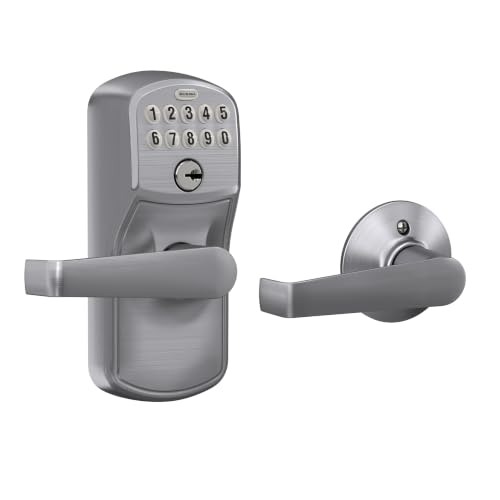
The maker lists the Powerbolt 250 as a single-cylinder deadbolt with a backlit keypad, auto-lock, vacation mode and a turn button inside. Codes are limited to 25 user codes and 5 one-time codes. After three wrong code attempts the keypad disables and sounds an alarm, which the maker calls an intrusion alert. The backset adjusts between 2-3/8 and 2-3/4 inches and the door must be between 1-3/8 and 1-3/4 inches thick, with an optional thick door pack listed for 2-1/4 inch doors. It is ANSI Grade 3, carries a lifetime mechanical and finish warranty and a one-year electronics warranty, and comes in several finishes. Some variants include SmartKey rekeying and others do not, so confirm which style you are buying if rekeying to match existing keys matters to you.
This is the pick for a garden shed door, a rental unit, a second entry or a household that just wants to stop carrying keys. It has no app, so there is nothing to set up and nothing that depends on Wi-Fi.
Yale Assure Lock 2: slim profile and flexible connectivity
The Assure Lock 2 comes as a Wi-Fi version (YRD410-WF1) and a Bluetooth version (YRD430-BLE), and a Z-Wave version also exists. The maker and listings describe 4 to 8 digit passcodes, auto-lock and optional auto-unlock, and alerts for low battery, wrong codes and tampering. Four AA batteries are included and are listed as lasting about a year, with a 9V backup option. It is listed as ANSI/BHMA Grade 2 and IPX5 rated, and fits doors from 1-3/8 to 2-1/4 inches thick, with an adaptor included for small bore holes. A DoorSense sensor that reports whether the door is open or closed is part of the package in listings. One thing to note: older pages state up to 250 codes, while newer retailer listings and Yale’s owner’s manual for a related model say an unlimited number can be managed over a Bluetooth or Wi-Fi connection, so treat the maker’s current specification sheet as the final word if you need many guest codes. The app is listed for use in the US and Canada only.
Schlage Encode: Wi-Fi without a separate hub
The Encode (BE489) connects directly over 2.4 GHz Wi-Fi, works with the Schlage Home app and links to Alexa, Google Home and Alarm.com. Listings state it holds 100 codes, uses four AA batteries with up to six months of typical battery life, and has a capacitive touchscreen with a built-in tamper alarm. The backset adjusts to 2-3/8 or 2-3/4 inches and it fits doors 1-3/8 to 1-3/4 inches thick. It ships with a preset programming code and two preset access codes that you should replace during setup. Schlage’s own specification lists ANSI/BHMA A156.36 Grade 1 for the deadbolt, though a few retailer pages show Grade 2, possibly from handleset bundles that carry a different grade, so rely on the maker’s specification sheet. It installs without wiring in a manner the listings describe as a screwdriver job.
The Encode comes in Camelot, Century and some other trim styles. It suits owners who want a recognisable lock brand and the convenience of Wi-Fi in a single product.
Ultraloq U-Bolt: more users and a higher stated grade
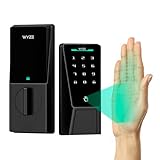
The maker lists the U-Bolt series with support for up to 60 users, four AA batteries, an IP65 weather rating and 128-bit AES encryption, and says it meets ANSI A156.36 Grade 1. The warranty is 18 months on the electronics and lifetime on the mechanical parts. The door prep is a standard 2-1/8 inch face hole and a 1 inch latch hole, with an adjustable backset and a door thickness range of 1-3/8 to 1-3/4 inches. There is also a Pro version that adds fingerprint access.
Budget, Mid-Range and Premium Tiers
- Budget tier: offline keypad locks such as the Powerbolt 250. You trade app features and a higher grade for simplicity.
- Mid-range tier: Wi-Fi or Bluetooth models in the Yale Assure Lock 2 and Ultraloq U-Bolt class, where you get remote status, scheduled guest codes and a higher grade.
- Premium tier: hub-free Wi-Fi models with many users and strong ecosystem integration, such as the Schlage Encode, or fingerprint-equipped variants.
Pick X If…
| If you want… | Choose | Why |
|---|---|---|
| Codes and a key, nothing else | Kwikset Powerbolt 250 | Offline, backlit keypad, 25 codes plus one-time codes |
| A slim lock with phone control and door status | Yale Assure Lock 2 | Wi-Fi or Bluetooth options, DoorSense sensor, 9V backup |
| Wi-Fi with no extra hub | Schlage Encode | Direct 2.4 GHz Wi-Fi and 100 codes |
| Many users and a stated Grade 1 | Ultraloq U-Bolt | Up to 60 users and IP65 per the maker |
| A thick door over 1-3/4 inches | Yale Assure Lock 2, or Kwikset with thick door pack | Yale lists 2-1/4 inches; Kwikset sells an add-on pack |
Fit and Compatibility Notes
- Measure the bore and backset first. Most of these locks want a 2-1/8 inch face hole, a 1 inch edge hole and a backset of 2-3/8 or 2-3/4 inches. Small bore doors may need an adaptor.
- Check door thickness. The usual range is 1-3/8 to 1-3/4 inches. Thicker doors need a model or accessory rated for them.
- Know your handing. The models above are described as reversible for left or right hinged doors.
- Wi-Fi band. The Schlage Encode is 2.4 GHz only; the Yale Wi-Fi version lists both 2.4 and 5 GHz. Confirm your router can support what the lock needs.
- Swing doors only. These are deadbolts for hinged doors. Sliding doors need different hardware.
Safety and Security Notes
- Change every preset or default code during setup and avoid birthdays or repeated digits.
- Replace batteries when the lock warns you rather than waiting for failure. Use the battery type the maker specifies; Schlage recommends alkaline AA cells.
- Do not defeat tamper alarms or auto-lock features, and do not prop a door lock open to avoid code entry.
- No lock guarantees protection against forced entry. A solid door, long strike plate screws and a sound frame are part of the picture.
- If a door is part of a fire escape route in a rental or multi-unit building, local code may restrict what hardware is allowed. Ask the building authority or a licensed professional.
- If the job involves any wiring, such as a hardwired access-control system, follow the manual and local code and use a licensed electrician.
Alternatives to Consider
- Keypad lever handles suit interior doors or doors without a deadbolt prep, though they offer less resistance than a deadbolt.
- Add-on retrofit smart lock units that sit over your existing deadbolt keep your original keyway and hardware.
- A traditional mechanical keyless push button lock needs no batteries at all and suits garages and outbuildings where connectivity is not needed.
Frequently Asked Questions
Do push button door locks need Wi-Fi?
No. Offline models like the Kwikset Powerbolt 250 work with a keypad and a key only. Wi-Fi or Bluetooth models add app control, but the keypad still works if the network is down.
How long do the batteries last?
The makers list around six months for the Schlage Encode under typical use and about a year for the Kwikset Powerbolt 250 and Yale Assure Lock 2. Real life depends on usage and wireless features, so expect variation.
What happens if the batteries die?
These locks warn you first. If the batteries do die, the physical key works on models that keep a cylinder, and some models accept a 9V battery held to the contacts for a temporary wake-up as the maker describes.
Can I install one myself?
Listings describe the models above as screwdriver installs with no wiring, taking roughly half an hour on a door with standard deadbolt holes. If the door needs drilling or the frame is damaged, a locksmith or carpenter is the safer route.
Which grade should I look for?
ANSI/BHMA grades rank durability and security tests, with Grade 1 the highest. Grade 3 is acceptable for light-duty residential use, while Grade 2 or Grade 1 suits main entrances. Because retailers sometimes disagree, read the maker’s own specification sheet.
Are keypad locks safe from code guessing?
The makers describe features such as lockout after repeated wrong entries and tamper alerts, which limit guessing. Choose a code that is not obvious and rotate guest codes when a guest leaves.