Key takeaways
- Unplug the opener and follow the manual before opening the head unit or touching the backup battery.
- Do not defeat the safety reversing sensors, the manual release or any safety feature while you work.
- Do not open a garage door spring or cable assembly. Springs are under high tension, and a garage door professional should handle them.
- Keep coin cells away from children and pets. If one is swallowed, seek emergency medical help immediately.
- Use only batteries the maker states are compatible, and do not mix old and new batteries or battery types.
- Dispose of used lead-acid and lithium batteries through a recycling or hazardous-waste point.
The best garage door opener battery depends on which battery you mean: for the backup battery inside a LiftMaster, Chamberlain or Craftsman opener with battery backup, the maker-branded LiftMaster 485LM (a 12 volt, 5 amp-hour pack) is the safest match, and for remote controls the usual answer is a 3 volt CR2032 coin cell, with a 9 volt battery in many keypads. “Garage door opener battery” is used for three different parts, so this guide names the meaning near the top and then covers each: the backup battery in the opener head, the battery in the handheld remote, and the battery in the wireless keypad. Match the part to your exact opener model and the manual before you buy anything.
Our top picks

As an Amazon Associate we earn from qualifying purchases at no extra cost to you.
Three batteries, three different jobs
The opener head unit, which hangs from the ceiling, plugs into mains power. Many newer openers add a battery backup so the door can still open and close during a power cut, and that is the battery most people mean when they search for “garage door opener battery”. The handheld remote and the exterior keypad are separate devices that run on their own small batteries. A problem with one does not mean the others are failing, so first identify what is actually weak.
A beeping opener is a common sign of a weak backup battery on models that have one. The maker’s manual explains the beep pattern for your model, and the replacement steps. A remote with a weak battery usually shows a shorter range, an intermittent response or a dim indicator light. A keypad with a weak battery has a dim backlight or stops responding to codes.
Backup batteries for the opener
LiftMaster 485LM
Dealer and parts listings describe the 485LM as the standard 12 volt, 5 amp-hour backup battery for LiftMaster, Chamberlain and Craftsman DC openers with integrated battery backup, with part numbers listed as equivalent to 485LMC, Chamberlain 4228 and service part 41A6357-1. It is described as a plug-in replacement with no wiring, trickle charged by the opener, and about four hours is listed for a full recharge. Listings name openers such as the 8550, 8500, WLED, 3850 and 8360 as compatible, but advise confirming against your opener manual. Sellers differ slightly on the amp-hour rating, with one guide giving 4.5 Ah, so go by your manual. Chamberlain’s own page for the earlier 4228 lists it as replaced by the 485LM. A listing also notes that the 41B591 batteries are for older backup units and that the 41A5726 is a backup board, so the 485LM is only the battery, not the control board.
Aftermarket sealed lead-acid and LiFePO4 packs
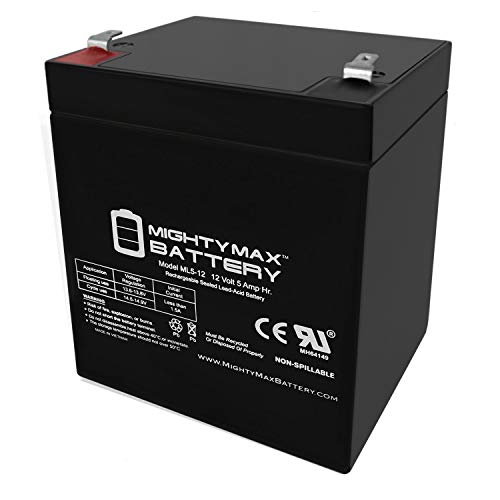
Third-party makers sell 12 volt 5 amp-hour sealed lead-acid batteries under various brand names, and some sell lithium iron phosphate (LiFePO4) versions in the same size. These can fit, but the stated specs are the same 12 volt and 5 amp-hour, and one lithium listing notes an F1 terminal. Confirm the terminal type, the physical size and the connector against the original battery. Lithium packs have different charging needs from lead-acid, so use one only if the seller says it is designed for your opener’s charger, and read the opener manual, because a mismatch with the charging circuit is a risk you should not take for a saving.
Remote and keypad batteries
Handheld remotes
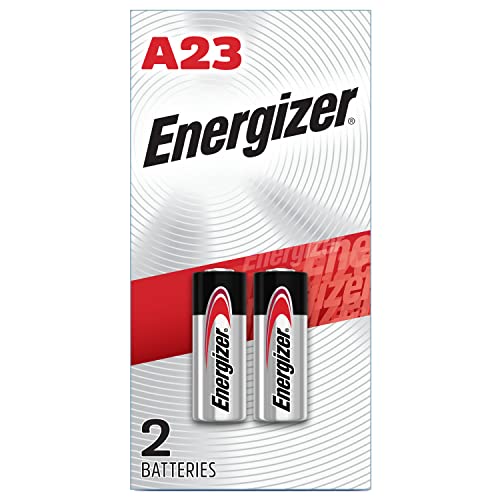
For Chamberlain, LiftMaster and Craftsman remotes made since about 2011, the common battery is a 3 volt CR2032 lithium coin cell, and older Chamberlain remotes may need a CR2025. Most Genie remotes also use a CR2032, with exceptions: some slim models use a CR2025 or CR2016, some older three-button Intellicode remotes use a 12 volt A23 alkaline, and some remotes take two AAA batteries. Sources give conflicting rules of thumb for telling the type from the label, so open the battery compartment and read the stamped size inside before you buy.
Wireless keypads
Most Chamberlain and LiftMaster wireless keypads, including the 940EV, use one 9 volt alkaline battery behind the sliding cover. Genie keypads vary between 9 volt, AA and AAA depending on the model, and sources differ, so check the compartment. CR2032 is rarely the keypad battery.
At a glance
| Part | Typical battery | Best for | Limits |
|---|---|---|---|
| Opener backup (LiftMaster, Chamberlain, Craftsman DC with battery backup) | LiftMaster 485LM, 12 V 5 Ah | Keeping the door working in a power cut | Confirm opener model; battery only, not the board |
| Opener backup, aftermarket | 12 V 5 Ah sealed lead-acid or LiFePO4 | Buyers comfortable matching terminals and size | Terminal and charger compatibility must be confirmed |
| Chamberlain, LiftMaster, Craftsman remote | CR2032 (older: CR2025) | Everyday handheld remotes | Read the stamped size inside |
| Genie remote | CR2032 mostly; CR2025, CR2016, A23 or AAA on some | Genie remotes | Types vary by model |
| Chamberlain, LiftMaster keypad | 9 V alkaline | Exterior keypad | Genie keypads differ |
Budget, mid-range and premium
Budget. Aftermarket sealed lead-acid 12 volt 5 amp-hour packs and bulk coin cells. They work when the specs match, and the saving is real, but they put the matching burden on you.
Mid-range. Name-brand coin cells and alkaline 9 volt batteries for remotes and keypads, plus well-known aftermarket backup packs from established battery makers that list your opener model as compatible.
Premium. The maker-branded 485LM, and lithium iron phosphate packs where the seller states compatibility. You pay for the certainty of fit and, with lithium, a longer stated life, though the charger compatibility question applies.
How to choose and fit
Identify the model first
Find the model number on the opener head unit label or in the manual, and note whether the opener has a battery backup compartment. Without a backup compartment, you cannot add a battery by buying one: the backup system is part of the opener’s design, and adding it may mean a different opener or a maker-approved kit.
Match the specs
Match voltage, amp-hour rating, physical size, terminal type and connector. A 12 volt 5 amp-hour pack of the right shape is the listed standard for the 485LM. Do not substitute a larger or smaller voltage, and do not force a battery into a compartment.
Plan for age
Backup batteries wear out, and the maker’s manual gives a recommended replacement interval, and parts sellers commonly suggest somewhere between one and three years, though none of them is the maker. A battery that cannot hold a charge will beep or fail to open the door in a power cut. Replace it as the manual says, and dispose of old batteries at a recycling point, not in household trash.
Safety notes
- Unplug the opener and follow the manual before opening the head unit or touching the backup battery.
- Do not defeat the safety reversing sensors, the manual release or any safety feature while you work.
- Do not open a garage door spring or cable assembly. Springs are under high tension, and a garage door professional should handle them.
- Keep coin cells away from children and pets. If one is swallowed, seek emergency medical help immediately.
- Use only batteries the maker states are compatible, and do not mix old and new batteries or battery types.
- Dispose of used lead-acid and lithium batteries through a recycling or hazardous-waste point.
Pick X if
| Pick this | If you |
|---|---|
| LiftMaster 485LM | Own a LiftMaster, Chamberlain or Craftsman DC opener with integrated backup and want the closest match |
| Aftermarket 12 V 5 Ah lead-acid | Can confirm the size and terminal and want a lower-cost replacement |
| LiFePO4 12 V 5 Ah pack | The seller states it is for your opener, and the manual allows it |
| CR2032 coin cell | Have a modern LiftMaster, Chamberlain, Craftsman or Genie remote |
| 9 V alkaline | Have a Chamberlain or LiftMaster keypad like the 940EV |
Alternatives
If your opener has no battery backup, you can use the manual release handle to open the door during a power cut, once the door is in a safe position. A portable power station or a small generator can run an opener temporarily, though both should be used per their manuals, outdoors for generators, and never with a damaged cord. Some owners replace an old opener with a battery-backup model when the unit is near the end of its life, and a garage door technician can advise on the best fit for your door.
Frequently Asked Questions
Why does my garage door opener beep?
On openers with battery backup, regular beeping usually means the backup battery is weak and needs replacing, though the pattern differs by model. Read the manual for the specific beep code.
What size battery does a LiftMaster backup use?
The common backup battery, the 485LM, is listed as 12 volt and 5 amp-hour. Confirm that your opener is on the compatibility list.
What battery goes in a garage door remote?
Most modern Chamberlain, LiftMaster, Craftsman and Genie remotes use a 3 volt CR2032 coin cell. Some use CR2025, CR2016, A23 or AAA, so read the stamped type in the compartment.
Can I use a lithium battery for the opener backup?
Some sellers list lithium iron phosphate packs in the same 12 volt 5 amp-hour size. Read the opener manual and the seller’s compatibility statement, since lithium has different charging needs from lead-acid.
How long does a backup battery last?
The maker’s manual states the replacement interval, parts sellers commonly cite one to three years, and the life depends on use and temperature. Replace it when the opener beeps or when the door will not run in a power cut.
Can I replace the battery myself?
Plug-in backup batteries are designed for simple swaps without wiring. Unplug the opener first, follow the manual, and call a garage door technician if the door, springs or cables need work.