Our Short List of 3

- Best for: Beginners who want one kit for car panels and small touch up work.
- 1.3mm fluid tip with a 600cc aluminum cup for base coats and clear coats
- 1.0mm fluid tip with a 250cc plastic cup for spot repairs
- Gravity feed design
- Power source listed as external air compressor

- Best for: General purpose spraying in a home workshop with a 1-3 HP compressor.
- Nozzle size: 1.5mm
- Cup capacity: 20 oz
- Required air supply: 1-3 HP compressor
- Required air pressure: 50-70 PSI

- Best for: Car painters who want a large cup and a standard 1.4mm tip for base coats and clear coats.
- 600CC capacity
- 1.4mm nozzle
- Gravity feed design
- Model name listed as H827
All 4 Picks at a Glance
| Product | Specs | Action |
|---|---|---|
| DeVilbiss StartingLine HVLP Gravity Spray Gun Kit |
| Check price on Amazon |
| Central Pneumatic 47016 HVLP Gravity Feed Spray Gun |
| Check price on Amazon |
| PNTGREEN HVLP Spray Gun Gravity Feed |
| Check price on Amazon |
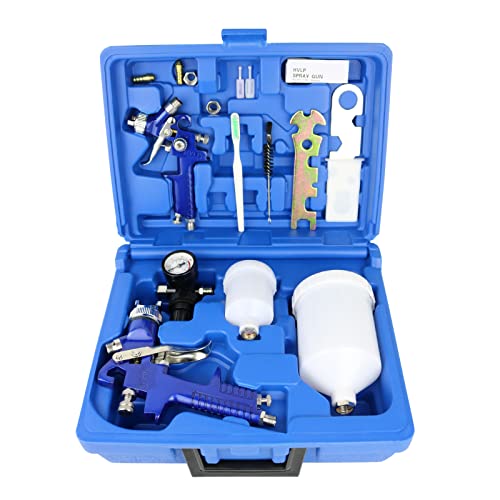 Hotorda HVLP Air Gravity Spray Gun Set |
| Check price on Amazon |
Key takeaways
- Compare four compressed air HVLP conversion sprayers for cars, furniture and cabinets, with nozzle sizes, cup capacity and compressor needs explained.
A compressed air HVLP conversion sprayer turns a shop compressor into a finishing tool, and the choice matters because the wrong gun can waste paint, leave orange peel, or stall on a large panel. Buyers usually arrive with a compressor already in the garage and a project in mind, whether that is a car panel, a set of kitchen cabinets, or a wooden chair that needs a smooth coat. The gun must match the compressor output, the coating thickness, and the size of the surface, or the finish will show every compromise.
This guide is for home painters, car restorers, furniture makers, and workshop owners who already own a compressor and want a gravity feed HVLP gun that runs from it. Each sprayer below was chosen from its Amazon product title and listed specifications, with nozzle size, cup capacity, and air requirements taken from the product page. The comparison focuses on practical differences, so a reader can match a gun to a compressor and a project without guessing.
Quick Picks
As an Amazon Associate we earn from qualifying purchases
| Product | Best for | Key spec from title |
|---|---|---|
| DeVilbiss StartingLine HVLP Gravity Spray Gun Kit | Beginners painting cars and panels | HVLP gravity spray gun kit with 1.3mm and 1.0mm tips |
| Central Pneumatic 47016 HVLP Gravity Feed Spray Gun | General purpose spraying on a small compressor | 20 oz gravity feed spray gun with 1.5mm nozzle |
| PNTGREEN HVLP Spray Gun Gravity Feed | Car painting with a large cup | 600CC capacity with 1.4mm nozzle |
| Hotorda HVLP Air Gravity Spray Gun Set | Detail work plus larger panels in one set | Two spray guns with 0.8mm and 1.4mm tips |
How to Choose
Match the Gun to Your Compressor
A conversion HVLP gun draws air from an external compressor, so the compressor sets the limit on what the gun can do. Check the gun listing for air consumption in cubic feet per minute and the working air pressure range, then compare those figures with the compressor output at the same pressure. A small compressor with a modest tank will run a low consumption gun for short bursts, while a gun that needs a steady high flow will cause pressure to fall and the spray pattern to weaken. Look at horsepower, tank size, and the rated output, and remember that a gun used for a whole car door needs a steadier supply than one used for a single chair leg.
Choose the Nozzle Size for the Coating
Nozzle size controls how much material leaves the gun and how thick the coating can be. A 1.0mm tip suits thin material and small touch up work, where control matters more than coverage. A 1.3mm or 1.4mm tip covers base coats and clear coats on cars and furniture, giving a balance between flow and finish. A 1.5mm tip handles thicker material and general purpose work, while a larger tip is better for primer. Buying a set with two tips gives more flexibility, but a single well chosen tip is enough when the coating type stays the same across projects.
Decide Between a Single Gun and a Set
A single gravity feed gun keeps the setup simple, with one cup, one tip, and one set of controls to learn. That suits a buyer who paints one kind of surface with one kind of coating and wants a quick clean up after each session. A set with two guns, or a kit with extra tips and cups, suits a buyer who moves between primer, base coat, and detail work. Extra parts add cleaning time and storage needs, so the benefit only appears when the second gun genuinely covers a different job. Think about the next three projects, not just the first one, before choosing.
Check Cup Capacity, Controls, and Cleaning
Cup capacity decides how often the painter must stop to refill during a job. A 600cc cup covers a car panel or several cabinet doors before a refill, while a smaller cup is lighter and easier to hold for detail work. Adjustable controls for fan pattern, fluid flow, and air volume let the painter shape the spray to the surface, and a regulator with a gauge helps hold pressure steady. Cleaning matters just as much, because dried paint in the nozzle or fluid passage ruins the next finish. Choose a gun with parts that come apart easily and a cleaning kit in the box when possible.
The 4 Best Options
DeVilbiss StartingLine HVLP Gravity Spray Gun Kit
- Best for: Beginners who want one kit for car panels and small touch up work.
- 1.3mm fluid tip with a 600cc aluminum cup for base coats and clear coats
- 1.0mm fluid tip with a 250cc plastic cup for spot repairs
- Gravity feed design
- Power source listed as external air compressor
Beginners who want one kit for car panels and small touch up work.
Check the air consumption against your compressor before buying, because a small tank will need frequent pauses to recover.
The DeVilbiss StartingLine kit gives a new painter two guns in one box, which makes it a forgiving way to learn HVLP spraying without buying separate tools for base coats and spot repairs. The larger gun handles panels and broad surfaces, while the smaller gun reaches tight areas and small parts where a full size cup would get in the way. Its controls cover fan pattern and fluid flow, so a beginner can practise on scrap material, adjust the pattern, and build confidence before moving to a visible surface.
Watch out for: Check the air consumption against your compressor before buying, because a small tank will need frequent pauses to recover.
Central Pneumatic 47016 HVLP Gravity Feed Spray Gun
- Best for: General purpose spraying in a home workshop with a 1-3 HP compressor.
- Nozzle size: 1.5mm
- Cup capacity: 20 oz
- Required air supply: 1-3 HP compressor
- Required air pressure: 50-70 PSI
General purpose spraying in a home workshop with a 1-3 HP compressor.
The 1.5mm nozzle is broad for fine clear coat work, so test the finish on scrap before spraying a visible panel.
The Central Pneumatic 47016 is a straightforward general purpose gun that suits a workshop where the compressor is modest and the jobs vary from furniture to metal parts. Its 1.5mm nozzle moves more material than a fine finish tip, so it covers primer and thicker coatings without constant clogging, and the adjustable fan pattern helps the painter switch between wide passes and narrower work. The 20 oz cup holds enough material for a chair, a small cabinet, or a fender without becoming heavy in the hand.
Watch out for: The 1.5mm nozzle is broad for fine clear coat work, so test the finish on scrap before spraying a visible panel.
PNTGREEN HVLP Spray Gun Gravity Feed
- Best for: Car painters who want a large cup and a standard 1.4mm tip for base coats and clear coats.
- 600CC capacity
- 1.4mm nozzle
- Gravity feed design
- Model name listed as H827
Car painters who want a large cup and a standard 1.4mm tip for base coats and clear coats.
Confirm the air inlet fitting and hose connection match your compressor setup, because adapters are easy to overlook until the first job.
The PNTGREEN gravity feed gun focuses on one job and does it with a generous cup, which suits car painters who want fewer refills during a panel or a full side. Its 1.4mm nozzle sits in the middle of the range for base coats and clear coats, giving a smooth flow without the heavy output of a primer tip. The gravity feed layout keeps paint moving toward the nozzle, and the aluminium style cup in the listing is sized for longer sessions where stopping to refill would break the rhythm of the work.
Watch out for: Confirm the air inlet fitting and hose connection match your compressor setup, because adapters are easy to overlook until the first job.
Hotorda HVLP Air Gravity Spray Gun Set
- Best for: Painters who need both a detail gun and a panel gun in one set.
- 0.8mm fluid tip with 125ml cup and 1.4mm fluid tip with 600ml cup
- Locking air pressure regulator with gauge included
- 3 control knobs for spray pattern, fluid flow, and air volume
- Maximum pressure listed as 70 PSI
Painters who need both a detail gun and a panel gun in one set.
Two guns mean twice the cleaning after a session, so allow time to flush both guns before the paint dries inside them.
The Hotorda set pairs two guns in one case, so a painter can keep a fine tip ready for detail work and a larger tip ready for panels without swapping nozzles mid job. The smaller gun uses a 0.8mm tip and a 125ml cup for model work, small parts, and tight corners, while the larger gun uses a 1.4mm tip and a 600ml cup for furniture, cars, and broader surfaces. A locking air pressure regulator with a gauge is included, which helps hold pressure steady when the compressor cycles during a longer spray session.
Watch out for: Two guns mean twice the cleaning after a session, so allow time to flush both guns before the paint dries inside them.
Which One Fits Your Situation
You Are Learning to Spray Car Panels
Choose the DeVilbiss StartingLine kit, because the two guns cover broad panels and small repairs without a second purchase. Practise the 1.3mm gun on a scrap panel first, set the fan pattern wide for doors and narrow for edges, and use the smaller gun for chips and tight spots. The kit structure keeps the learning curve short, since each gun has a clear job and the controls stay simple.
Your Compressor Is Small and Your Jobs Vary
Choose the Central Pneumatic 47016, because its listed requirement is a 1-3 HP compressor and its 1.5mm nozzle handles a wide range of coatings. It suits furniture, metal parts, and primer work where a fine finish tip would clog or move too slowly. Keep sessions short, let the tank recover between passes, and test the pattern on scrap before each new material.
You Paint Cars and Want Fewer Refills
Choose the PNTGREEN gun, because the 600CC cup and 1.4mm nozzle suit base coats and clear coats across a panel without stopping to refill. It is a single gun setup, so cleaning stays quick and the painter can focus on steady passes and overlap. Check the hose fitting first, then set the air pressure within the gun range and keep the distance from the surface consistent.
You Switch Between Detail Work and Large Surfaces
Choose the Hotorda two gun set, because the 0.8mm gun handles small parts and the 1.4mm gun handles panels in the same session. The included regulator helps hold pressure steady, and the carrying box keeps both guns and cleaning tools together. Plan the order of work so the detail gun is used first, then move to the larger gun for broad coats.
Common Mistakes
- Buying a gun that needs more air than the compressor can supply, then blaming the finish when pressure drops mid panel.
- Using a primer tip for a clear coat, or a fine tip for thick primer, and expecting a smooth result from the wrong nozzle.
- Skipping a test spray on scrap material, so the first pass on the real surface reveals a pattern or flow problem.
- Leaving paint in the gun after a session, which dries in the nozzle and fluid passage and spoils the next job.
- Holding the gun too close or too far from the surface, creating runs on one pass and dry spray on the next.
Frequently Asked Questions
What is a compressed air HVLP conversion sprayer?
A compressed air HVLP conversion sprayer is a gravity feed gun that runs from an external air compressor and uses high volume, low pressure air to atomise paint. The compressor supplies the air, the gun controls pattern and flow, and low pressure at the air cap reduces overspray. It differs from a turbine system, which has its own built in air supply.
How much compressor do I need for an HVLP gun?
The right compressor depends on the gun air consumption and working pressure listed on its product page. Compare the gun CFM figure with the compressor output at the same pressure, and allow for the tank to recover during longer sessions. A gun that needs 6 CFM will stall on a compressor that delivers far less, while a low consumption gun can work on a modest home compressor for short jobs.
Which nozzle size should I choose for car paint?
A 1.3mm or 1.4mm nozzle suits most car base coats and clear coats, because it balances flow and finish on panels. A 1.0mm tip suits thin material and small touch ups, while a 1.5mm tip suits thicker coatings and primer. If the work covers primer, base coat, and clear coat, a set with two tips or two guns gives more flexibility than a single fixed tip.
How do I clean an HVLP spray gun after use?
Empty the cup, flush the gun with a compatible cleaner, and remove the nozzle and needle for a thorough clean when the coating has dried in the passages. Use the cleaning brush from the kit, dry the parts before reassembly, and store the gun with the cup off so air can circulate. Cleaning straight after a session takes far less time than clearing dried paint later.