Our Short List of 3

- Best for: A mid-size patio or deck that needs strong afternoon shade.
- Material: high-density polyethylene, 185 GSM
- UV block: up to 95%
- Size: 16′ x 16′ x 16′ triangle
- Fittings: stainless steel D-rings, 3 ropes included

- Best for: Covering a large pool surround, yard or carport in one span.
- Material: 190 GSM 100% virgin HDPE with UV stabiliser
- UV block: 95%
- Size: 22′ x 22′ x 22′ triangle
- Fittings: stainless steel D-rings, reinforced double-stitched seams

- Best for: A small seating nook or balcony that must stay dry in light rain.
- Material: polyester with hot-glue waterproof treatment
- Size: 6.5′ x 10′ triangle
- Colour: taupe
- Fittings: stainless steel D-rings
All 5 Picks at a Glance
| Product | Specs | Action |
|---|---|---|
| SUNNY GUARD 16′ x 16′ x 16′ Triangle Sun Shade Sail |
| Check price on Amazon |
| ColourTree 22′ x 22′ x 22′ Sand Beige Triangle Sun Shade Sail |
| Check price on Amazon |
| SUNNY GUARD Waterproof 6.5′ x 10′ Taupe Triangle Sun Shade Sail |
| Check price on Amazon |
 SHADESPEARE 12′ x 12′ x 12′ Brown Triangle Sun Shade Sail |
| Check price on Amazon |
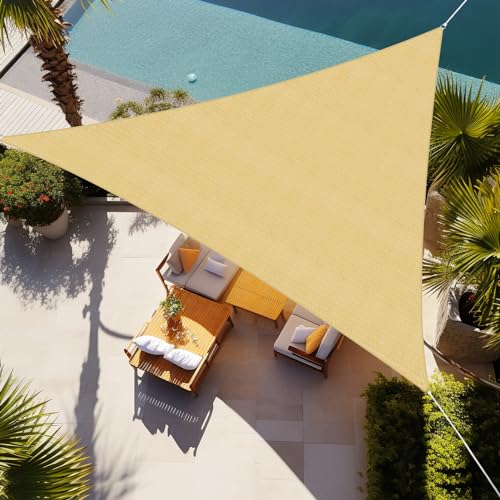 Shade&Beyond 20′ x 20′ x 20′ Light Grey Triangle Sun Shade Sail |
| Check price on Amazon |
Key takeaways
- Compare the best shade sails for Bundaberg patios, pools and carports, with UV block, fabric density, size and fixings explained before you buy.
Bundaberg summers arrive early and stay late, and a patio without shade can sit unused from mid-morning until the sun finally drops. A shade sail changes that in an afternoon, stretching a triangle or rectangle of fabric over the deck, pool or carport so the space underneath stays usable through the hottest part of the day. The choice that matters most is not colour but fabric: how dense the weave is, how much ultraviolet light it blocks, and whether it lets rain through or sheds it.
This guide is for Bundaberg homeowners shading a patio, pool surround, driveway or school-sized yard, and for renters who want shade they can take down again. Every sail below was picked from its Amazon product page using the size, fabric weight, UV block figure and fittings listed there, so you can compare like with like before measuring your own fixing points.
Quick Picks
As an Amazon Associate we earn from qualifying purchases.
| Product | Best for | Key spec from title |
|---|---|---|
| SUNNY GUARD 16′ x 16′ x 16′ Triangle | A mid-size patio that needs strong afternoon shade | 16′ x 16′ x 16′ triangle, 95% UV block |
| ColourTree 22′ x 22′ x 22′ Triangle | Covering a large pool surround or yard | 22′ x 22′ x 22′ triangle, 190 GSM virgin HDPE |
| SUNNY GUARD Waterproof 6.5′ x 10′ Triangle | A small seating nook that must stay dry | 6.5′ x 10′ triangle, waterproof polyester |
| SHADESPEARE 12′ x 12′ x 12′ Triangle | A family deck needing a balance of size and cover | 12′ x 12′ x 12′ triangle, waterproof fabric |
| Shade&Beyond 20′ x 20′ x 20′ Triangle | Shading a wide carport or open entertaining area | 20′ x 20′ x 20′ triangle, 95% shading rate |
How to Choose
Fabric density and UV block
Fabric density, given in grams per square metre, is the quickest way to judge how a sail will cope with Queensland sun. A 185 to 190 GSM high-density polyethylene weave is the standard for residential sails, and most of the sails in this guide block around 95% of ultraviolet light while still letting air pass through. Denser fabric also resists stretching and fraying over a long hot season. Before settling on a sail, read the UV block figure on the product page rather than trusting the colour: a dark sail can still be loosely woven, and a pale sail made from virgin HDPE with UV stabiliser can outlast it.
Size, shape and fall
Measure the area you want shaded, then look for a sail slightly larger than that footprint, because a sail only shades the ground directly beneath it once the sun moves. Triangles suit three fixing points such as a house wall and two posts, while rectangles cover patios and carports more evenly. Leave roughly half a foot to a foot of clearance between each corner and its fixing point so you have room for turnbuckles and tensioning hardware. A sail pulled drum-tight looks neat on day one and sags within weeks, so plan the fall from the start.
Water behaviour in storms
Bundaberg afternoons can turn from clear sky to a heavy downpour in minutes, so decide in advance whether your sail should shed water or let it through. Breathable HDPE sails allow rain to pass, which stops water pooling in the middle but means the furniture underneath still gets wet. Waterproof polyester sails keep a seating area dry, yet they demand a steeper slope, usually installed at a 20 to 40 degree angle, so rain runs off instead of collecting. Whichever type you choose, take the sail down before severe weather rather than trusting any fabric to survive a storm.
Fixings, tension and wind
A sail is only as strong as its anchor points, and this is where most installations fail. Each corner needs a sound fixing: a wall bracket bolted into structure, a hardwood post set in concrete, or a purpose-made shade sail post. Stainless steel D-rings at the corners resist rust in coastal air, and quality turnbuckles let you re-tension the sail as the fabric settles. Check whether ropes and hardware are included, since several sails in this guide ship with ropes only and need a separate hardware kit. In a coastal city with gusty summer storms, never attach a large sail to a fence or a flimsy pergola.
The 5 Best Options
SUNNY GUARD 16′ x 16′ x 16′ Triangle Sun Shade Sail
- Best for: A mid-size patio or deck that needs strong afternoon shade.
- Material: high-density polyethylene, 185 GSM
- UV block: up to 95%
- Size: 16′ x 16′ x 16′ triangle
- Fittings: stainless steel D-rings, 3 ropes included
A mid-size patio or deck that needs strong afternoon shade.
The fabric is breathable rather than waterproof, so rain passes through, and mounting hardware is sold separately.
A 16-foot triangle is a practical starting point for a Bundaberg patio, big enough to shade a table and chairs without demanding the heavy posts a larger sail needs. The 185 GSM high-density polyethylene fabric blocks up to 95% of ultraviolet rays while staying breathable, so hot air escapes instead of building up underneath. Three ropes are included for the corners, and the maker notes that each sail is cut by hand and offers custom sizing. Installed with a clear slope, it suits a deck, pool edge or barbecue area that catches the western sun.
Watch out for: The fabric is breathable rather than waterproof, so rain passes through, and mounting hardware is sold separately.
ColourTree 22′ x 22′ x 22′ Sand Beige Triangle Sun Shade Sail
- Best for: Covering a large pool surround, yard or carport in one span.
- Material: 190 GSM 100% virgin HDPE with UV stabiliser
- UV block: 95%
- Size: 22′ x 22′ x 22′ triangle
- Fittings: stainless steel D-rings, reinforced double-stitched seams
Covering a large pool surround, yard or carport in one span.
Installation hardware kits are sold separately, and the listing warns against nylon ropes, which break easily under tension.
When the area to shade is a pool surround or a wide stretch of lawn, a 22-foot triangle covers ground that smaller sails cannot reach. ColourTree uses 190 GSM virgin HDPE rather than recycled material, and the listing states the fabric passed 20,000 hours of laboratory UV testing. Double-layered reinforced seams run along every edge, and each corner ends in a stainless steel D-ring with extra stitching. A three-year limited warranty backs the sail under normal use, which is reassuring for a fabric product facing subtropical sun year-round.
Watch out for: Installation hardware kits are sold separately, and the listing warns against nylon ropes, which break easily under tension.
SUNNY GUARD Waterproof 6.5′ x 10′ Taupe Triangle Sun Shade Sail
- Best for: A small seating nook or balcony that must stay dry in light rain.
- Material: polyester with hot-glue waterproof treatment
- Size: 6.5′ x 10′ triangle
- Colour: taupe
- Fittings: stainless steel D-rings
A small seating nook or balcony that must stay dry in light rain.
Install it at a 20 to 40 degree angle with correct tension, or water can still collect on the surface.
Not every shaded corner needs to be large, and this compact waterproof triangle suits a reading chair, a small balcony or the sunny end of a deck. The polyester fabric has a hot-glue treatment that gives it a waterproof finish, so a short shower does not send everyone indoors. At 6.5 by 10 feet it needs only three modest fixing points, which makes it a good first sail for renters or for anyone testing a layout before committing to posts and concrete. The taupe colour sits quietly against most house paint.
Watch out for: Install it at a 20 to 40 degree angle with correct tension, or water can still collect on the surface.
SHADESPEARE 12′ x 12′ x 12′ Brown Triangle Sun Shade Sail
- Best for: A family deck that needs a balance of size, shade and rain cover.
- Material: polyurethane
- Size: 12′ x 12′ x 12′ triangle
- Colour: brown
- UV protection: up to 90%
A family deck that needs a balance of size, shade and rain cover.
Accessories and mounting hardware need to be purchased separately, and the sail should come down in high winds.
A 12-foot triangle hits the middle ground for a family deck: large enough for a dining setting, small enough to hang from a house wall and two posts without engineering. SHADESPEARE builds this sail from polyurethane fabric with a waterproof rating and states UV protection of up to 90%, a little below the HDPE sails above but paired with genuine rain protection. The maker offers custom orders in other sizes and colours, so the same design can be repeated over a second area. Brown reads as a warm, natural tone against timber decking and garden beds.
Watch out for: Accessories and mounting hardware need to be purchased separately, and the sail should come down in high winds.
Shade&Beyond 20′ x 20′ x 20′ Light Grey Triangle Sun Shade Sail
- Best for: Shading a wide carport, entertaining area or open yard.
- Material: 185 GSM HDPE
- Shading rate: 95%
- Size: 20′ x 20′ x 20′ triangle
- Colour: light grey
Shading a wide carport, entertaining area or open yard.
The fabric is permeable rather than waterproof, so it shades without keeping rain out, and severe weather calls for taking it down.
For a wide carport, an open entertaining slab or a school-sized yard, this 20-foot triangle from Shade&Beyond covers serious ground in a single piece of fabric. The 185 GSM HDPE cloth carries a 95% shading rate, and thick polypropylene ropes are included in the box, which saves a separate purchase. The light grey colour reflects heat rather than absorbing it, keeping the air underneath noticeably cooler on still afternoons. Its model number and permeable design mark it as a shade-first sail, so pair it with a slope that lets storm rain drain away.
Watch out for: The fabric is permeable rather than waterproof, so it shades without keeping rain out, and severe weather calls for taking it down.
Which One Fits Your Situation
A small patio that bakes in the afternoon
Pick the SUNNY GUARD 16-foot triangle if your patio holds a table and four chairs and the western sun is the problem. Its 95% UV block and breathable weave cool the space without trapping heat, and three fixing points are usually enough. Measure first, leave room for tensioning hardware, and set one corner lower so the occasional storm shower runs off instead of sitting on the fabric.
A pool area that needs big coverage
Choose the ColourTree 22-foot triangle or the Shade&Beyond 20-foot triangle when the shade has to stretch over a pool surround or a wide lawn. Both use dense HDPE with a 95% block figure, and the larger span means fewer sails to buy and tension. Budget for proper posts set in concrete, because a sail this size pulls hard on its anchors in a gusty southerly change.
A carport or driveway that must stay dry
Go waterproof here: the SUNNY GUARD 6.5 by 10 foot triangle for a motorbike or a single bay, or the SHADESPEARE 12-foot triangle for a full car space. Hang either one with a clear 20 to 40 degree slope so rain runs off the low edge, and check the fixing points can carry the extra load of a water-shedding sail. Remember that no fabric sail replaces a solid roof in a severe storm.
A rental or a first sail on a tight footprint
Start with the SUNNY GUARD waterproof 6.5 by 10 foot triangle, which needs only three modest anchors and can come down at the end of the season. Its small size keeps the tension manageable on temporary fixings, and the waterproof fabric means a quick shower does not ruin an evening outside. If the layout works, add a second sail later rather than guessing at a large permanent installation on day one.
Common Mistakes
- Buying by colour instead of reading the fabric weight and UV block figure on the product page.
- Measuring the sail to the exact size of the shaded area, leaving no clearance for turnbuckles and tensioning.
- Hanging a breathable HDPE sail flat and expecting it to keep furniture dry in rain.
- Anchoring a large sail to a fence, a light pergola or a gutter instead of a post set in concrete or a structural wall bracket.
- Leaving the sail up through severe weather and high winds instead of taking it down before a storm.
Frequently Asked Questions
What size shade sail do I need for a Bundaberg patio?
Measure the seating or pool area you want shaded, then choose a sail slightly larger, because shade falls straight down only at midday and shifts as the sun moves. Leave roughly half a foot to a foot between each sail corner and its fixing point for turnbuckles. A 12 to 16 foot triangle suits most patios, while pool surrounds and carports need a 20 foot span or two overlapping sails.
Do shade sails block rain as well as sun?
It depends on the fabric. Breathable HDPE sails let rain pass through so water cannot pool, which means the area underneath still gets wet. Waterproof polyester or polyurethane sails keep light rain out, but only when installed with a clear slope of 20 to 40 degrees so water runs off. Neither type is a substitute for a solid roof in a heavy downpour or storm.
How much slope should a shade sail have?
Hang one corner or edge lower than the rest so the sail falls at roughly 20 to 40 degrees. That slope lets rain run off a waterproof sail and stops water collecting in the middle of a breathable one. A flat sail sags, holds water and wears out faster. Re-tension the sail after the first few weeks, since new fabric stretches as it settles.
How long do HDPE shade sails last in Queensland sun?
A well-made HDPE sail with UV stabiliser can last several seasons, and some makers back theirs with a three-year limited warranty. Lifespan depends on fabric weight, stitching, tension and whether the sail comes down before storms. Stainless steel D-rings and double-stitched seams help, while constant flapping in wind and permanent exposure to severe weather shorten the life of any fabric sail.