Our Short List of 3

- Best for: studios and one-bedroom flats that need compact storage and app control.
- Capacity: 20 pints per day
- Coverage: up to 1,500 sq ft per the listing title
- Smart control: WiFi through the SmartHome app on iOS and Android; works with Alexa
- Design: lift-and-twist cube; extended form holds up to 3x the water of traditional units, nested form is half the size

- Best for: open-plan apartments and whole-floor humidity with sink drainage.
- Capacity: 50 pints per day at 80°F and 60 percent RH; up to 120 pints max at 95°F and 90 percent RH per the title
- Coverage: up to 7,000 sq ft per the listing
- Smart control: WiFi app sets humidity levels, schedules and modes from anywhere
- Drainage: built-in pump, continuous draining, 1.6 gallon tank

- Best for: users who want humidity history, reminders and automation routines.
- Capacity: 50 pints per day under the 2019 DOE standard; 70 pints under the 2012 DOE standard
- Coverage: up to 4,500 sq ft
- Tank and drainage: 2.0 gallon bucket; 3 ft corrugated drain hose included
- Smart control: app, voice and touch; Alexa, Google Assistant and IFTTT; 2.4GHz WiFi and Bluetooth
All 3 Picks at a Glance
| Product | Specs | Action |
|---|---|---|
| Midea Cube 20 Pint Dehumidifier |
| Check price on Amazon |
| hOmeLabs 50 Pint WiFi Dehumidifier with Pump |
| Check price on Amazon |
| GoveeLife Smart Dehumidifier Max |
| Check price on Amazon |
Key takeaways
- Compare four smart WiFi dehumidifiers for humid apartments: a compact 20-pint cube, two 50-pint app-controlled models, and a pick with humidity graphs.
A humid apartment leaves few good places to put a dehumidifier and even fewer ways to drain one. Most renters cannot drill a line to a floor drain, so the real decision is how a unit moves water, how much moisture it pulls each day, and whether its app control is strong enough to run it from work or bed. Pick wrong and you get a machine that fills its bucket by noon, hums beside the sofa, and still leaves the bathroom mirror fogged.
The four models below suit different renters: small-space tenants who need a compact footprint, open-plan households fighting whole-home damp, and smart-home users who want schedules, alerts and voice commands. Each pick was chosen from the names and specifications on its Amazon product page, with the smart features, capacities and drainage options taken from the listing rather than from brand marketing pages elsewhere.
Quick Picks
As an Amazon Associate we earn from qualifying purchases
| Product | Best for | Key spec from title |
|---|---|---|
| Midea Cube 20 Pint | Studios and one-bedroom flats with tight storage | 20 pints per day, up to 1,500 sq ft, Alexa compatible |
| hOmeLabs 50 Pint WiFi with Pump | Open-plan layouts with whole-floor humidity | WiFi with built-in pump, up to 7,000 sq ft |
| Frigidaire Gallery 50 Pint WiFi | Households using Alexa or Google Home | 50 pints per day, WiFi app control, voice compatible |
| GoveeLife Smart Dehumidifier Max | Users who want humidity history and automations | 50 pints per day, 2.0 gallon bucket, up to 4,500 sq ft |
How to Choose
Match the pint figure to the room that is actually damp
A pint figure describes how much moisture a unit removes in a day under stated conditions, and the conditions matter as much as the number. A 20-pint model like the Midea Cube is built for a bedroom or small flat, while 50-pint machines are meant for larger, wetter areas. Measure the damp zone honestly: a steamy bathroom plus an adjoining bedroom is a different load from a whole open-plan floor. Oversizing wastes money and floor space, and an oversized unit also short-cycles in a small room, switching on and off instead of drying steadily.
Decide how the water leaves before the bucket decides for you
Every compressor dehumidifier collects water, and in an apartment the exit route is the whole game. A bucket is fine beside a sink you pass daily, but a 2-gallon bucket on a 50-pint machine fills fast in muggy weather. A drain hose helps only if the unit can sit above a sink or tub edge. A built-in pump, like the one in the hOmeLabs pick, pushes water upward to a sink from floor level, which is often the only workable setup in a rental with no floor drain.
Check what the app controls, not just that WiFi exists
A smart label can mean anything from a basic on-off switch to full scheduling. Look for the controls you will use weekly: setting a target humidity, building a run schedule, switching modes and getting a tank-full alert before the machine stops mid-cycle. Voice support differs too — some models work with Alexa only, while others add Google Assistant or IFTTT routines. Confirm the WiFi band as well, because several of these units connect on 2.4GHz networks only, which matters in buildings with merged-band routers.
Plan the footprint, airflow and noise path
Compressor models need breathing room, so check the listed dimensions against the corner you actually have, not the one you wish you had. A cube design that nests down for storage suits a studio where the unit hides in a closet between damp spells. Think about where the fan noise lands at night: a machine sized for a whole floor may be overkill, and louder, in a sleeping space. Leave clearance around the intake and exhaust, keep the unit off thick carpet, and place it near the damp source rather than across the room.
The 4 Best Options
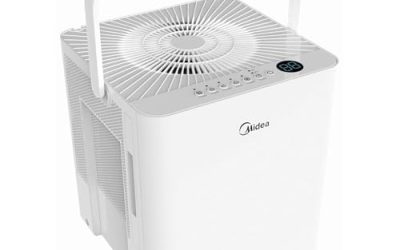
Midea Cube 20 Pint Dehumidifier
- Best for: studios and one-bedroom flats that need compact storage and app control.
- Capacity: 20 pints per day
- Coverage: up to 1,500 sq ft per the listing title
- Smart control: WiFi through the SmartHome app on iOS and Android; works with Alexa
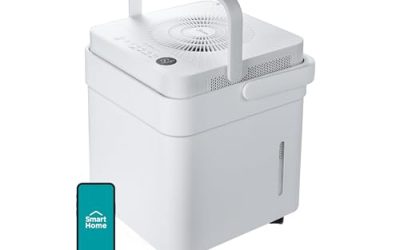
- Design: lift-and-twist cube; extended form holds up to 3x the water of traditional units, nested form is half the size
studios and one-bedroom flats that need compact storage and app control.
the 20-pint capacity tops out in larger or very damp spaces, and control runs through Midea’s SmartHome app rather than a general smart-home platform.
The Midea Cube is the apartment-sized pick in this group, built around a lift-and-twist body that extends for a larger water tank and nests down to half its size for storage or carrying to a sink. Its 20-pint daily capacity and 1,500 square foot coverage suit studios and one-bedrooms where damp shows up as window condensation and a musty closet. The SmartHome app monitors humidity and water level, and the unit works with Alexa, so a renter can start it before leaving work and arrive to drier air.
hOmeLabs 50 Pint WiFi Dehumidifier with Pump
- Best for: open-plan apartments and whole-floor humidity with sink drainage.
- Capacity: 50 pints per day at 80°F and 60 percent RH; up to 120 pints max at 95°F and 90 percent RH per the title
- Coverage: up to 7,000 sq ft per the listing
- Smart control: WiFi app sets humidity levels, schedules and modes from anywhere
- Drainage: built-in pump, continuous draining, 1.6 gallon tank
open-plan apartments and whole-floor humidity with sink drainage.
it is a large unit for a small studio, and a near-identical hOmeLabs listing without the pump exists, so check the model number HME1004 before ordering.
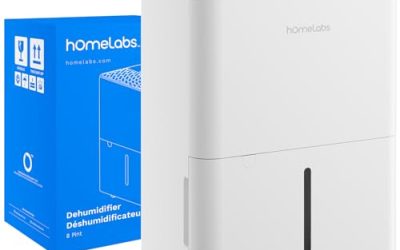
This is the heavy lifter for open-plan apartments and homes where humidity is a whole-floor problem rather than a single-room one. The listing gives 50 pints per day under standard conditions, coverage up to 7,000 square feet, and a built-in pump that pushes collected water up to a sink, which removes the daily bucket routine. The app sets humidity levels, schedules and modes from anywhere, and the control set includes Comfort, Turbo and Continuous modes, a timer and auto shut-off for when the tank fills.
Frigidaire Gallery 50 Pint Dehumidifier with WiFi
The Frigidaire Gallery model suits households that already run lights and plugs through a voice assistant, because it works with both Amazon Alexa and Google Home alongside the Frigidaire app. Its 50-pint capacity targets larger damp areas such as a ground-floor flat or a combined living and laundry space. Custom humidity control and a timer let it hold a set level through the day instead of running flat out, and the listing notes energy certification, which matters for a machine that may run daily through a humid season.
Specs
- Capacity: 50 pints per day
- Smart control: WiFi with the Frigidaire app; works with Amazon Alexa and Google Home
- Power: 115V
- Features: timer and custom humidity control
- Efficiency: certified energy-efficient model per the listing title
- Model: FGAC5044W1
Best for: households using Alexa or Google Home in larger damp spaces.
Watch out for: a newer Frigidaire model is sold under a separate listing, so confirm the FGAC5044W1 model number on the page before ordering.
ASIN: B07Z5QH2HL
GoveeLife Smart Dehumidifier Max
- Best for: users who want humidity history, reminders and automation routines.
- Capacity: 50 pints per day under the 2019 DOE standard; 70 pints under the 2012 DOE standard
- Coverage: up to 4,500 sq ft
- Tank and drainage: 2.0 gallon bucket; 3 ft corrugated drain hose included
- Smart control: app, voice and touch; Alexa, Google Assistant and IFTTT; 2.4GHz WiFi and Bluetooth
users who want humidity history, reminders and automation routines.
WiFi is 2.4GHz only, and the Auto Mode pairing needs a separate GoveeLife thermo-hygrometer.
The GoveeLife Max is built for people who like their home data visible. The app shows humidity record graphs and sends tank-full reminders, and the unit can pair with a GoveeLife thermo-hygrometer so Auto Mode reacts to readings from another room. Capacity is 50 pints per day with coverage up to 4,500 square feet, the bucket holds 2.0 gallons, and a 3-foot drain hose comes in the box. Control runs through the app, voice assistants including Alexa and Google Assistant, IFTTT, or touch controls on the unit.
Which One Fits Your Situation
A studio where the dehumidifier has to disappear
Pick the Midea Cube. A studio gives a dehumidifier nowhere to hide, and the Cube’s nested form is half its working size, so it can live in a closet between damp spells and come out when laundry dries indoors. The app shows the water level from the sofa, and the included drain hose covers the muggy weeks when bucket trips get old.
An open-plan flat that stays muggy from end to end
Pick the hOmeLabs 50 Pint with Pump. Open layouts spread cooking, shower and laundry moisture across one big air volume, and this is the only pick here whose listing pairs 50-pint capacity with coverage up to 7,000 square feet. The pump sends water to a sink on its own, so the machine keeps pace without daily emptying.
A rental with no floor drain and a bucket you keep forgetting
Pick the hOmeLabs if a sink sits anywhere near the damp room, because its built-in pump lifts water upward and ends the bucket routine entirely. If the unit must stand alone, pick the GoveeLife Max instead: its app sends tank-full reminders, and auto shut-off stops the machine cleanly when the 2.0 gallon bucket fills.
A voice-controlled home that runs on routines
Pick the Frigidaire Gallery if your household mixes Alexa and Google Home, since it is the pick that supports both assistants next to its own app. Pick the GoveeLife Max instead if your automations run through IFTTT or you want humidity graphs and sensor-based Auto Mode to drive the schedule.
Common Mistakes
- Comparing pint figures from different standards: the GoveeLife lists 50 pints under the 2019 standard and 70 under the older one, so compare like with like before deciding one machine is stronger.
- Buying whole-floor coverage for a single damp bedroom, then living with a bigger, louder unit than the room ever needed.
- Ignoring drainage until the first humid week, when a 50-pint machine can fill a small bucket every day and shut off mid-cycle.
- Assuming any router works: several smart models connect on 2.4GHz WiFi only, which can block setup on merged-band home networks.
- Parking the unit in a corner with the intake against a wall or on thick carpet, which chokes airflow and leaves the far side of the room damp.
Frequently Asked Questions
Can I run a smart dehumidifier while I am away from home?
Yes. Each pick here connects to an app that sets humidity levels, schedules and modes remotely, and the apps report water levels or send tank-full reminders. Auto shut-off stops a unit when its bucket fills, so a weekend away does not end with an overflow, though a hose or pump setup is better for longer trips.
Do I need a built-in pump in an apartment?
Only when gravity cannot do the job. A drain hose works if the dehumidifier can sit higher than a sink, tub or drain. On a flat floor with no floor drain, a pump like the one in the hOmeLabs pick pushes water up to sink height, which is often the difference between continuous running and daily bucket duty.
What humidity level should I set on the app?
A target between 40 and 50 percent relative humidity suits most apartments: dry enough to discourage musty smells and window condensation, without making the air feel harsh. Ground-floor and bathroom-heavy homes may need the lower end during wet weather. Use the app’s humidity readout for a few days and adjust in small steps rather than chasing a single number.
Why do two 50-pint models list different maximum capacities?
Pint figures depend on the temperature and humidity used during measurement. The hOmeLabs listing, for example, states 50 pints per day at 80°F and 60 percent RH, rising to a 120-pint maximum at 95°F and 90 percent RH. Hot, saturated air simply holds more water, so the standard-condition figure is the honest one to compare across brands.