Key takeaways
- Find the best smart room dehumidifiers for large basements, with Wi-Fi control, 50-pint capacity, built-in pumps and drain options for damp lower levels.
As an Amazon Associate I earn from qualifying purchases.
The Short Answer
The best smart room dehumidifier for large basements is the Midea Cube 50-Pint Smart Dehumidifier. It removes 50 pints of moisture per day, covers rooms up to 4,500 square feet, and connects to Wi-Fi so you can check humidity, change settings, and get full-tank alerts from your phone through the MSmartHome app. It also works with Alexa. Its lift-and-twist design gives it a 4.2-gallon water tank, so it runs longer between emptying than most standard units, and a drain hose is included for continuous drainage.
If your basement has no floor drain, get the pump version of the same unit, the Midea Cube 50-Pint Smart Dehumidifier with Built-In Pump. It moves collected water upward and out through a hose, which solves the most common drainage problem in below-grade rooms. If you want a well-known appliance brand with an ionizer and a washable filter, the Frigidaire Gallery 50-Pint Smart Dehumidifier is a strong alternative. And if your basement is very large or open plan, the hOmeLabs 50-Pint Wi-Fi Dehumidifier lists coverage up to 7,000 square feet, the widest coverage in this guide.
Every pick below is a Wi-Fi smart dehumidifier in the 50-pint class, the capacity that makes sense for a large basement. Smaller units will run constantly and still lose ground on humid days.
Our Top Picks
- Midea Cube 50-Pint Smart Dehumidifier — Best overall for large basements, with the largest tank in this guide.
- Midea Cube 50-Pint Smart Dehumidifier with Built-In Pump — Best for basements without a floor drain.
- Frigidaire Gallery 50-Pint Smart Dehumidifier FGAC5044W1 — Best brand-name alternative, with an ionizer and a washable filter.
- hOmeLabs 50-Pint Wi-Fi Dehumidifier HME1003 — Best for very large basements, with coverage up to 7,000 square feet.
Quick Comparison
| Product | Best for | Key spec | Amazon link |
|---|---|---|---|
| Midea Cube 50-Pint Smart Dehumidifier | Best overall | 50 pints per day, up to 4,500 sq ft, Wi-Fi, 4.2-gallon tank | View on Amazon |
| Midea Cube 50-Pint Smart Dehumidifier with Built-In Pump | No floor drain | 50 pints per day, up to 4,500 sq ft, Wi-Fi, built-in pump | View on Amazon |
| Frigidaire Gallery 50-Pint Smart Dehumidifier FGAC5044W1 | Brand-name pick | 50 pints per day, Wi-Fi, Alexa and Google Home, 3 fan speeds | View on Amazon |
| hOmeLabs 50-Pint Wi-Fi Dehumidifier HME1003 | Very large basements | 50 pints per day, up to 7,000 sq ft, Wi-Fi, 1.6-gallon tank | View on Amazon |
How to Choose
A basement is not like a bedroom. It sits below grade, so moisture seeps in through walls and floors, the air stays cooler, and the space is often large or divided into storage areas. Here is what to weigh before you buy.
Capacity first. Capacity is measured in pints of moisture removed per day, and for a large basement, 50 pints per day is the right starting point. A 30-pint or 35-pint unit may suit a small bedroom, but in a big basement it will run around the clock and still fall behind during wet weather. All four picks in this guide are 50-pint units, measured under the current 2019 Department of Energy test method. Some listings also quote a much higher pint figure measured at extreme heat and humidity. That higher number is not the standard figure, so compare units using the 50-pint figure.
Coverage area second. Manufacturers list a coverage area in square feet, but these numbers are measured under ideal conditions, so treat them as a rough guide. A 4,500-square-foot rating suits most large basements. If your basement is open plan and larger than that, the hOmeLabs pick with its 7,000-square-foot listing gives you extra headroom. If your basement is divided into separate rooms with closed doors, no single dehumidifier will cover every room well. Place the unit in the dampest area and leave interior doors open when you can.
Smart control matters more in a basement than anywhere else. You probably do not visit your basement every day, so a dehumidifier you can check from your phone is genuinely useful. Look for Wi-Fi control through the maker’s app, a digital humidistat that lets you set a target humidity level, and alerts when the tank is full. Confirm on the listing which app each model uses and which voice assistants it supports.
Drainage decides how much work the unit creates. You have three options: empty the bucket by hand, connect a drain hose and let gravity carry water to a floor drain or sump, or use a built-in pump that pushes water upward through a hose to a sink or drain. Gravity drainage only works if the drain is lower than the unit, and many basements have no floor drain at all. That is why the pump version of the Midea Cube is the second pick in this guide.
Tank size, cold performance, and placement. If you empty the bucket by hand, a bigger tank means fewer trips down the stairs. The Midea Cube models have a 4.2-gallon tank, roughly two and a half times a standard 1.6-gallon tank, while the Frigidaire Gallery holds 16.9 pints and the hOmeLabs holds 1.6 gallons. All of these units shut off automatically when the tank is full. Basements also run cool, so look for automatic defrost, which melts frost on the coils so the unit keeps working; the Midea and Frigidaire models list it. Set a target around 45 to 50 percent relative humidity, which is dry enough to discourage mold and musty smells without making the unit run nonstop. Look for energy-efficiency certification, a washable filter, and auto restart after a power outage. Measure the spot where the unit will sit and leave clear space around it for airflow.
The Picks in Detail
Midea Cube 50-Pint Smart Dehumidifier
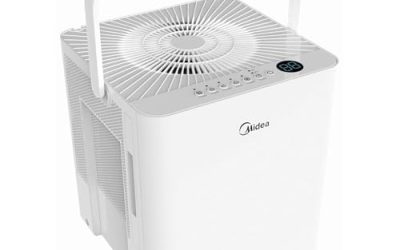
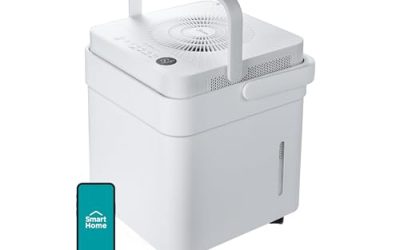
The Midea Cube is the top pick because it combines the right capacity, the largest tank in this guide, and full smart control. It removes 50 pints of moisture per day, covers rooms up to 4,500 square feet, and connects to Wi-Fi through the MSmartHome app, so you can monitor humidity, adjust settings, and receive full-tank alerts from anywhere. It also works with Alexa.
Its lift-and-twist design is the standout feature. When extended, its tank holds 4.2 gallons, up to three times a conventional tank. When nested, the unit is about half the size, which makes storage easier. A drain hose is included for continuous drainage. The humidity range is 35 to 85 percent, and the unit includes automatic defrost and auto restart. It carries energy-efficiency certification.
Pros:
- 50 pints per day with coverage up to 4,500 square feet
- Wi-Fi control through the MSmartHome app, plus Alexa voice control
- 4.2-gallon tank and included drain hose
Cons:
- No built-in pump, so gravity drainage needs a floor drain lower than the unit
- Confirm the exact noise level on the listing
Midea Cube 50-Pint Smart Dehumidifier with Built-In Pump
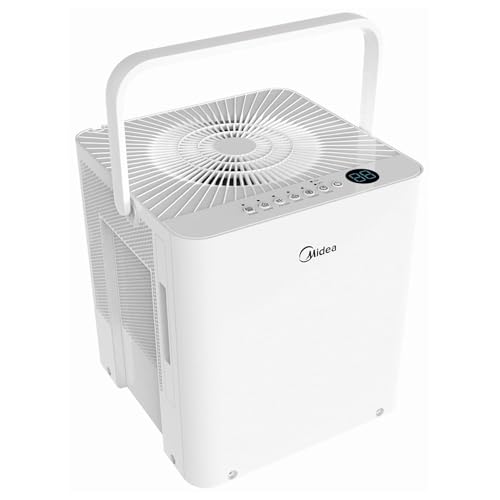
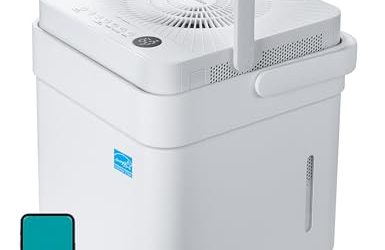
This is the same Cube 50-pint platform as the top pick, with one important addition: a built-in pump. The pump moves collected water upward and out through a hose, so you are not limited to a floor drain. It removes the same 50 pints per day, covers the same rooms up to 4,500 square feet, and has the same Wi-Fi control through the MSmartHome app with Alexa compatibility. A drain hose is included, and the unit holds energy-efficiency recognition for 2022.
Everything else matches the top pick: the 4.2-gallon tank, the lift-and-twist design, the 35 to 85 percent humidity range, automatic defrost, and auto restart. The pump adds a moving part and a little noise when it runs, but for a basement without a usable drain it is the practical choice. If you do have a floor drain, the standard Cube does the same job with fewer moving parts.
Pros:
- Built-in pump pushes water upward to a sink or drain, no floor drain needed
- Same 50 pints per day and 4,500-square-foot coverage as the top pick
- Wi-Fi control through the MSmartHome app, plus Alexa voice control
Cons:
- The pump adds a component that can wear over time and adds some noise when it cycles
- Confirm the pump lift height on the listing before you plan a long hose run
Frigidaire Gallery 50-Pint Smart Dehumidifier FGAC5044W1
The Frigidaire Gallery FGAC5044W1 is the brand-name alternative in this guide. It removes 50 pints of moisture per day and connects to Wi-Fi through the Frigidaire app, so you can adjust humidity from your phone anywhere. It works with both Alexa and Google Assistant, and it includes a clean air ionizer and a washable filter, plus a filter check indicator that reminds you when the filter needs cleaning.
The unit has three fan speeds, with listed noise levels of 47 decibels on low, 49 on medium, and 51 on high. The bucket holds 16.9 pints, and the unit shuts off automatically when the bucket is full. The humidity range is 35 to 85 percent, and the unit includes low-temperature operation, automatic defrost, and auto restart. It carries energy-efficiency certification. Confirm the coverage area on the listing.
Pros:
- Wi-Fi control through the Frigidaire app, with Alexa and Google Assistant support
- Clean air ionizer and washable filter with a filter check indicator
- Three fan speeds with listed noise levels from 47 to 51 decibels
Cons:
- 16.9-pint bucket is smaller than the Midea Cube tank, so it fills sooner when emptied by hand
- No built-in pump, so drainage depends on gravity or manual emptying
hOmeLabs 50-Pint Wi-Fi Dehumidifier HME1003

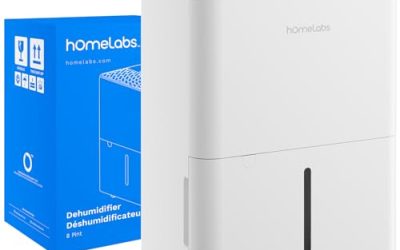
The hOmeLabs HME1003 is the pick for very large or open basements. It removes 50 pints of moisture per day under the standard test conditions of 80 degrees Fahrenheit and 60 percent relative humidity, and it lists coverage up to 7,000 square feet, the widest coverage in this guide. The listing also notes a maximum figure of 120 pints at 95 degrees Fahrenheit and 90 percent relative humidity, but that is an extreme-condition figure, not the standard rating, so use the 50-pint figure when comparing.
It is a Wi-Fi enabled dehumidifier with remote control, so you can adjust settings and monitor it from your phone. It has a 1.6-gallon tank, auto shut-off when the tank is full, and a hose outlet for continuous drainage. Confirm on the listing which app it uses and whether it supports voice assistants, as well as the exact noise level.
Pros:
- Widest listed coverage in this guide, up to 7,000 square feet
- 50 pints per day under standard test conditions, with Wi-Fi remote control
- 1.6-gallon tank with auto shut-off when full
Cons:
- The 1.6-gallon tank is smaller than the Midea Cube tank, so it needs emptying more often if not drained by hose
- Confirm the app name, voice assistant support, and noise level on the listing
Who Should Choose What
Choose the Midea Cube 50-Pint Smart Dehumidifier if you want the best all-around unit for a typical large basement. The big tank, the included drain hose, and full app control cover the most common basement situations.
Choose the Midea Cube 50-Pint Smart Dehumidifier with Built-In Pump if your basement has no floor drain, or the only drain is higher than the unit or too far away for a gravity hose. If you have a working floor drain, the standard Cube does the same job with fewer moving parts.
Choose the Frigidaire Gallery 50-Pint Smart Dehumidifier FGAC5044W1 if you prefer a long-established appliance brand, want both Alexa and Google Assistant support, or like the ionizer and the washable filter with a cleaning reminder.
Choose the hOmeLabs 50-Pint Wi-Fi Dehumidifier HME1003 if your basement is very large, open plan, or connected to other damp spaces. Its 7,000-square-foot coverage listing gives it the most headroom in this guide. Just plan on continuous drainage, because its tank is smaller than the Midea Cube tank.
If your basement is divided into separate rooms with doors that stay closed, place the unit in the dampest room and leave interior doors open when you can.
Common Mistakes
Buying too small. The most common mistake is choosing a 30-pint or 35-pint unit for a large basement. A small unit will run all day and still leave the air damp. Match the unit to the space, not to the shelf it will sit on.
Ignoring drainage. Many buyers set up a dehumidifier, then discover the bucket fills every day and nobody wants to carry it up the stairs. Decide on drainage before you buy. If you have a floor drain, get a unit with an included hose. If you do not, get a pump model. A dehumidifier that is a chore to empty is a dehumidifier that gets switched off.
Comparing the wrong pint numbers. Some listings show a large pint figure measured at 95 degrees Fahrenheit and 90 percent relative humidity. That number looks impressive, but it is not the standard rating. Compare units using the 2019 Department of Energy rating, which is the 50-pint figure for every pick in this guide.
Placing the unit in a corner. A dehumidifier needs air flow on all sides. Pushing it tight against a wall or into a corner chokes the intake and cuts performance. Leave clear space around the unit.
Setting the target too low, and forgetting setup. Setting the humidistat to the lowest possible level does not dry the basement faster. It just makes the unit run constantly. A target around 45 to 50 percent relative humidity is dry enough to discourage mold and musty smells. Also set up the app when you first install the dehumidifier, test the full-tank alert, and rinse the washable filter on a regular schedule.
Expecting one unit to fix a water problem. A dehumidifier controls humidity in the air. It does not fix a leaking foundation crack, a failed sump pump, or water coming in through a window well. Fix the water entry first.
FAQ
What size dehumidifier do I need for a large basement?
A 50-pint unit is the right size class for most large basements. It removes 50 pints of moisture per day under standard test conditions and is listed for rooms up to 4,500 square feet or more. Smaller units will run constantly and still fall behind in a big, below-grade space.
Do smart dehumidifiers need Wi-Fi to work?
No. A smart dehumidifier works as a normal dehumidifier without Wi-Fi, using its onboard controls and humidistat. Wi-Fi adds remote control, humidity monitoring from your phone, and full-tank alerts. If your basement has weak Wi-Fi, the unit will still dehumidify, but you lose the remote features.
Should I get a dehumidifier with a built-in pump?
Get a pump model if your basement has no floor drain, or if the only drain is higher than the unit or too far away for a gravity hose. The pump pushes water upward through a hose to a sink or drain. If you have a floor drain near the unit, a gravity hose is simpler. The Midea Cube with Built-In Pump is the pump pick in this guide.
How often will I need to empty the tank?
It depends on how damp the basement is and on the tank size. In a very damp basement, a 1.6-gallon tank can fill in a day. The Midea Cube tank holds 4.2 gallons, so it runs longer between emptying. All of these units shut off automatically when the tank is full. If you cannot check the unit daily, set up continuous drainage or choose a pump model.
What humidity level should I set for a basement?
A target around 45 to 50 percent relative humidity works well for most basements. That level is dry enough to discourage mold and musty smells without making the unit run nonstop. The picks in this guide let you set a target between about 35 and 85 percent. If the basement still smells musty at 45 to 50 percent, look for a leak or a ventilation problem.
Conclusion
For most large basements, the Midea Cube 50-Pint Smart Dehumidifier is the best pick. It has the capacity, the coverage, the smart control, and the largest tank in this guide, plus an included drain hose. If your basement has no floor drain, step up to the Midea Cube 50-Pint Smart Dehumidifier with Built-In Pump. The Frigidaire Gallery FGAC5044W1 is the runner-up for buyers who want a well-known brand with an ionizer, a washable filter, and both Alexa and Google Assistant support. And the hOmeLabs HME1003 is the pick for very large basements, with the widest coverage listing in this guide.
Whichever model you choose, set it up with continuous drainage or a pump if you can, connect the Wi-Fi and test the alerts on the first day, and set the target around 45 to 50 percent relative humidity. A smart dehumidifier only earns its place in a basement when it runs steadily without daily attention. Check the current specs and availability on the listing before you order, since details can change.