Our Short List of 3
All 4 Picks at a Glance
| Product | Specs | Action |
|---|---|---|
 SUNMAX RT50 Walk-Behind Floor Scrubber Dryer | Check price on Amazon | |
 SUNMAX RT15 Compact Walk-Behind Floor Scrubber | Check price on Amazon | |
 SUNMAX RT50DW Self-Propelled Floor Scrubber | Check price on Amazon | |
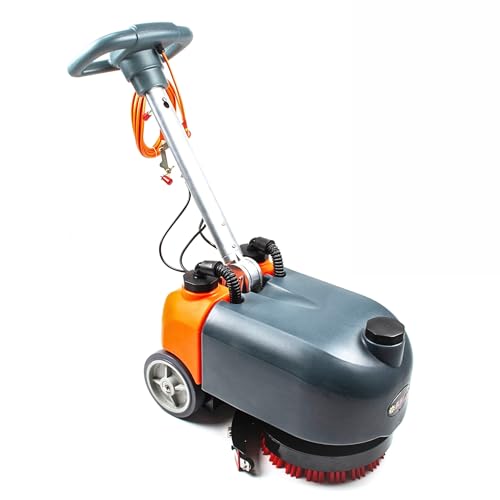 SUNMAX RT15AC Corded Walk-Behind Floor Scrubber Dryer | Check price on Amazon |
Key takeaways
- Compare the best walk-behind floor scrubbers for daily cleaning routes by path width, tank size, runtime and noise, and pick a machine that fits your route.
Introduction
A daily cleaning route is a different job from an occasional deep clean. The same floors need the same treatment every day: entrances tracked with grit, aisles scuffed by carts, spills in the middle of the sales floor, restrooms that need attention before opening. A mop spreads much of that soil around and leaves the surface wet, while the best walk-behind floor scrubbers for daily cleaning routes apply solution, scrub it loose and vacuum the dirty water away in a single pass, leaving the floor dry enough to walk on right away.
Walk-behind scrubber dryers are built for exactly this rhythm. The operator walks behind the machine, guiding it along a planned route, while the brush scrubs and the squeegee recovers the water. One person can cover a large floor in far less time than mopping, with a more consistent result day to day. That consistency is what a daily route is really about: not a heroic clean once a week, but a reliable clean every day.
This guide compares four walk-behind scrubber dryers suited to daily routes, from a compact 14-inch machine for small shops to a self-propelled 28-inch model for large floors. Each one is a true scrubber dryer rather than a powered mop, with separate solution and recovery tanks, a powered brush and a squeegee that leaves the floor dry. The guide also explains how to match path width, power source, tank size and noise to the route you actually run.
At a Glance
| Product | Best For | Key Spec |
|---|---|---|
| SUNMAX RT50 Walk-Behind Floor Scrubber Dryer | All-round daily routes in medium and large spaces | 22-inch path, 31-inch squeegee, 200 RPM, up to 5 hours runtime |
| SUNMAX RT15 Compact Walk-Behind Floor Scrubber | Small shops and tight aisles | 14-inch path, 17.8-inch squeegee, 180 RPM, up to 2.5 hours runtime |
| SUNMAX RT50DW Self-Propelled Floor Scrubber | Large open floors and long straight runs | 28-inch dual-brush path, 35-inch squeegee, self-propelled |
| SUNMAX RT15AC Corded Walk-Behind Floor Scrubber Dryer | Continuous cleaning near outlets without battery charging | 14-inch path, 18-inch squeegee, corded 110-volt, 26-foot cord |
How to Choose a Walk-Behind Scrubber for a Daily Route
Cleaning path width
Path width decides how many passes a route needs. A 14-inch machine fits narrow aisles and small shops, but it takes many more passes to cover a large floor. A 22-inch machine suits most medium and large spaces, covering open sales floors quickly while still turning between fixtures. A 28-inch dual-brush deck only pays off on large, open floor plates with long straight runs, where its width becomes an advantage rather than a burden. Measure your narrowest aisle and your tightest turn before choosing, because a scrubber that cannot reach the back corner will not get used.
Battery or corded power
Battery machines move freely, work safely around customers and clean entrances during the day, but they need charging time and will eventually need a battery replacement. Corded machines run continuously and cost less to buy and keep, at the price of a trailing cord that must be managed around fixtures and customers. For a daily route, think about when the cleaning happens: battery power suits daytime cleaning and routes that cross open areas, while corded power suits after-hours cleaning in smaller spaces with outlets spread around the floor.
Tank size and runtime
Tank size and runtime decide how often the operator stops. A large recovery tank means fewer trips to empty dirty water, and a long battery runtime means the whole route can be finished on one charge. For a daily route, the goal is to complete the planned loop without returning to the charger or the drain halfway through. Small tanks and short runtimes are workable on a small floor, but on a large floor they turn a routine clean into a series of interruptions.
Squeegee width and water recovery
The squeegee is what leaves the floor dry, and its width should reach beyond the brush on both sides so water is recovered even through gentle turns. A squeegee that is narrower than the scrubbed path leaves wet stripes at the edges, which defeats the purpose of a scrubber dryer. Check that the squeegee assembly is easy to adjust and that replacement blades are available, since the squeegee blade is a wear item on a machine used every day.
Noise level
Noise matters when cleaning happens during open hours. A machine rated around the level of normal conversation can run a few aisles away from shoppers without dominating the store, while a louder machine belongs after closing. If your route includes daytime spot cleaning of entrances or spills, favour a quieter model. If all cleaning happens before opening, noise is a minor concern.
Maneuverability and storage
A daily-use machine needs to turn in confined spaces, fit through doorways and park in a real storage spot. Folding or adjustable handles help the machine work around fixtures and store in a small closet. Self-propelled drive reduces operator fatigue on long routes, but it adds weight and complexity that a small shop may not need. Consider who will operate the machine every day and how much storage space is genuinely available.
SUNMAX RT50 Walk-Behind Floor Scrubber Dryer
The SUNMAX RT50 is the all-rounder in this guide, and the machine that fits the widest range of daily routes. A 22-inch disc brush covers open floors quickly, while the 31-inch squeegee reaches beyond the brush on both sides and pulls water off the floor even through gentle turns between display tables and shelving. With a rated output of up to 30,000 square feet per hour, a mid-size space that once took an evening of mopping can be scrubbed in a fraction of the time.
Battery power is a genuine advantage on a daily route. The RT50 runs for up to five hours per charge, enough for a full cleaning route through the sales floor, entrance, restrooms and back room without returning to the charger. The 14.5-gallon recovery tank means fewer stops to empty dirty water, and the brush runs at 200 RPM, which gives the machine real scrubbing action on tile, vinyl and sealed concrete rather than a light wipe.
The machine arrives as a complete set of parts, including the brush, pad driver, squeegee assembly, batteries and charger, so there is no second order for the pieces needed to run it. That matters for a team starting a daily route, since a machine that needs extra parts before its first clean is a machine that sits in the corner.
The trade-off is size. At roughly 45 inches long, the RT50 is a substantial machine that belongs in spaces with a proper storage corner or janitor closet rather than under a counter. For supermarkets, home goods stores, pharmacies and larger apparel shops, though, the balance of path width, tank capacity and runtime is hard to beat on a daily route.
Pros:
– Wide 22-inch path and 31-inch squeegee cover large floors in fewer passes
– Up to five hours of battery runtime for a full daily route on one charge
– Large 14.5-gallon recovery tank means fewer emptying stops
– Arrives as a complete kit with brush, pad driver, squeegee, batteries and charger
Cons:
– Roughly 45 inches long, so it needs a proper storage space
– Battery charging time must be planned into the daily schedule
– Larger frame is less nimble in very tight aisles than a compact machine
SUNMAX RT15 Compact Walk-Behind Floor Scrubber
The SUNMAX RT15 is built for the small end of the daily-route spectrum: boutiques, salons, cafes with retail counters and small specialty shops with narrow aisles, tight turns around shelving and very little storage. A 14-inch brush and a body that turns in confined spaces fit exactly that footprint, with a handle that folds and adjusts so the machine can work around fixtures and park in a small closet when the route is done.
Despite the small frame, this is a genuine scrubber dryer rather than a powered mop. Separate 3-gallon solution and 4-gallon recovery tanks keep clean and dirty water apart, the tanks detach for filling and emptying at a utility sink, and the 180 RPM disc brush does real scrubbing work on tile, vinyl, sealed concrete and similar hard floors. An LCD panel shows working status and error codes, which helps a small team diagnose a clog or a low battery without guesswork.
The trade-offs are coverage and charging patience. At up to 14,500 square feet per hour the RT15 is half as productive as the RT50, and the battery needs six to eight hours to recharge after giving up to two and a half hours of runtime. For a small shop cleaned once a day, neither point is a problem in practice: the route is short, the machine recharges overnight, and the compact size means it actually gets used every day instead of being left in storage.
Pros:
– Compact 14-inch format fits narrow aisles and small storage spaces
– Separate solution and recovery tanks keep clean and dirty water apart
– Folding, adjustable handle for working around fixtures
– LCD panel shows status and error codes for easy diagnosis
Cons:
– Up to 14,500 square feet per hour is half the output of the larger RT50
– Battery needs six to eight hours to recharge
– Small tanks suit small floors only and need frequent emptying on larger ones
SUNMAX RT50DW Self-Propelled Floor Scrubber
The SUNMAX RT50DW is the machine for genuinely large daily routes: big-box stores, warehouse clubs, large supermarkets and home improvement centres where floors are measured in tens of thousands of square feet. Pushing a heavy scrubber the length of those aisles is tiring work, and the RT50DW answers with a self-propelled drive and a dual-brush deck that scrubs a 28-inch path, the widest in this guide.
The maker rates output at up to 46,000 square feet per hour, so long straight runs down grocery or hardware aisles go quickly. A 35-inch squeegee trails the wide deck and recovers water across the full scrubbed width, and the 14.5-gallon tank capacity keeps the machine working instead of shuttling back to a drain. Powered travel keeps pace consistent from the first aisle to the last, which matters when one operator is responsible for the entire floor before opening.
This is the largest and heaviest style of machine here, and it earns its keep only where the floor area justifies it. In a store with short aisles and frequent turns, the extra width becomes a burden rather than a benefit, and storage needs a proper janitor area. For large, open floors with long straight runs, though, nothing else in this list covers ground as fast on a daily route.
Pros:
– Widest 28-inch dual-brush path in this guide for fast coverage
– Self-propelled drive reduces operator fatigue on long routes
– 35-inch squeegee recovers water across the full scrubbed width
– 14.5-gallon tank capacity keeps the machine working longer between stops
Cons:
– Largest and heaviest machine here, needing proper storage space
– Extra width is a burden in stores with short aisles and frequent turns
– Overkill for small or medium floors where a compact machine would do
SUNMAX RT15AC Corded Walk-Behind Floor Scrubber Dryer
The SUNMAX RT15AC takes the same compact 14-inch scrubber dryer format as the RT15 and removes the battery entirely. It plugs into a standard 110-volt outlet and runs for as long as the store needs through a 26-foot power cord. That simple change makes it a strong choice for a daily route where the cleaning happens near outlets and the operator never wants to think about charging.
Removing the battery also removes the long-term cost and downtime of battery replacement from the ownership picture, and the machine is the lightest here at about 100 pounds, with a compact body measuring roughly 27.6 by 18.2 inches at the base. It stores easily and moves between rooms without effort. Published noise is 56 dB, in line with normal conversation, which is a pleasant surprise at this level and suits cleaning in occupied spaces.
Corded operation suits small and medium stores with outlets spread around the floor plate: convenience stores, small grocers, fitness retail, medical supply shops and back-of-house areas. The 180 RPM brush and 18-inch squeegee give it the same genuine scrub-and-recover action as its battery sibling, so the daily clean is no less thorough.
The cord is the obvious compromise. Routes must be planned around outlet locations, the cord needs managing around fixtures and customers, and the machine is a poor choice for scrubbing during busy open hours. For after-hours cleaning in a smaller store, those are easy compromises to accept in exchange for continuous runtime and simple upkeep.
Pros:
– Corded 110-volt power gives continuous runtime with no charging wait
– No battery to replace, reducing long-term ownership cost
– Lightest machine here at about 100 pounds, with a compact storage footprint
– Quiet 56 dB operation suits cleaning near people
Cons:
– 26-foot cord limits reach and needs managing around fixtures
– Routes must be planned around outlet locations
– Poor choice for scrubbing during busy open hours
Comparison: Which One Fits Your Daily Route
Start with floor size. A small shop with narrow aisles should choose between the two compact 14-inch machines: the battery-powered RT15 for free movement and daytime cleaning, or the corded RT15AC for continuous after-hours cleaning without charging. Both cover the same footprint, so the choice is really about power source and when the route runs.
A medium or large space with open floors should look at the RT50 first. Its 22-inch path, five-hour runtime and large recovery tank suit a full daily route through sales floor, entrance and restrooms without mid-route stops, and its complete kit means it is ready to run from day one. Only step up to the self-propelled RT50DW when the floor is genuinely large and mostly long, straight runs, since its 28-inch width earns its keep only there. A scrubber that cannot turn in your narrowest aisle, fit through your narrowest doorway or park in your storage space will not get used every day, and a daily route only works when the machine is easy to take out, run and put away.
Frequently Asked Questions
Can a walk-behind scrubber be used while customers are in the store?
Yes, with the right machine and the right timing. Quieter models operating around the level of normal conversation can clean entranceways and spills during open hours, and battery machines avoid the trip hazard of a trailing cord. Corded machines and louder models are better kept for after-hours cleaning.
Which floor types can these machines clean?
The machines in this guide are designed for hard floors such as tile, vinyl, sealed concrete and similar surfaces. They are not carpet cleaners, and they should not be used on unsealed wood or other floors that the manufacturer does not list as suitable. Check the floor type against the machine guidance before the first use.
How much maintenance does a daily-use scrubber need?
Daily maintenance is straightforward: empty and rinse the recovery tank, refill the solution tank, clean the squeegee blade and check the brush for wrapped debris. The squeegee blade and brush are wear items and will need replacing over time, so check that replacements are available when you buy.
How do I plan a daily cleaning route?
Walk the floor and plan a loop that starts at the farthest point and works back toward the storage area, so the operator never walks over a freshly cleaned floor. Group the dirtiest areas, such as entrances and restrooms, into the route, and plan tank emptying and refilling stops at a utility sink along the way.
Battery or corded: which is better for a daily route?
Battery power suits routes that cross open areas and cleaning during open hours, since there is no cord to manage. Corded power suits after-hours cleaning in smaller spaces with outlets nearby, since it runs continuously and never needs charging. The deciding factors are route timing, floor size and outlet placement.
How long does a battery scrubber take to recharge?
It varies by model. A compact machine may need six to eight hours to recharge after up to two and a half hours of runtime, while a larger machine may run for up to five hours per charge. Plan charging overnight so the machine is ready for the next daily route.
Conclusion
A daily cleaning route works when the machine matches the floor, the timing and the operator. The SUNMAX RT50 suits most medium and large spaces with its wide path, long runtime and large tank, while the compact RT15 fits small shops and tight aisles. The self-propelled RT50DW covers genuinely large floors faster than anything else here, and the corded RT15AC offers continuous cleaning for smaller spaces with outlets nearby. Measure your narrowest aisle, plan your route around tanks and charging, and choose the machine that your team will actually take out every day.
Disclosure: As an Amazon Associate, we earn from qualifying purchases.