Our Short List of 3
All 4 Picks at a Glance
| Product | Specs | Action |
|---|---|---|
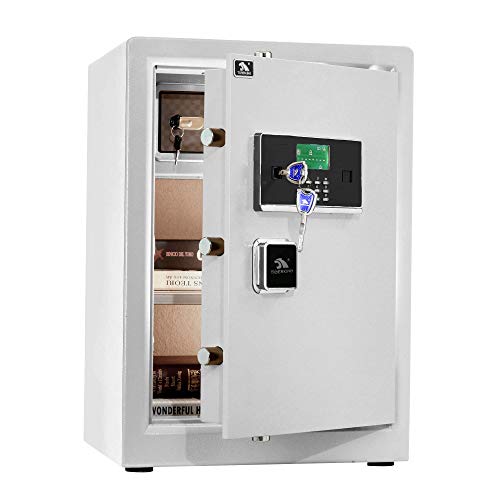 1. TIGERKING Safe Box, 3.7 Cubic Feet — 63XH-1W (White) | Check price on Amazon | |
 2. Amazon Basics Steel Home Security Safe, 1.8 Cubic Feet — 50SAM | Check price on Amazon | |
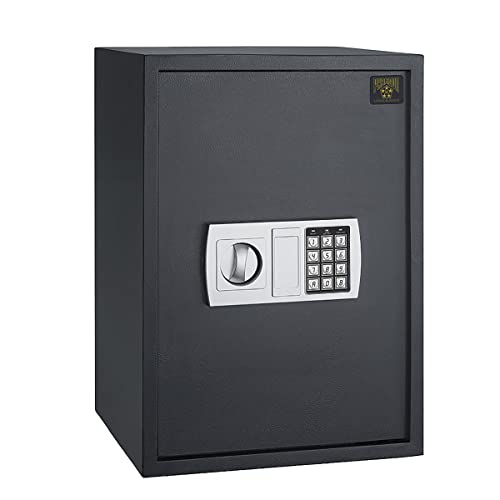 3. Paragon Lock & Safe Personal Digital Safe Box — 83-DT5916 | Check price on Amazon | |
 4. TIGERKING Security Fingerprint Biometric Safe — FED-BLACK | Check price on Amazon |
Key takeaways
- Five home safes that anchor to the floor or wall and hide their hinges inside the door, from a compact Bonsaii box to a 3.7 cubic foot TIGERKING.
A home safe only does its job if it stays where you put it and gives a pry tool nothing to work on. That is why this guide filters on two construction details rather than lock gadgets: the safe must be designed to bolt down, with pre-drilled anchor holes and mounting hardware, and its hinges must be concealed inside the door frame, where they cannot be attacked or used to lever the door off. Plenty of well-known safes fail one of those tests — a pry-resistant hinge bar is not a concealed hinge, and a heavy safe with no anchor holes can simply be carried away.
Our top pick: the TIGERKING 63XH-1W, the largest safe here, with five solid locking bolts and a dual-key backup. Runner-up: the Amazon Basics 1.8 Cubic Feet safe, the straightforward keypad box with the clearest listing-stated mounting provision. Specifications below come from the manufacturers’ manuals and Amazon listings for the exact models linked.
Quick Picks
As an Amazon Associate we earn from qualifying purchases.
| Product | Best for | Key spec |
|---|---|---|
| TIGERKING Safe Box 63XH-1W (White) | Largest capacity in the group | 3.7 cu ft, five 25 mm live-locking bolts |
| Amazon Basics Steel Home Security Safe, 1.8 Cubic Feet | Simple keypad security that anchors down | Pre-drilled holes with floor and wall hardware |
| Paragon Lock & Safe 83-DT5916 | A shelf-divided interior in a steel body | About 1.8 cu ft, 11-gauge alloy steel |
| TIGERKING Fingerprint Safe FED-BLACK | Fingerprint access in a compact box | Four pre-drilled holes, back and bottom |
| Bonsaii Safe Box SF003 | Small footprint for a closet or shelf | About 1.2 cu ft, USB-C emergency power port |
How to Choose
Bolt-down provision comes first
Look for pre-drilled holes in the back, the base, or both, and check whether anchor bolts are included in the box. A safe that arrives with holes and expansion bolts is designed to be fixed to a floor or wall stud; a safe that expects you to drill your own holes is not making the same promise. Where the holes sit decides where the safe can go — back holes suit wall mounting, base holes suit floor mounting, and the most flexible models here offer both.
Concealed hinges, stated in those words
The hinge wording in a listing matters. “Pry-resistant concealed hinges” means the hinge mechanism sits inside the door and cannot be reached from outside. A “hinge bar” along the door edge is a different construction and does not meet this guide’s test, however sturdy it may be. Every safe below is documented with concealed hinges in its own manual or listing text — that wording, not a product photo, is what to trust.
Lock type is a convenience choice
Once the construction is right, choose the lock you will actually use daily. This group spans a programmable keypad with a backup key, a keypad paired with a mandatory master key, a fingerprint reader with PIN and key fallbacks, and PIN pads with manual override keys. None of those choices changes the bolt-down or hinge story, so buy the access method that fits your routine.
Size the interior, not the exterior
Capacity figures and interior dimensions are the honest measure of what fits. Where a listing and a manual disagree — and two models below have exactly that problem — this guide says so rather than printing a tidy number that neither source fully supports.
Anchoring and Hinge Checks Before You Buy
Two quick checks save most returns in this category. First, decide the mounting surface before ordering: floor mounting into concrete or a joist is the strongest option, wall mounting needs a stud behind the back holes, and a shelf mount only works if the shelf itself is fixed. Measure the safe’s footprint against that spot, including room for the door to swing. Second, confirm the anchor hardware matches your surface — expansion bolts supplied in the box are intended for masonry-style fixing, and timber floors may need different fixings you supply yourself.
For hinges, read the product description for the safe’s exact model number rather than relying on the brand’s other products. Manufacturers in this category sell near-identical safes side by side, some with concealed hinges and some with exposed ones, and the hinge design can change between sizes of the same line. The models below were each checked at model level.
The 5 Best Options
1. TIGERKING Safe Box, 3.7 Cubic Feet — 63XH-1W (White)
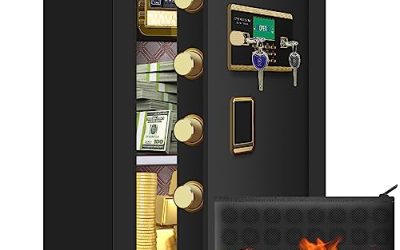
The largest safe in this guide, at 3.7 cubic feet, with exterior measurements of 15 inches deep, 17.3 inches wide and 25 inches high, and an interior of 17 by 11.8 by 20.8 inches. Its manual documents two pre-drilled holes in the back with included expansion bolts for wall or floor mounting, and it specifies pry-resistant concealed hinges. The door carries five 25 mm solid live-locking bolts behind a 10 mm door plate, and the interior adds a removable shelf plus a separate lock box. Access is by electronic keypad combined with a dual-key system: the master key is always required, alongside either the code or the emergency key — a deliberate two-step routine worth knowing before you buy. A vibration and repeated-wrong-entry alarm is built in. One accuracy note: this model’s own manual states no fire rating, so despite what the wider TIGERKING range offers elsewhere, this safe should not be treated or described as fireproof.
2. Amazon Basics Steel Home Security Safe, 1.8 Cubic Feet — 50SAM
The plainest proposition here: a 1.8 cubic foot steel safe, 13.8 by 13 by 19.7 inches outside and 13.6 by 10.6 by 19.6 inches inside, weighing 37.5 lb before you anchor it. The listing states pre-drilled mounting holes and hardware for both floor and wall mounting, and it describes two live-door bolts with pry-resistant concealed hinges. The door is 8-gauge steel over a 14-gauge body, opened by a programmable electronic keypad with a backup key for when the batteries or the code fail you. The listing states no fire rating, so treat this as a theft-deterrent box rather than a fire document safe. One variant warning: the Amazon Basics line is sold in several sizes, each under its own listing — the link here is the 1.8 cubic foot 50SAM model described above, not one of the smaller versions.
3. Paragon Lock & Safe Personal Digital Safe Box — 83-DT5916
Paragon’s 83-DT5916 is a long-running design in 11-gauge alloy steel, sized at about 1.8 cubic feet with external measurements of 13.75 by 13 by 19.75 inches and an internal space of 13.5 by 12 by 19 inches. Its manual documents pre-drilled holes and fixing bolts for anchoring to the floor or wall, and concealed hinges for a tamper-resistant door. Inside, a single shelf divides the space into two compartments. Entry is by an electronic PIN of three to eight digits, with two manual override keys supplied, and the lock runs on four AA batteries. Two honesty notes from the documentation: the maker’s own materials give conflicting weight figures for this model, so no weight is stated here rather than guessing between them; and the listing states no fire rating. Some third-party pages loosely label this model a drop box — its manual describes a personal safe box with a shelf and no drop slot, which is how it is presented here.
4. TIGERKING Security Fingerprint Biometric Safe — FED-BLACK
This is the fingerprint option of the group, and its mounting provision is the most thorough here: four pre-drilled holes across the back and the bottom, with four mounting bolts included, so it can be fixed to a wall, a floor or a shelf. The listing describes two live-door bolts behind a pry-resistant steel door with pry-resistant concealed hinges. Access is three-way — fingerprint on an optical sensor, a PIN code, or a key — and a dual alarm sounds on violent vibration or after three incorrect entries, beeping for sixty seconds. A removable shelf organises the interior, which measures 13.5 inches wide, 10.6 inches deep and 9.5 inches high. The evidence for this model does not state exterior dimensions or a total capacity, so none are printed here; judge its size from the interior measurements above. The listing states no fire rating.
5. Bonsaii Security Safe Box — SF003
The compact pick, at about 1.2 cubic feet, with exterior measurements of 12.99 by 12.99 by 14.17 inches — small enough for a closet floor or a sturdy shelf, provided it is anchored. The body is heavy-duty SPHC steel with two live door bolts and pry-resistant concealed hinges, and the listing documents two pre-drilled holes on the back and the bottom for wall and floor mounting, with two expansion bolts in the package. Entry is by digital keypad with emergency keys, and there is a USB-C emergency power port for the day the internal batteries run flat with the door shut. A removable shelf and an included money bag round out the interior. Sources differ slightly on this model’s exact capacity figure, so it is given here as about 1.2 cubic feet; no weight is stated in the listing evidence. The listing claims no fire rating for this model, whatever headline wording some retailers attach to it.
Which One Fits Your Situation
You need the most storage space
Choose the TIGERKING 63XH-1W. Its 3.7 cubic feet and lockable inner box suit bulkier valuables and document folders, and its two-step key-and-code routine adds a deliberate barrier to casual opening.
You want a keypad safe for a bedroom or office
Choose the Amazon Basics 1.8 Cubic Feet if you want the simplest routine, or the Paragon 83-DT5916 if a shelf dividing the interior into two compartments matters more than a slightly larger door gauge.
You want fingerprint access
Choose the TIGERKING FED-BLACK. It is the only biometric model here that also documents both concealed hinges and a four-point mounting provision, but size it by its interior dimensions before ordering.
Space is tight
Choose the Bonsaii SF003. It keeps the full construction checklist — concealed hinges, back and bottom anchor holes, expansion bolts included — in the smallest footprint of the five.
Common Mistakes
- Trusting the brand instead of the model. Sibling safes in the same line can differ in hinge design and mounting holes. Check the exact model’s manual or listing text, as was done for every pick above.
- Reading “hinge bar” as concealed hinges. A pry-resistant hinge bar reinforces an external hinge; it is a different construction and leaves the hinge line on the outside of the door.
- Bolting into plasterboard or a loose shelf. Anchor holes only help if the fixing lands in a stud, joist or masonry. A safe bolted to weak material can be torn out with the material attached.
- Assuming a fire rating that was never stated. None of the five listings or manuals here states a fire rating for these models. If fire protection is the priority, that is a different shortlist.
Frequently Asked Questions
Why do concealed hinges matter if the safe is bolted down?
Because the two features stop different attacks. Bolting down stops the safe being carried away to be opened elsewhere; concealed hinges remove the external hinge line as a lever point and stop the door being lifted off its hinges in place.
Can these safes be mounted to a wall instead of the floor?
Yes, where the model provides back holes. The TIGERKING FED-BLACK and Bonsaii SF003 offer holes in both the back and the bottom, while the TIGERKING 63XH-1W and Paragon 83-DT5916 document back or floor fixing in their manuals. Wall mounting needs a stud or masonry behind the holes.
What happens when the keypad batteries die?
Each model here has a non-electronic fallback: a backup or emergency key on the Amazon Basics, TIGERKING and Paragon models, and on the Bonsaii a USB-C emergency power port that wakes the keypad long enough to enter your code, alongside its emergency keys.
Are any of these safes fireproof?
No fire rating is stated for any of the five models in their listings or manuals, so none of them should be bought on the expectation of rated fire protection. They are bolt-down theft-deterrent safes with concealed hinges, which is the job this guide selected them for.