Our Short List of 3

- Best for: First-time users who want a simple daily foam wedge routine. Watch out for: The wave shape suits most necks, but very tall users may find the rest short; check the dimensions first.
- Specs:
- Wave foam design with memory foam fill
- OEKO-TEX certified foam
- 10 minutes a day suggested use
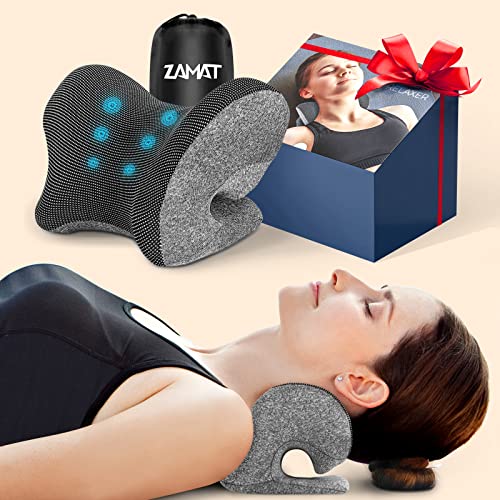
- Best for: People who want a low wedge with massage points and a washable magnetic cover. Watch out for: The magnetic cloth is a comfort feature, not a medical treatment; if you have a diagnosed neck condition, ask a clinician first.
- Specs:
- Polyurethane foam fill
- Magnetic therapy pillowcase with breathable cloth
- 6 massage granules for acupressure shiatsu massage

- Best for: People who know traction helps them and want a stronger stretch at home. Watch out for: Needs a sturdy door and a chair, plus a few minutes of setup; do not use traction with an undiagnosed neck injury without asking a clinician.
- Specs:
- Over-the-door water bag traction
- Water bag graduated from 2 to 20 pounds
- Foam padded head halter
All 4 Picks at a Glance
| Product | Specs | Action |
|---|---|---|
| RESTCLOUD Neck and Shoulder Relaxer |
| Check price on Amazon |
| ZAMAT Neck and Shoulder Relaxer |
| Check price on Amazon |
| DMI Over-the-Door Cervical Traction Device |
| Check price on Amazon |
 The Original Neck Hammock |
| Check price on Amazon |
Key takeaways
- Compare the best neck stretchers for desk strain and stiffness, from foam wedges and magnetic relaxers to over-door traction and portable hammocks.
Hours at a desk leave the neck stiff in the same place every evening, and the fix is not another pillow. A neck stretcher gently extends the cervical curve, opening space between the vertebrae and letting tight muscles release while you lie still. The hard part is choosing the right kind: a foam wedge props the neck on a curved rest, an over-door device pulls with a water bag, and a portable hammock hangs the head from a door or a chair. Each one works differently, and the wrong shape can feel worse than doing nothing.
This guide is for desk workers, drivers, and anyone whose neck tightens after long hours looking down. We picked five stretchers from Amazon listings, one for each approach: a foam wedge, a magnetic wedge, an acupressure arc, an over-door traction device, and a portable hammock. Every pick below lists its real model details and Amazon identifier, so you can check the exact listing before you buy.
Quick Picks
As an Amazon Associate we earn from qualifying purchases.
| Product | Best for | Key spec from title |
|---|---|---|
| RESTCLOUD Neck and Shoulder Relaxer | Everyday foam wedge stretching | Wave foam design, 10 minutes a day |
| ZAMAT Neck and Shoulder Relaxer | Magnetic therapy plus massage points | Magnetic therapy pillowcase, 6 massage granules |
| Mantus Cervical Spine Neck Stretcher | Acupressure and dual-angle stretching | Dual-angle design, spiked acupressure surface |
| DMI Over-the-Door Cervical Traction Device | Hands-free traction at home | Water bag graduated from 2 to 20 pounds |
| The Original Neck Hammock | Portable traction anywhere | Adjustable straps, doctor developed |
How to Choose
Pick the mechanism first
A neck stretcher is not one product but four different ideas wearing the same name, so start with the mechanism. A foam wedge is the simplest: you lie on it and gravity does the work, which suits people who want a quiet ten-minute routine on the floor. Over-door traction adds a gentle pull through a water bag, giving a stronger stretch that suits people who already know traction helps them. A hammock hangs the head so the neck floats, which suits travellers and small homes. An acupressure arc presses raised points into the muscles, which suits people who like firm pressure. Pick the mechanism that matches your comfort with pressure before you compare brands.
Match the shape to your neck
The curve of the device matters more than the brand on the box. A wedge that is too tall forces the chin up and loads the upper neck, while one that is too flat does almost nothing. Look for a contoured rest that cradles the base of the skull and leaves the shoulders on the floor. Firm foam holds its shape under body weight, while soft foam collapses and wastes the session. If you have a long neck or broad shoulders, a wider rest spreads the load better. When a listing gives dimensions, compare them against the width of your own neck and shoulders rather than trusting a stock photo.
Check the session length
Most neck stretchers are built for short sessions, usually ten to twenty minutes a day, and longer is not better. A wedge or arc needs almost no setup: place it on the floor, lie back, and breathe. Over-door traction takes longer to set up because you hang the bag, adjust the straps, and sit upright in a chair, so it suits a fixed routine at home rather than a quick break. A hammock needs a door or a chair back and a minute of adjustment. If you will only use it at your desk between calls, pick the one you can start in under a minute.
Size, materials, and portability
A neck stretcher lives on the floor, in a closet, or in a suitcase, so size and materials decide whether it gets used. Foam wedges are light and easy to store, and a washable cover matters because the device touches skin and hair every day. Over-door kits fold into a small bag but include a water bag and straps that tangle if you rush. Hammocks pack down to almost nothing, which makes them the best travel option. Check the weight and the packed size in the listing, and prefer a cover you can remove and wash over one that is glued to the foam.
The 5 Best Options
RESTCLOUD Neck and Shoulder Relaxer
- Best for: First-time users who want a simple daily foam wedge routine. Watch out for: The wave shape suits most necks, but very tall users may find the rest short; check the dimensions first.
- Specs:
- Wave foam design with memory foam fill
- OEKO-TEX certified foam
- 10 minutes a day suggested use
First-time users who want a simple daily foam wedge routine. Watch out for: The wave shape suits most necks, but very tall users may find the rest short; check the dimensions first.
The wave shape suits most necks, but very tall users may find the rest short; check the dimensions first.
The RESTCLOUD is the classic foam wedge, shaped as a gentle wave that supports the neck and shoulders at the same time. Its memory foam gives a little under body weight without collapsing, and the contoured rest holds the base of the skull so the neck can lengthen. The listing suggests ten minutes a day, which makes it easy to fit into a morning or evening routine. It is light enough to move between rooms, and the wave shape works on the floor, on a bed, or on a yoga mat. For a first neck stretcher, this is the least intimidating option and the easiest to use every day.
ZAMAT Neck and Shoulder Relaxer
- Best for: People who want a low wedge with massage points and a washable magnetic cover. Watch out for: The magnetic cloth is a comfort feature, not a medical treatment; if you have a diagnosed neck condition, ask a clinician first.
- Specs:
- Polyurethane foam fill
- Magnetic therapy pillowcase with breathable cloth
- 6 massage granules for acupressure shiatsu massage
People who want a low wedge with massage points and a washable magnetic cover. Watch out for: The magnetic cloth is a comfort feature, not a medical treatment; if you have a diagnosed neck condition, ask a clinician first.
The magnetic cloth is a comfort feature, not a medical treatment; if you have a diagnosed neck condition, ask a clinician first.
The ZAMAT adds two ideas to the foam wedge: a magnetic therapy pillowcase and six raised massage granules. The ergonomic curve follows the natural shape of the cervical spine, giving vertical and horizontal support while the granules press into the neck muscles for an acupressure-style massage. The breathable magnetic cloth cover is soft and sweat-resistant, and both the case and the pillow are machine washable, which is rare in this category. Sessions run ten to twenty minutes, and the low profile suits people who find taller wedges uncomfortable.
Mantus Cervical Spine Neck Stretcher
The Mantus is an acupressure arc rather than a soft wedge, built from high-density foam with a spiked surface that presses into the muscles along the neck. It offers two angles, so you can start with the gentler slope and move to the steeper one as your neck gets used to the pressure. The washable cover and non-slip base keep it in place on the floor, and the firm construction holds its shape under a heavy load. It suits people who like firm pressure and want a stronger stretch than a plain foam wedge gives.
- Specs:
- Dual-angle design
- Spiked acupressure surface
- High-density foam construction
- 400 pounds capacity
- 13.8 x 8.5 x 4.3 inches
- Washable cover
- Non-slip base
- Best for: People who prefer firm acupressure and a stronger stretch than a soft wedge.
- Watch out for: The spiked surface feels intense on a first use, so start with short sessions and the gentler angle.
ASIN: B0GHP57HYQ
DMI Over-the-Door Cervical Traction Device
- Best for: People who know traction helps them and want a stronger stretch at home. Watch out for: Needs a sturdy door and a chair, plus a few minutes of setup; do not use traction with an undiagnosed neck injury without asking a clinician.
- Specs:
- Over-the-door water bag traction
- Water bag graduated from 2 to 20 pounds
- Foam padded head halter
People who know traction helps them and want a stronger stretch at home. Watch out for: Needs a sturdy door and a chair, plus a few minutes of setup; do not use traction with an undiagnosed neck injury without asking a clinician.
Needs a sturdy door and a chair, plus a few minutes of setup; do not use traction with an undiagnosed neck injury without asking a clinician.
The DMI pulls instead of propping, using a water bag hung over a door to create gentle traction while you sit in a chair. The bag is graduated from two to twenty pounds, so you control the pull by adding water, and the foam padded head halter spreads the force around the chin and the back of the head. It is a Duro-Med product and is eligible for FSA and HSA spending, which tells you it is aimed at people managing a real neck problem rather than casual stiffness. Setup takes a few minutes, but the traction it gives is the closest thing to a clinic device.
The Original Neck Hammock
- Best for: Travellers and small-space users who want portable traction anywhere. Watch out for: Needs a door or a sturdy chair back to hang from, and the floating feeling takes a session or two to get used to.
- Specs:
- Adjustable straps, about 100 centimetres long
- Polyester fabric
- 9.12 ounces
Travellers and small-space users who want portable traction anywhere. Watch out for: Needs a door or a sturdy chair back to hang from, and the floating feeling takes a session or two to get used to.
Needs a door or a sturdy chair back to hang from, and the floating feeling takes a session or two to get used to.
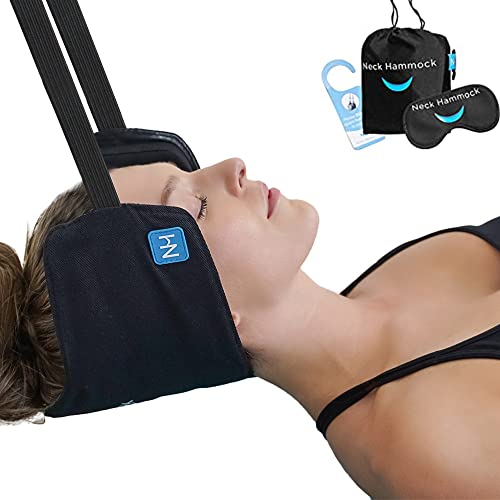
The Neck Hammock is the most portable pick in this list: a fabric sling that hangs from a door or a chair back and lets the head float while the neck releases. The straps adjust to about one hundred centimetres, so you can set the height for a chair, a door, or a bed, and the whole kit folds into a small pouch. It was developed with a doctor and a physical therapist, and the fabric is a light polyester that packs down to almost nothing. For travellers, hotel rooms, and small flats, it is the only pick here that fits in a carry-on bag.
Which One Fits Your Situation
Desk worker with end-of-day stiffness
Pick the RESTCLOUD wedge or the ZAMAT magnetic wedge. Both sit on the floor beside your desk, take ten minutes, and need no setup, so you can use one right after work without changing your routine. The RESTCLOUD is the simpler of the two, while the ZAMAT adds massage points and a washable cover for people who want a little more from the same ten minutes.
You want real traction without a clinic visit
Pick the DMI over-the-door device. It is the only pick that pulls with a measured weight, and the graduated bag lets you start at two pounds and work up slowly. It needs a door and a chair, so it suits a fixed spot at home rather than a desk drawer, but the stretch it gives is stronger than any wedge.
You travel or have very little space
Pick the Neck Hammock. It folds into a pouch, weighs under ten ounces, and hangs from almost any door, so it works in hotel rooms, small flats, and offices with a spare chair. The floating feeling is different from lying on a wedge, so give it two or three sessions before you judge it.
You like firm pressure on tight muscles
Pick the Mantus acupressure arc. Its spiked surface and dual angles give the firmest pressure in this list, and the high-density foam holds its shape under a heavy load. Start on the gentler angle with short sessions, and move to the steeper side only when the first angle feels easy.
Common Mistakes
- Using a neck stretcher for too long on the first day, then blaming the device for the soreness that follows.
- Picking a wedge that is too tall or too firm for your neck, which loads the upper neck instead of releasing it.
- Using traction with an undiagnosed injury or numbness in the arms without asking a clinician first.
- Buying a lookalike listing: the RESTCLOUD wave model has a parallel listing under a different identifier, so check the model number in the cart.
- Expecting one session to fix months of stiffness, then giving up before a daily routine has time to help.
Frequently Asked Questions
How long should I use a neck stretcher each day?
Most listings suggest ten to twenty minutes a day, and that range fits all five picks in this guide. Start at the short end for the first week, especially with the Mantus arc or the DMI traction device, and add time only when the session feels comfortable. Longer sessions do not work faster, and overdoing it on day one is the most common reason people stop using a stretcher.
Are neck stretchers safe for everyone?
For ordinary stiffness from desk work, a foam wedge or a hammock is a gentle tool, but traction devices and firm arcs deserve more care. If you have a diagnosed neck condition, a recent injury, numbness or tingling in the arms, or you have had neck surgery, ask a doctor or a physical therapist before you buy. Stop using any stretcher that causes sharp pain or new symptoms.
What is the difference between a foam wedge and over-door traction?
A foam wedge supports the neck from below and lets gravity open the curve while you lie still, which feels passive and gentle. Over-door traction pulls the head upward with a water bag while you sit, which gives a stronger and more adjustable stretch. Wedges suit daily maintenance and first-time users, while traction suits people who already know that pulling helps their neck.
Can I travel with a neck stretcher?
Yes, but only some picks pack well. The Neck Hammock folds into a small pouch and weighs under ten ounces, so it fits in a carry-on bag. The RESTCLOUD and ZAMAT wedges are light but bulky, and the DMI kit needs a door plus a water bag, so it stays at home. If travel is your main use, pick the hammock first and leave the wedge at home.