Our Short List of 3
All 5 Picks at a Glance
| Product | Specs | Action |
|---|---|---|
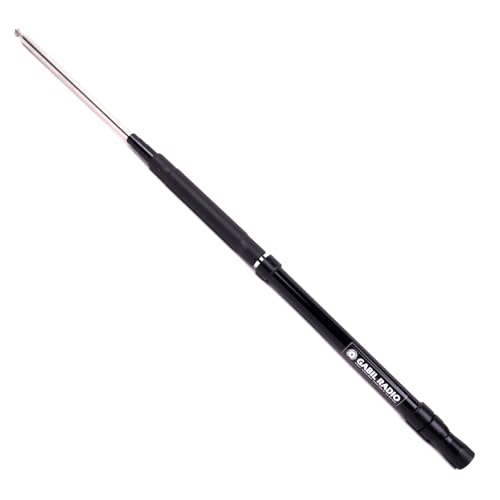 1. Gabil GRA-7350T Telescopic HF Antenna | Check price on Amazon | |
 2. Gabil GRA-1900T Portable HF VHF Telescopic Antenna | Check price on Amazon | |
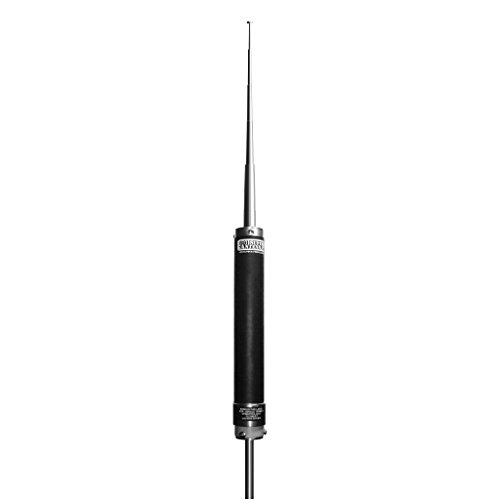 3. Super Antenna MP1C All Band HF VHF Portable Antenna | Check price on Amazon | |
 4. Super Antenna MP1DXG HF Portable Antenna with Ground Mount | Check price on Amazon | |
 5. JPC-12 Portable HF Vertical Antenna Kit, PAC-12 | Check price on Amazon |
Key takeaways
- Compare the best small HF antennas for portable ham radio, from telescopic whips to loaded verticals, with band coverage, power ratings, and setup tips.
A full-size HF antenna can be a wonderful thing at a permanent station, but many operators simply do not have the space for one. Apartment balconies, small yards, homeowners association rules, rental homes, and portable operating from parks and summits all push in the same direction: the antenna has to be short, light, and quick to put up and take down. Small HF antennas answer that problem by using loading coils, telescopic whips, and compact vertical designs that trade some efficiency for a footprint that fits real life.
This guide compares five small HF antennas that are all built around that same idea. Every model below is a compact, portable HF antenna for amateur radio transmitting, not a receive-only loop, not a VHF whip, and not a full-size tower antenna. Read the How to Choose section first, because with shortened antennas the details that matter most are band coverage, tuning method, power handling, and the ground arrangement each design expects.
As an Amazon Associate, we earn from qualifying purchases.
How to Choose a Small HF Antenna
Start with band coverage, because no small antenna covers every HF band equally well. A shortened vertical that reaches 80 meters or even 160 meters does so with a loading coil, and coil loading on the lowest bands usually means narrow usable bandwidth and lower efficiency. Antennas in this guide range from designs focused on 40 meters through 6 meters, which is where compact verticals perform most comfortably, to models that add 80 meter and 160 meter coverage through extension coils. Match the antenna to the bands actually planned for use.
Next, consider how tuning works. Most small HF antennas are manually tuned. Some slide a coil tap or a tuning sleeve along the coil, some change the length of a telescopic whip against engraved markings, and some combine both methods. Manual tuning is repeatable once the settings for each band are noted, and an antenna analyzer or the SWR meter in the radio makes the process faster. None of the antennas here is automatic, so plan on a short tuning step each time the band changes.
Power handling deserves a careful look. Published ratings in this category are usually given for SSB, and the rating for CW and digital modes can be lower because those modes run a higher duty cycle. A rating of 100 watts SSB suits the common 100 watt transceiver class, while higher rated coils give more headroom. Digital operators should stay below the SSB figure and watch for coil heating during long transmissions, especially on the lowest bands.
The ground side of the antenna matters as much as the visible whip. A short vertical is only half of the antenna system. The other half is the radial field, counterpoise wire, ground spike, vehicle body, or metal surface the antenna works against. Kits that include radial sets or a ground mount start with an advantage, because the parts are made to work together. Whip-only models need a mount and counterpoise supplied by the operator. Before buying, list what is in the box and what else the station needs: a mount, coaxial cable, radial wires, and possibly a tripod or spike.
Finally, judge packed size and deployed height honestly. A whip that collapses to around 12 inches disappears into a backpack, while a kit that erects to about 13 feet needs more open space and a calmer day. None of these designs is meant to stay up permanently in severe weather.
1. Gabil GRA-7350T Telescopic HF Antenna
The Gabil GRA-7350T is a manually tuned loaded vertical built around a stainless steel telescopic whip and a coil body with laser-engraved length markings. Those markings give a repeatable starting point for each band, so returning to a band becomes a matter of setting the whip and coil to the recorded marks and trimming for the lowest SWR. The antenna covers 3.5 MHz with its extension coil part fitted, plus the 7 to 30 MHz range and 50 MHz, which spans 80 meters through 6 meters in a whip that collapses to roughly the length of a ruler.
At full extension the GRA-7350T stands about 8.5 feet, yet it weighs only about a pound with the 3.5 MHz part fitted and less without it. That height and weight suits balcony rails, tripods, and portable mounts. The 130 watt SSB rating covers portable radios and the standard 100 watt transceiver class, and the PL-259 connector plugs directly into common SO-239 mounts and cables. Because it is a whip antenna rather than a complete kit, the operator supplies the mount and the counterpoise or ground arrangement, and that ground side will decide much of the real-world result, particularly on 40 and 80 meters.
Who It Suits
The GRA-7350T suits portable and balcony operators who want one light whip covering 80 meters through 6 meters and who are comfortable tuning by engraved marks. It is a strong fit for operators who already own a suitable mount and radial or counterpoise setup and want the antenna itself to stay as small and light as possible.
2. Gabil GRA-1900T Portable HF VHF Telescopic Antenna
The Gabil GRA-1900T takes the same telescopic idea and pushes the coverage lower, with a published range of 1.8 to 50 MHz. That span runs from 160 meters through 6 meters, which is unusually wide for a portable telescopic antenna and makes this model the broadest-coverage whip in this guide. Tuning is handled by tap and telescopic adjustment, so band changes are a manual process, and the lowest bands should be approached with realistic expectations: a whip of this size on 160 meters is heavily loaded, narrow in bandwidth, and dependent on a good ground or counterpoise to radiate usefully.
The GRA-1900T weighs about 1.5 pounds and uses a PL-259 UHF connector, so it drops onto standard mounts without adapters. Its published power rating is 120 watts, which again covers portable radios and 100 watt class transceivers on SSB, with the usual caution about sustained digital operation at the top of the range. For evening operating, emergency kits, and stations that want a single whip for almost any HF band, that reach is the reason to choose this model over a narrower one.
Who It Suits
The GRA-1900T suits operators who want the widest possible band coverage from one small telescopic antenna, including 160 meter and 80 meter capability for nighttime portable or emergency use. It also suits mobile and field stations that value a standard PL-259 connection and a sub-two-pound packed weight over the fastest possible band changes.
3. Super Antenna MP1C All Band HF VHF Portable Antenna
The Super Antenna MP1C is a modular portable vertical built around a sliding tuning system. Its SuperSlider sleeve moves along the SuperCoil to set the frequency, and the included FG1 Frequency Guide, an SWR ruler, gives reference settings for quick band changes. The antenna extends to about 7 feet and packs down to about 12 inches, the defining trait of the MP1 family.
Coverage is described by the maker as 3.5 to 300 MHz overall, covering the 40 meter through 2 meter bands, with 40 through 10 meters plus 6 meters as the core HF range. The SuperCoil carries a 500 watt rating, far above the other whips here, giving unusual headroom for a portable antenna. One point to plan around: the MP1C is the antenna only. It uses a 3/8-24 fitting and requires a mount and coaxial cable, sold separately, plus radials or a counterpoise. Budget for those parts from the start.
Who It Suits
The MP1C suits operators who want the smallest packed size in this guide together with a high power rating and a repeatable slider tuning system. It fits go-bag and travel stations, apartment operators who must set up and take down for each session, and anyone willing to add their own mount and radial setup in exchange for a very compact antenna at the center of it.
4. Super Antenna MP1DXG HF Portable Antenna with Ground Mount
The MP1DXG takes the same MP1 vertical concept and packages it as a more complete field system. Alongside the collapsible antenna, the kit adds a ground spike mount, radial sets, an SWR ruler, and a go bag, so the ground side is addressed in the box. For portable operating on grass or soil, that is a practical advantage: the station can be set up as intended, without first sourcing separate parts.
In standard configuration the MP1DXG covers 40 through 10 meters, 7 to 30 MHz, plus 6 meters up to 54 MHz. The 80, 75, and 60 meter bands require optional SuperCoils sold separately. The antenna stands about 7 feet, folds to under 12 inches, and weighs about a pound, while the kit is listed at 2 pounds. Power handling is 500 watts SSB and 300 watts on CW and data, the highest digital-mode figure in this guide.
Who It Suits
The MP1DXG suits portable operators who want a self-contained vertical system rather than a bare whip, especially for park, field, and emergency deployments on open ground where a spike mount and radials can be used properly. It also suits digital-mode operators who value the higher CW and data power rating.
5. JPC-12 Portable HF Vertical Antenna Kit, PAC-12
The JPC-12, also sold under the PAC-12 name, is a portable vertical kit built from aluminum alloy sections, a multi-band loading coil with a sliding regulator, a telescopic whip, and a 240 millimeter ground anchor. Tuning is done by sliding the regulator along the coil and adjusting the whip, with published reference settings for each band and a stated SWR of 1.1 to 1.3 when set up as directed. The design erects to about 410 centimeters, roughly 13.5 feet, which is the tallest deployed height in this guide, and that extra height is part of its appeal for operators who have the open space to use it.
Coverage runs from 7 to 50 MHz across eight bands: 40, 30, 20, 17, 15, 12, 10, and 6 meters. There is no 80 meter coverage in the standard kit, so this is a 40 meter and up antenna, aimed squarely at the bands where portable verticals are most effective. Power handling is 100 watts SSB at 50 ohms, matching the common portable and entry transceiver classes. Packed down, the kit retracts to about 34.5 centimeters and weighs about 1.4 kilograms, around 3 pounds, so it travels as a compact bag kit rather than a pocket whip.
Who It Suits
The JPC-12 suits portable and small-yard operators focused on 40 meters through 6 meters who can deploy a taller vertical and a ground anchor. It is a good match for park activations, camping stations, and balcony setups where its erected height is an asset rather than a problem, and where a complete kit with its own ground hardware is preferred.
FAQ
Can a small HF antenna work as well as a full-size antenna?
A small HF antenna can make contacts worldwide on the higher HF bands, especially 20 meters and above, but it will not match a full-size antenna for efficiency on the lowest bands. Loading coils shorten the radiator, and the shorter the antenna is compared with the wavelength, the more signal is lost, mainly on 80 and 160 meters. Good radials, careful tuning, and operating at the right time of day close much of the practical gap.
Does a small HF vertical need radials or a counterpoise?
Yes, in almost every setup a small vertical needs some form of ground side to work against. That can be a radial set, a counterpoise wire, a ground spike system, a vehicle body, or a large metal surface. Kits such as the MP1DXG and the JPC-12 include ground hardware for this reason, while whip-only models expect the operator to supply it.
Is an antenna tuner required with these antennas?
A tuner is not required on a band where the antenna has been manually tuned to a low SWR, and that resonant tuning is how the models in this guide are designed to be used. A tuner still helps at band edges and can rescue a compromise installation, while transmit power should stay within the rating for the mode in use.
Which small HF antenna is best for an apartment balcony?
The best balcony choice is usually a light telescopic whip on a sturdy clamp or tripod mount, with a short counterpoise wire run along the rail or floor. The Gabil whips suit that role because of their low weight and standard connectors, while the MP1C suits balconies where packed size matters most. Balcony metalwork detunes verticals, so expect to retune after mounting and keep the whip clear of the building where possible.
Final Verdict
For the lightest all-round whip with 80 meter reach, the Gabil GRA-7350T is the balanced choice, and the GRA-1900T extends that idea to 160 meters. For the smallest packed size with the most power headroom, the Super Antenna MP1C stands out, and the MP1DXG turns the same concept into a complete ground-mounted field system with the strongest digital-mode rating here. For 40 meters through 6 meters with the tallest deployed profile and ground hardware included, the JPC-12 kit is the pick. Choose by band coverage first, then by ground arrangement.
Product and ASIN Reference
| Product name | ASIN |
|---|---|
| Gabil GRA-7350T Telescopic HF Antenna | B08H4CTJ1B |
| Gabil GRA-1900T Portable HF VHF Telescopic Antenna | B095HBY2ML |
| Super Antenna MP1C All Band HF VHF Portable Antenna | B01GWW0N5Q |
| Super Antenna MP1DXG HF Portable Antenna with Ground Mount | B07F3YD2QM |
| JPC-12 Portable HF Vertical Antenna Kit, PAC-12 | B0D4TV9BP4 |