Key takeaways
- Find the best padded bike shorts for road, trail, and indoor rides. Compare chamois types, fit, fabric, inseam, pockets, and bibs before you choose today.
The best padded bike shorts turn a ride you endure into a ride you enjoy. A good chamois spreads pressure across your sit bones, reduces friction, and stays in place while you pedal. A poor one shifts, bunches, or thins out, and the discomfort usually arrives long before the ride ends.
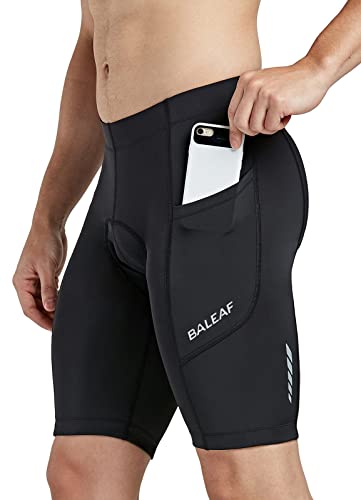
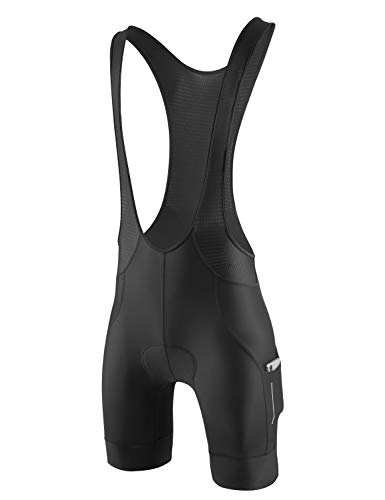
Quick answer: for most riders, a close-fitting padded short with a 3D or 4D chamois, a 9-inch inseam, moisture-wicking stretch fabric, and silicone leg grippers is the safest starting point. The BALEAF 3D padded short with pockets is the most versatile pick in this guide. The BALEAF 4D bib short suits longer rides where a waistband tends to shift, and the Sportneer 4D short is a straightforward option for training and indoor cycling. Trail riders who prefer a looser look should consider the ZOIC Ether set, where the padding sits in a removable liner rather than in the outer short itself.
Quick Picks
Our Short List of 3
All 5 Picks at a Glance
| Product | Specs | Action |
|---|---|---|
| BALEAF Men’s Bike Shorts 3D Padded with Pockets | Check price on Amazon | |
| BALEAF Men’s Cycling Bib Shorts 4D Padded | Check price on Amazon | |
 Sportneer Men’s 4D Padded Bike Shorts | Check price on Amazon | |
 Beroy Men’s 3D Padded Bike Shorts | Check price on Amazon | |
 ZOIC Ether Short and Essential Liner | Check price on Amazon |
How to Choose
Matching the chamois, fit, and ride matters most; pockets and reflective trim are secondary.
Chamois Density and Shape
The chamois is the padded panel sewn into the seat of the short, and it deserves the most attention. A denser, multi-layer pad spreads pressure over a wider area, while a thin, flat pad can feel fine for a short spin and then lose its shape on a longer ride.
Labels such as 3D and 4D describe how the padding is shaped and layered, not a single standard measurement. A 3D pad is usually contoured to follow the saddle and the body. A 4D pad adds another layer, often with thicker foam in the sit-bone area. The thickest part of the pad should sit under your sit bones in your normal riding position. For rides of around an hour, a basic 3D foam pad is usually enough. For rides of two hours or more, look for a multi-density pad with a smooth top surface and seams away from high-pressure areas.
Fit and Sizing
Cycling shorts fit close to the body, which keeps the chamois in place, prevents the fabric from catching on the saddle, and reduces chafing. If the short is loose, the pad can shift and the benefit of the padding is lost.
Use the brand size chart and measure your waist and hips before ordering, rather than relying on your usual trouser size. Cycling brands size differently, and several shorts in this guide are described in their listings as running small. If you fall between sizes, check torso length too for bib shorts, and try the shorts on the bike at home before a long ride.
Fabric and Breathability
Most padded bike shorts use a blend of nylon or polyester with spandex. Nylon blends tend to feel smooth and durable, while polyester blends are often lighter and dry quickly. Spandex, also listed as elastane, provides the stretch that lets the short move with your legs. A blend with around 18 to 20 percent spandex usually offers a good balance of stretch and support.
Moisture-wicking fabric matters because sweat trapped against the skin increases friction. Look for fabric described as moisture-wicking, quick-dry, or breathable, and for flatlock seams, which lie flat against the skin and reduce rubbing. Several shorts here list UPF 50+ fabric, which blocks ultraviolet light on covered areas but does not replace sunscreen on exposed skin.
Inseam Length
A 9-inch inseam is a common middle ground for men, giving enough coverage to prevent the leg opening from riding up onto the thigh while still leaving the knee free. Shorter inseams, around 5 inches, suit indoor training and riders who prefer less fabric, but they can ride up during pedalling. Longer inseams, around 10 to 12 inches, suit taller riders and mountain bikers who want more coverage, but they can feel warm on hot days.
Silicone leg grippers help the short stay in place; if silicone irritates your skin, look for a wide, soft elastic hem instead. For women, choose a women-specific short with a women-specific chamois rather than sizing down in a men’s model, because the waistband and the chamois shape are cut differently.
Shorts or Bib Shorts
The choice between regular shorts and bib shorts comes down to the waistband. Regular shorts have an elastic waistband that can press into the stomach when you lean forward, especially on long rides. Bib shorts replace the waistband with shoulder straps, which hold the short in place and spread the pressure across the shoulders. Many riders who do longer road rides prefer bibs for that reason.
Bibs have trade-offs. They take longer to put on and take off, and they make comfort breaks more awkward. If you ride for an hour or less, or mostly on trails where you stop often, regular shorts are usually simpler. If you ride for two hours or more on the road and your waistband is the first thing that bothers you, bibs are worth trying.
Pockets and Practical Details
Side pockets hold a phone, a key, or a small snack within reach. Rear pockets, common on bib shorts, hold a phone or a compact tool without bouncing. Zipper pockets are better for valuables on rough trails, because an open pocket can let a phone slide out on a bump. Reflective trim helps visibility on commutes, though it does not replace a light.
Care instructions also matter. Many padded shorts are machine washable on a gentle cycle, while some list hand washing only. Washing in cold water, skipping fabric softener, and air drying rather than tumble drying helps the elastic and the foam pad keep their shape. A pad that is repeatedly tumble dried can become stiff or lose its cushioning.
The Best best padded bike shorts Reviewed
BALEAF Men’s Bike Shorts 3D Padded with Pockets
The BALEAF 3D padded short is the most versatile pick in this guide, and the one to start with if you want a single pair for road riding, commuting, and indoor training. It is a close-fitting short with a 9-inch inseam, a 3D chamois, and four pockets, which is more storage than most padded shorts offer.
The fabric is listed as 80 percent nylon and 20 percent spandex, with UPF 50+ protection. That blend gives a smooth, stretchy feel that moves well during pedalling, and the moisture-wicking finish helps on warm days. The leg openings use a silicone gripper to hold the short in place, and the waistband is a high-rise pull-on design, which suits riders who find low-rise shorts slip down when they lean forward.
The 3D padding suits middle-distance rides of around one to two hours, and flatlock stitching helps reduce rubbing. Two large side pockets hold a phone securely, with room for keys or a snack, which makes this short useful for commuting. Check the size chart against your waist and hip measurements before ordering.
BALEAF Men’s Cycling Bib Shorts 4D Padded
The BALEAF 4D bib short is the pick for riders who find a waistband uncomfortable on longer rides. The shoulder straps hold the chamois in place and remove the pressure point at the waist, which is the main reason many road riders move to bibs. The listing notes that the shorts run small and recommends sizing up from your normal preferred size, so check the size chart carefully.
The chamois is a 4D pad, a step up in layering from the 3D pad in the regular BALEAF short above. The extra layering is aimed at longer rides, where a denser pad holds its shape for more hours in the saddle. The fabric is listed as 80 percent nylon and 20 percent spandex, with UPF 50+ protection, quick-dry and moisture-wicking properties, and high stretch. The 9-inch inseam gives the same coverage as the regular short.
Four pockets hold a phone, keys, and small essentials. The shoulder-to-hem length is listed at 18 inches, so long-torso riders should check that measurement. The bib design is the main trade-off: it is more stable than a waistband short on a long ride, but it is slower to put on and take off. If you mostly ride for an hour or less, the regular BALEAF short above is simpler. If your rides regularly pass two hours and your waistband is what bothers you first, the bib is the better choice.
Sportneer Men’s 4D Padded Bike Shorts
The Sportneer 4D short is a straightforward training short with a three-layer 4D sponge pad, a breathable nylon-spandex fabric, and a simple close fit. It is aimed at road riding, spinning, and indoor training, where the pad needs to cushion repeated saddle time without adding bulk or extra features that get in the way.
The fabric is listed as 82 percent nylon and 18 percent spandex, with UPF 50+ protection and a reflective logo for low-light visibility. The waistband is a wide elastic band, and the leg openings use a silicone grip to keep the short from riding up. The size chart lists an inseam of about 9.4 inches in medium, which is close to the 9-inch standard and gives good thigh coverage.
The three-layer pad is the centre of this short. The layers are designed to absorb shock and spread pressure, while the top surface stays smooth against the skin. That makes it a good match for training rides of around an hour, where you want consistent cushioning without a very thick pad that feels bulky when you stand. Two practical notes: care instructions list hand washing only, which is more demanding than machine-wash care, and the fit is low-rise, so riders who prefer a higher waistband may find the BALEAF short more comfortable.
Beroy Men’s 3D Padded Bike Shorts
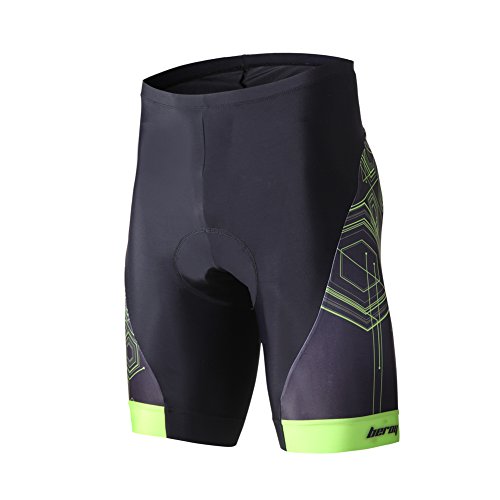
The Beroy 3D padded short is a simple, close-fitting tight with a 3D foam chamois and no extra pockets or bib straps. It is the most basic design in this guide, and that simplicity is its appeal for riders who want a padded short without added features.
The listing describes the short as a comfortable bicycle tight with 3D chamois padding foam inside, designed to provide protection on the saddle while riding. The pad is a foam chamois rather than a gel pad, which gives a firm, consistent cushion that holds its shape during pedalling. Foam pads feel less bulky than thick gel pads and dry quickly, which suits short to medium rides and indoor training.
Because this short has no pockets, it is best paired with a jersey that has rear pockets, or with a small saddle bag, if you need to carry a phone or keys. That is a normal trade-off for a simple tight, and it keeps the short light and free of bouncing storage. The close fit also means the short works well as a liner under a loose mountain bike short, where the outer short provides the pockets and the Beroy tight provides the padding. Check the brand size chart, measure your waist and hips, and try the short on the bike before a long ride.
ZOIC Ether Short and Essential Liner
The ZOIC Ether is a different kind of pick from the other four in this guide, and the difference matters. The outer short is a baggy mountain bike short with a 12-inch inseam, and the padding sits in a separate 9-inch Essential Liner worn underneath. That means the outer short itself is not padded. The padding comes from the liner, which can be removed, washed separately, or worn on its own under another shell.
That two-piece design is a partial fit for the keyword in this guide, and it should be understood before buying. If you want a single padded short that you put on and ride in, the BALEAF, Sportneer, or Beroy shorts above are a closer match. If you ride trails and prefer a loose, casual look with pockets and room to move, the ZOIC set gives you that look while the liner provides the chamois.
The outer short is listed as 96 percent polyester and 4 percent spandex, with a relaxed fit. The liner is the padded layer, and the set is designed so the liner stays in place under the shell during pedalling. Fit needs attention in both layers: the outer short should be loose enough to move freely without catching on the saddle, while the liner should be close enough to hold the pad in place.
What to Check Before You Buy
Before you order, confirm four details on the live listing: the exact model, colour, and size; the size chart against your measurements; the seller and return terms; and the care instructions, especially if the listing says hand wash only.
A pad that works on a narrow road saddle may feel too thick on a wide comfort saddle. Wash new shorts before the first long ride, and try them on a short ride first, to check whether the pad sits in the right place and whether any seam rubs. Keep the packaging and tags until you have done that first ride, in case you need to exchange the size. Padding does not replace bike fit: persistent numbness or saddle sores may come from saddle position or width.
FAQ
How thick should the padding in bike shorts be?
Thickness alone does not decide comfort. A medium-density pad that sits under your sit bones and holds its shape is usually more comfortable than a very thick pad that shifts or creates pressure at the edges. For rides of around an hour, a 3D foam pad is usually enough. For rides of two hours or more, a multi-layer or multi-density 4D pad is a better starting point.
Should I wear underwear under padded bike shorts?
Padded bike shorts are designed to be worn without underwear. The chamois is meant to sit directly against the skin, where it can reduce friction and wick moisture away. Wearing underwear under the short adds a layer that can bunch, trap moisture, and create seams in the wrong place.
How do I wash padded bike shorts?
Follow the label on the short you buy. Most padded shorts are machine washable on a gentle, cold cycle, while some, including the Sportneer short in this guide, list hand washing only. In general, wash in cold water, skip fabric softener, and air dry rather than tumble drying. Fabric softener can coat the fibres and reduce moisture-wicking, and high heat can damage the elastic and the foam pad.
What is the difference between 3D and 4D padding?
Both terms describe a contoured, layered pad rather than a flat piece of foam. A 3D pad is shaped in three dimensions to follow the saddle and the body, with thicker foam in the sit-bone area. A 4D pad adds another layer or a more sculpted profile, often with multiple densities of foam in different zones. Compare pad thickness and intended ride length, rather than choosing on the label alone.
Are bib shorts better than regular padded shorts?
Bib shorts are better for riders who find a waistband uncomfortable on long rides, because the shoulder straps hold the chamois in place and spread pressure across the shoulders. Regular shorts are simpler to put on and take off, and they are usually enough for rides of an hour or less. If your waistband is the first thing that bothers you on a long ride, try bibs.
Bottom Line
The best padded bike shorts match your ride length, saddle, and fit, not the thickest pad. For most riders, the BALEAF 3D padded short with pockets is the best starting point, combining a 3D chamois, a 9-inch inseam, stretch fabric with UPF 50+ protection, and useful storage. Longer road riders who dislike waistbands should look at the BALEAF 4D bib short, while indoor trainers will find the Sportneer 4D short a focused option.
The Beroy 3D tight suits short to medium rides without pockets, and the ZOIC Ether set suits mountain bikers who want a baggy outer short with a removable liner. Whichever short you choose, check the size chart and return terms, and try it on a short ride first.
Disclosure: As an Amazon Associate, we may earn from qualifying purchases.