Key takeaways
- Find the best battery operated tiller for raised beds and small plots. Compare cordless power, tilling width, depth, runtime and weight before you choose.
The best battery operated tiller for most home gardeners is the Greenworks 40V 10-Inch Cordless Tiller Cultivator, because it combines a useful 10-inch working width, a 40V battery system, and a manageable weight in a machine built for established beds. If you want a wider path, the Sun Joe 24V-X2-TLR14 is the stronger choice, with a 14-inch tilling width and a 7-inch depth. A battery operated tiller is at its best in soil that has already been worked. It loosens the top layer, mixes in compost, breaks up light crust, and clears weeds between rows, all without a cord, fuel, or pull cord.

This guide compares four real battery operated tillers sold on Amazon US. Each one runs on a rechargeable lithium-ion battery, and each one suits a different garden. Read the buying guide first if you are unsure how much width and depth you need, then match the pick to your beds.
Quick Picks
Our Short List of 3
All 4 Picks at a Glance
| Product | Specs | Action |
|---|---|---|
| Greenworks 40V 10-Inch Cordless Tiller Cultivator | Check price on Amazon | |
| Sun Joe 24V-X2-TLR14 Cordless Garden Tiller Cultivator Kit | Check price on Amazon | |
 Greenworks 60V 8-Inch Cordless Cultivator | Check price on Amazon | |
 ONEVAN 20V Cordless Tiller Cultivator | Check price on Amazon |
How to Choose
Battery Voltage and Battery Capacity
Voltage is the simplest way to compare cordless tillers, but it is not the whole story. A 20V machine is built for light cultivating in loose soil. A 40V machine has more torque for soil that has settled over winter or for beds with a dense root mat. A 60V machine holds its tine speed better when the soil resists. Capacity, measured in amp-hours, decides how long the machine runs. A 4.0Ah battery stores roughly twice the energy of a 2.0Ah battery at the same voltage, so it runs longer under the same load. A kit with two batteries is worth attention, because a second pack lets you swap and keep working while the first pack charges.
Tilling Width
Tilling width decides how many passes you need to cover a bed. A narrow machine, around 8 inches wide, fits between rows of young plants and inside a raised bed without disturbing the plants on either side. A 10-inch machine is a useful middle ground for a standard vegetable bed. A 14-inch machine covers a wide bed in fewer passes, but it needs more room to turn at the end of a row, and it can be awkward in a narrow raised bed.
Tilling Depth and Tine Design
Depth decides what the machine can actually do. A cultivator that digs 5 inches deep is fine for mixing compost into the top layer, breaking a surface crust, and weeding between rows. A machine that reaches 7 inches deep can work a new planting row in soil that has been loosened before. None of the battery models in this guide is a deep-tilling machine for breaking untouched ground, and buyers who need that should look at a larger corded or gas machine instead.
Runtime and Charging Time
Runtime is the hard limit on a cordless tiller. The Greenworks 40V is rated for up to 45 minutes on its included 4.0Ah battery, and that figure assumes soil that is not fighting back. Hard, dry, or compacted soil draws more current and shortens the working time. A smaller 2.0Ah battery may give around 20 minutes of work, which is enough for a couple of raised beds but not for a full vegetable plot.
Weight and Handling
Weight decides whether the machine is a pleasure or a chore. The lightest cordless cultivators weigh under 10 pounds, and they can be lifted over a raised bed wall with one hand. A wheeled tiller in the 21 to 33 pound range is heavier, but the wheels carry most of that weight while you work, and the extra mass helps the tines bite into the soil instead of skipping across the surface.
Soil Type and Garden Size
Soil type is the factor most buyers underestimate. Loose, sandy soil is easy work for any cordless tiller. Loam that has been worked for a season or two is the sweet spot for these machines. Heavy clay, dry and compacted soil, and ground full of stones or thick roots will slow a cordless tiller down, and may stop it altogether. If your soil is heavy clay, water the bed a day before tilling so the soil is moist but not wet, and make two shallow passes instead of one deep pass.
What Comes in the Box
A complete kit should include the tiller, at least one battery, a charger, and the tines fitted or ready to fit. Some kits include a second battery, which is worth having for a larger garden. Check the warranty on the tool and the battery, and keep the manual with the machine for assembly and safety guidance.
The Best best battery operated tiller Reviewed
Greenworks 40V 10-Inch Cordless Tiller Cultivator
The Greenworks 40V 10-Inch Cordless Tiller Cultivator is the best battery operated tiller for most home gardeners. It runs on a 40V lithium-ion battery, it works a path that adjusts from 8.25 to 10 inches wide, and it uses four forward-rotating steel tines that are 8 inches in diameter. The included 4.0Ah battery is rated for up to 45 minutes of runtime, and the charger takes around two hours to refill it. The machine weighs around 21 pounds and rides on 6-inch rear wheels, which makes it easy to move across a lawn and easy to control in a bed.
Sun Joe 24V-X2-TLR14 Cordless Garden Tiller Cultivator Kit
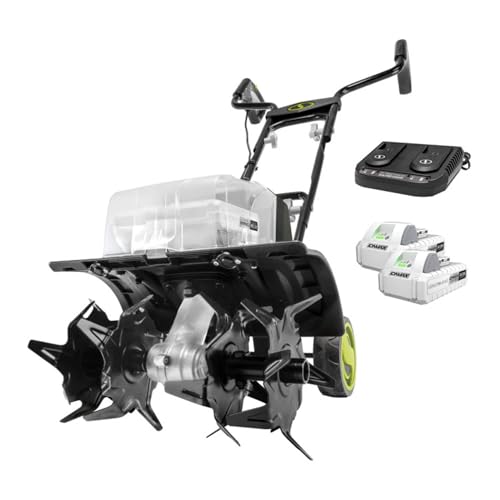
The Sun Joe 24V-X2-TLR14 Cordless Garden Tiller Cultivator Kit is the widest machine in this guide, and the best choice if you want to cover a bed in fewer passes. It tills 14 inches wide and up to 7 inches deep, using four durable steel tines driven by a 500-watt brushless motor. It runs on two 24V lithium-ion batteries, which together give a 48V system, and the kit includes both batteries and a charger. The machine weighs around 33 pounds with the batteries fitted, and it rides on easy-glide wheels that help you move it across the garden.
Greenworks 60V 8-Inch Cordless Cultivator
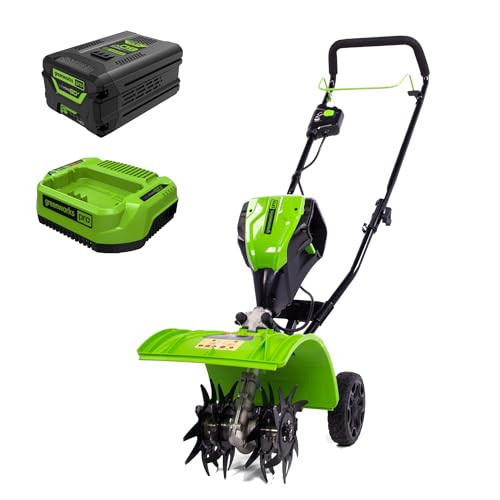
The Greenworks 60V 8-Inch Cordless Cultivator is the compact power pick in this guide. It runs on a 60V lithium-ion battery, and the kit includes a 4.0Ah battery and a charger. It works an 8-inch path and digs to a depth of 5 inches, using a brushless motor that holds its speed well in soil that resists. The 60V system gives this smaller machine more torque than its width suggests, and it is a good match for a gardener who wants strong performance in a machine that fits between rows.
ONEVAN 20V Cordless Tiller Cultivator
The ONEVAN 20V Cordless Tiller Cultivator is the lightest full-size pick in this guide, and the best choice for light work in tight spaces. It runs on a 20V lithium-ion system, it works a 9.5-inch path, and it digs to a depth of 6.7 inches. It uses a 550-watt motor that turns the tines at 360 revolutions per minute, and the kit includes two 3.0Ah batteries and a 1.5A fast charger. Having two batteries in the box is a real advantage at this size, because a spare pack lets you swap and keep working while the first pack charges.
What to Check Before You Buy
Check the battery first. Confirm whether the battery and charger are included, how many batteries are in the box, and what the battery capacity is. A tool-only listing is only a bargain if you already own the batteries it needs. Check the voltage as well, and match it to your soil. A 20V machine is for light work, a 40V machine is for general garden use, and a 60V machine is for a gardener who wants more torque in a compact frame.
Check the tilling width and depth against your beds. Measure your narrowest bed and your narrowest row, and choose a machine that fits with room to spare. Check the tine diameter and the number of tines, and look for adjustable tines if your spacing changes across the garden. A machine that is too wide for your beds will damage plants, and a machine that is too narrow will take too many passes.
FAQ
Is a battery operated tiller strong enough for clay soil?
A battery operated tiller can work clay soil that has already been loosened and kept moist, but it is not the best tool for dry, compacted clay that has never been dug. Water the bed a day before you till, make two shallow passes instead of one deep pass, and work slowly so the tines can bite. If the machine stalls, lift it slightly and let the tines clear before you continue. For heavy clay that has baked hard, a larger corded or gas machine is a better choice for the first pass, and a cordless tiller can maintain the bed afterwards.
How long does a cordless tiller battery last?
Runtime depends on the battery capacity, the voltage, and the soil. A 40V 4.0Ah battery is rated for up to 45 minutes in normal use, and a smaller 2.0Ah battery may give around 20 minutes. Heavy soil, thick roots, and deep passes all shorten the runtime, while loose soil and shallow passes extend it. A kit with two batteries lets you swap packs and keep working, and a second battery is the simplest way to cover a larger garden without waiting for a recharge.
What is the difference between a tiller and a cultivator?
A tiller is built to break new ground and dig deep, while a cultivator is built to loosen soil that has already been worked, mix in compost, and clear weeds. Most battery operated machines sold as tillers are really cultivators, including all four picks in this guide. They dig to a depth of 5 to 7 inches, which is enough for planting rows and bed maintenance, but not enough for breaking untouched ground. The distinction matters when you choose, because a cultivator used as a tiller will struggle, while a cultivator used as a cultivator will work well.
Do I need a second battery?
A second battery is worth having if your garden is larger than a few raised beds, if your soil is heavy, or if you want to finish the work in one session. A single battery is enough for a small plot, a few raised beds, or a short weeding session. If your kit includes two batteries, keep both charged and swap them when the first pack runs low. If your kit includes one battery, check whether a spare pack is sold separately and whether it fits other tools from the same brand.
Can a battery operated tiller work in a raised bed?
Yes, a battery operated tiller is well suited to a raised bed, as long as the tilling width fits the bed. A narrow machine of 8 to 10 inches wide fits most raised beds, and a light machine can be lifted over the bed wall. Measure the inside width of your bed before you buy, and leave room on either side so the tines do not strike the bed frame. Work along the length of the bed, overlap each pass slightly, and keep the depth shallow near the edges.
Bottom Line
The best battery operated tiller for most home gardeners is the Greenworks 40V 10-Inch Cordless Tiller Cultivator, because it balances width, runtime, and weight in a machine built for established beds. Choose the Sun Joe 24V-X2-TLR14 if you want the widest path and the deepest cut, choose the Greenworks 60V 8-Inch Cordless Cultivator if you want compact power for raised beds and narrow rows, and choose the ONEVAN 20V Cordless Tiller Cultivator if you want a light machine with two batteries for loose soil and tight spaces. Match the machine to your soil and your bed size first, check that the battery and charger are included, and plan your work around the runtime. A cordless tiller bought for the right job will save you time on every visit to the garden.
Disclosure: As an Amazon Associate, we may earn from qualifying purchases.